
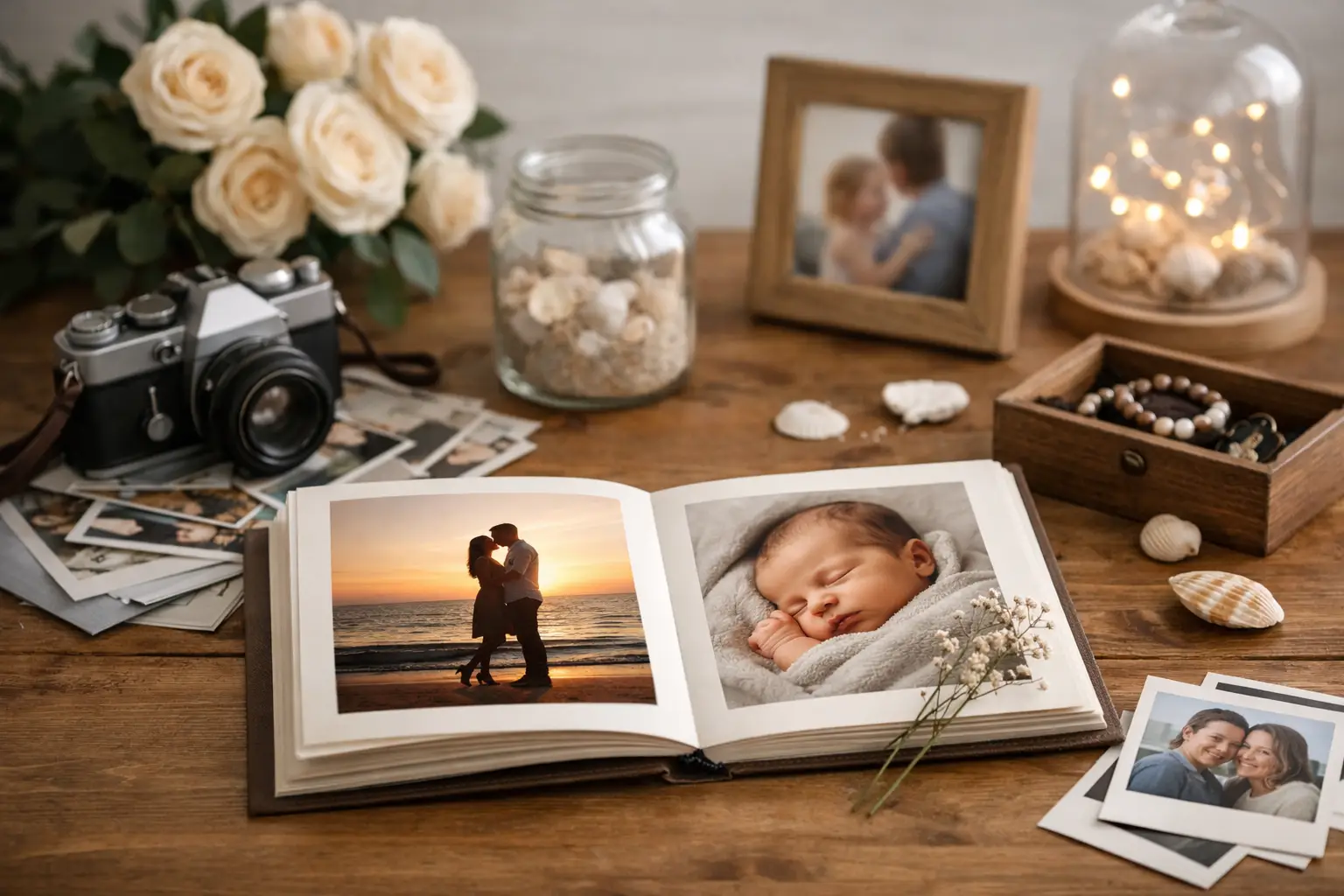
Some memories do not ask for much at the time. A concert ticket tucked into a coat pocket. A scribbled note from someone you love. The first song played at your wedding. Years later, those small things can carry astonishing weight. That is why learning how to preserve special memories matters – not as an exercise in storage, but as a way of keeping life close.
The most meaningful memories are rarely the grandest. Often, they live in ordinary details: a family phrase, a favourite record, the view from a holiday flat, the flowers from a milestone celebration. Preserving them well is less about keeping everything and more about choosing what tells the story best.
Why how to preserve special memories is so personal
No two people remember a moment in quite the same way. One person holds onto sound. Another remembers colour, texture or place. That is why there is no single correct answer to how to preserve special memories. A memory can live happily in a photo album, but it can be just as powerful as a framed lyric print, a personalised artwork piece, or an object displayed at home where it becomes part of everyday life.
The trade-off is simple. If you keep everything, the truly special can get lost. If you pare back too much, you may wish you had saved one more small clue from that chapter of life. The sweet spot sits somewhere in the middle – curated, thoughtful, and led by feeling rather than clutter.
Start with the moments that still tug at you
When people think about preserving memories, they often begin by sorting through boxes or scrolling through thousands of photos. That can quickly become overwhelming. A gentler place to begin is with the memories that still return unprompted.
Think about the moments you talk about most. The gig that changed your taste in music. The family home that shaped your childhood. The trip that marked a fresh start. The person whose handwriting you would know anywhere. These are the memories with lasting pull, and they are usually the ones worth honouring first.
Once you identify them, ask what form suits each one. Some memories belong in a private keepsake box because they feel intimate. Others deserve to be seen every day – framed on a wall, styled on a shelf, or worked into a piece that sparks conversation whenever someone visits.
Keep the story, not just the object
A keepsake without context can become mysterious over time. A ticket stub on its own may mean everything to you now, but in ten years it may need a little help. The strongest way to preserve a memory is to hold onto its story as well as its physical trace.
That might mean writing a few lines on the back of a photograph, noting the date and why it mattered. It could mean keeping a short letter with a sentimental object, or creating a display that combines several details from the same moment – an image, a place name, a lyric, a date. When the story sits alongside the item, the memory stays vivid.
This is especially meaningful for family pieces. A collectable inherited from a grandparent or an old music programme passed through generations becomes richer when its history is recorded. Without that, future family members may admire it but never fully know it.
Choose formats that fit real life
There is a romantic idea that every special memory should be preserved in a scrapbook or archive box, but real life is messier than that. The best method is often the one you will actually keep up with.
If you love styling your home, memory-led décor may be the most natural choice. Personalised prints, commemorative artwork and framed memorabilia allow your walls and shelves to tell your story without feeling overly formal. A beautiful keepsake becomes part of the atmosphere of a room, which means the memory is not hidden away waiting for a spring clean.
If you are more private, a memory box or album may suit you better. That approach works well for delicate items such as letters, cards, photographs and small mementoes that are too precious for daily display. It also gives you the pleasure of revisiting them quietly, on your own terms.
For some moments, digital storage helps. Voice notes, scanned letters and backed-up photo collections have their place. But digital alone can feel strangely distant. We live so much of life through screens that physical keepsakes still offer something rare: presence. You can hold them, place them, pass them on.
How to preserve special memories without creating clutter
This is where sentiment and practicality need to work together. Meaningful objects can fill a home beautifully, but only if they are chosen with care. If every drawer and shelf is packed, even treasured pieces lose their impact.
Try thinking like a curator rather than a collector of everything. Select the item that captures the memory most clearly. For a wedding, that might be a bespoke artwork piece inspired by the first dance rather than a full box of dried table decorations. For a music memory, it might be one framed record-related keepsake instead of a pile of old wristbands and folded programmes.
Display also matters. A thoughtfully placed piece feels intentional and honouring. Five unrelated sentimental objects squeezed onto a mantlepiece can feel accidental. Giving a memory room to breathe often gives it more emotional power.
Seasonal rotation can help too. Not every treasured item needs to be on view all year. Bringing pieces out at certain times – anniversaries, birthdays, Christmas, summer holidays – can make them feel fresh again and deepen their meaning.
Make memory part of your home, not a hidden archive
The most loved homes often reveal the people who live in them. Not through expensive trends, but through details with soul. A framed map of where you met. A custom print built around a song lyric. Nostalgic collectables that nod to your era, your passions, your people. These things do more than decorate a room. They give it character.
That is where preserving memories becomes especially joyful. It moves from safekeeping into storytelling. Instead of storing your life in loft boxes, you let pieces of it live around you.
For people who love distinctive interiors, this can be far more satisfying than generic décor. A home should not look like anyone could live there. It should feel unmistakably yours. Memory-led pieces create that feeling naturally because they are rooted in real life, not passing fashion.
Bespoke pieces can capture what photos cannot
Photographs are wonderful, but they are not always enough. Some memories are emotional in a way a single image cannot fully express. A favourite song, a shared joke, the feeling of a particular era, the significance of a date – these can be better held in a commissioned or personalised piece designed around the story.
That is the beauty of bespoke keepsakes. They allow you to preserve not just what something looked like, but what it meant. A custom creation can weave together names, places, lyrics, colours and symbols into something layered and deeply personal.
For gift-giving, this is especially powerful. The best sentimental gifts do not simply say, “I bought you something.” They say, “I remembered this mattered to you.” A memory turned into art carries that message beautifully.
If you are looking for inspiration, brands such as RUhavinit? speak to this idea so well – turning nostalgia, music, milestones and personal stories into pieces that feel lasting rather than generic.
Do not wait for a “big” occasion
One of the loveliest ways to preserve memories is to stop treating them as something only worth marking after weddings, births or landmark birthdays. Everyday life deserves remembrance too.
The first home you made your own. The pet who changed the shape of your days. A friendship that carried you through a difficult year. A parent’s recipe card with flour still caught in the corner. These are not minor things. They are the texture of a life.
Preserving them while they are still close can feel more tender than trying to piece them together later. It also means you are creating a living collection of your story as it unfolds, rather than always looking backwards.
There is no perfect method, and that is part of the charm. Some memories need a frame. Some belong in a box. Some ask to be turned into art and given pride of place. The real question is not whether a moment is grand enough to keep, but whether it still makes your heart pause when you think of it. If it does, it has already earned its place.
Leave a Reply