
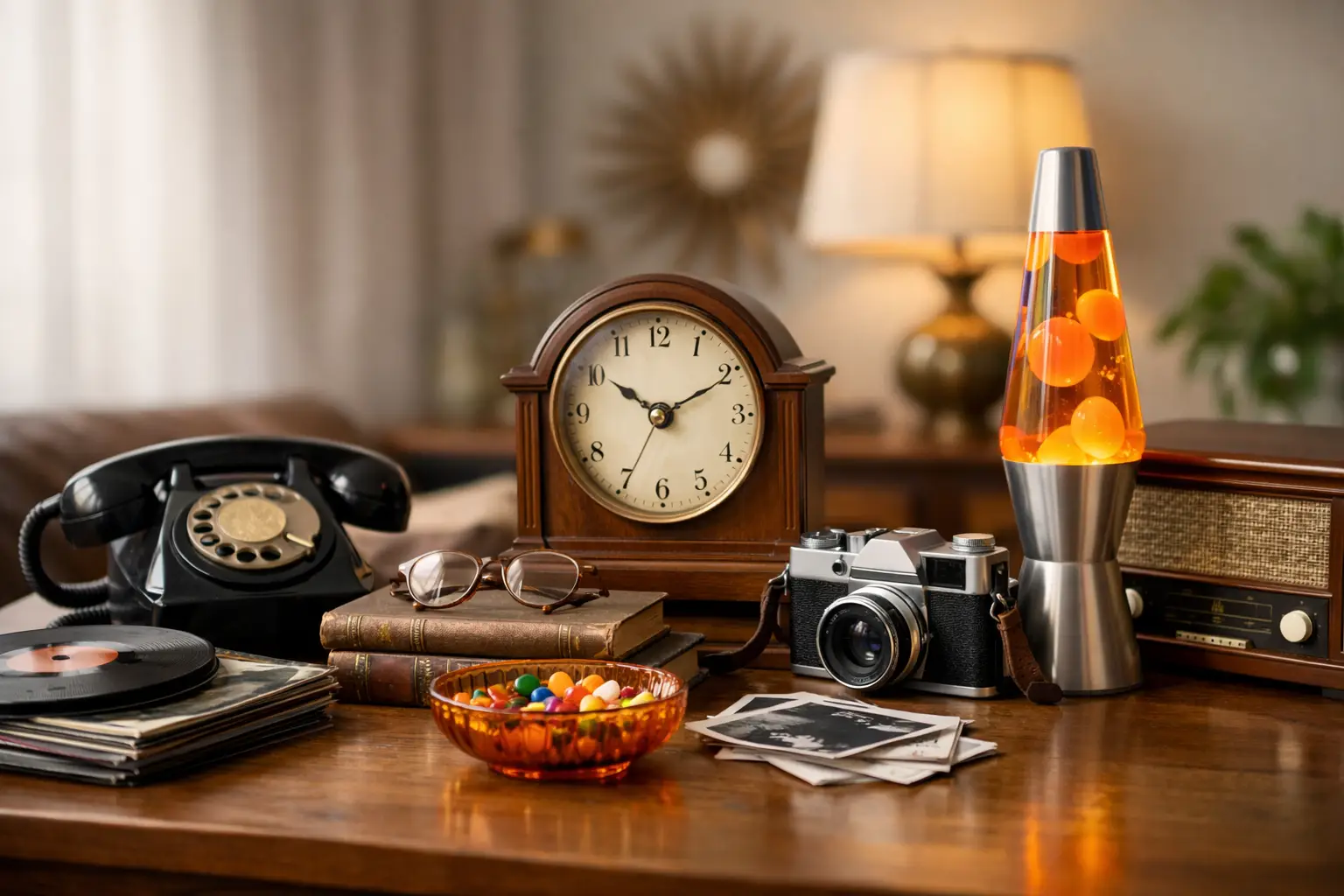
Some rooms look finished. Others feel lived in. The difference is often memory. The best nostalgic decor pieces do more than fill a shelf or soften a corner – they bring back a song, a decade, a family habit, a place you still carry with you.
That is why nostalgic decorating has such lasting pull. It is not about turning your home into a museum of the past, and it is not about buying anything vaguely retro and hoping it works. The pieces that stay with us are the ones that tell a story clearly. They hold a little history, but they also belong in the life you are living now.
What makes the best nostalgic decor pieces feel special?
The most meaningful nostalgic interiors are built on recognition. A record-shaped wall piece can remind someone of their first gig. A framed lyric print can bring back long car journeys, heartbreak, youth clubs or kitchen discos. Even a small object can carry enormous emotional weight when it reflects a real memory.
That emotional pull matters more than whether something is strictly antique or perfectly era-correct. In fact, one of the biggest mistakes people make with nostalgia-led styling is focusing too hard on authenticity and not enough on feeling. A home should not feel staged. It should feel like a personal archive with warmth and imagination.
There is also a balance to strike. Too many memory-heavy items in one space can start to feel cluttered or overly themed. Too few, and the room loses its sense of character. The sweet spot is usually a mix of old references and present-day styling – pieces with soul, given room to breathe.
Best nostalgic decor pieces worth bringing home
Music-inspired wall art
Music has a way of fixing a moment in time more vividly than almost anything else. A lyric print, framed record-style artwork or a piece inspired by a beloved artist can instantly give a room emotional depth. These work beautifully in living rooms, hallways and creative spaces because they start conversations without needing explanation.
The key is choosing music that means something to you, not simply a famous title that matches the colour scheme. Nostalgia falls flat when it is borrowed. It becomes powerful when it is personal.
Personalised keepsake prints
Few decor pieces feel more timeless than artwork created around a memory. It might mark a wedding song, a childhood street, a meaningful date or a family saying that still gets repeated at every gathering. Personalised prints bring nostalgia into the home in a way that feels intimate rather than generic.
They also make sense for people who want sentiment without visual heaviness. A bespoke print can be soft, elegant and artistic while still carrying real emotional significance. For many homes, this is where nostalgia feels most natural.
Vintage-style clocks
A good vintage-style clock adds atmosphere quickly. Railway-inspired designs, mid-century silhouettes or old-school kitchen clocks can all bring a familiar comfort to a space. There is something deeply grounding about them. They suggest routine, heritage and a slower rhythm.
Still, this is one of those categories where scale matters. A statement clock can anchor a room, but in a smaller space it may dominate too much. If the room is already rich with pattern or memorabilia, a simpler design often works better.
Framed memorabilia
Tickets, concert stubs, old photographs, postcards, matchbooks, magazine covers – these are often the most moving decorative pieces because they were never made to be decor in the first place. Framing them gives everyday history a second life.
This approach works especially well if you want your space to feel layered and collected. It is less polished than buying a single ready-made object, but far more individual. The beauty lies in the details and the story behind them.
Retro signage and typographic pieces
Old-fashioned lettering has undeniable charm. Cinema-style signs, pub-inspired plaques and classic typography can add wit and warmth, especially in kitchens, music rooms or home bars. They bring a playful nod to the past without demanding a complete vintage scheme.
The trade-off is that signage can sometimes tip into novelty if it is too loud or too obvious. The best pieces still feel curated. They should echo your personality, not overwhelm it.
Memory-led cushions and soft furnishings
Not all nostalgic decor needs to hang on a wall. Cushions, throws and textile pieces can introduce comfort in a quieter, more tactile way. Think heritage patterns, old-school concert references, embroidered dates or fabrics that recall a grandparent’s sitting room in the loveliest possible sense.
Soft furnishings are ideal if you want to test nostalgic styling without making a bigger commitment. They are easy to move, easy to layer and brilliant for making a home feel warmer. They may not be the star of the room, but they often create the atmosphere people remember.
Collectable display pieces
For collectors, nostalgia is often about the thrill of recognition. Model pieces, music memorabilia, themed ornaments and limited-edition collectables can all become part of a room’s identity when displayed thoughtfully. These are the objects guests notice, ask about and remember.
The difference between a striking display and visual clutter usually comes down to editing. Grouping pieces by theme, colour or era helps them feel intentional. A shelf with breathing space tells a stronger story than one packed edge to edge.
How to choose nostalgic decor that still feels stylish
Start with one memory, not one trend
The most affecting rooms usually begin with a single thread. A favourite album. A holiday camp poster style that reminds you of childhood summers. A print that captures your wedding song. Once you begin there, the rest of the room can build around something real.
If you begin with a trend, the result may still look attractive, but it can feel emotionally thin. Nostalgia has to connect to your own life to carry weight.
Let one era lead, but do not trap yourself in it
A 1960s-inspired piece can sit beautifully beside something contemporary. A 1980s music print can live comfortably in a calm, modern room. You do not need to recreate an entire decade to use nostalgic decor well.
In fact, restraint often makes these pieces more powerful. One or two era-led references can sing. Too many can make the room feel costume-like.
Think about emotion as much as colour
Decorating advice often centres on palettes, but nostalgic styling asks a different question – how do you want the room to feel? Comforting, playful, romantic, reflective, celebratory? Once you know that, it becomes easier to choose items that belong together, even if they are visually varied.
This is especially helpful when combining sentimental objects from different stages of life. The emotional tone can hold them together more effectively than a perfect colour match ever could.
The role of bespoke pieces in nostalgic interiors
Some memories simply cannot be found on a shelf. That is where bespoke decor becomes especially meaningful. A commissioned artwork, a personalised music-themed piece or a custom keepsake designed around your story can turn memory into something tangible and lasting.
This route suits people who want more than retro styling. It is for those who want their home to reflect who they are, what they love and what they never want to forget. Bespoke pieces tend to become anchors in a room because they carry a story no one else can replicate.
For a brand such as RUhavinit?, that is where nostalgic decor becomes something richer than ornament. It becomes collaboration, remembrance and creative expression all at once.
Why the best nostalgic decor pieces last
Trends come and go quickly, but memory has a different kind of permanence. The decor pieces that stay with you are rarely the most fashionable. They are the ones that still mean something years later, after redecorating, after moving house, after life has shifted around them.
That is why the best nostalgic decor pieces are not chosen in a rush. They are collected, gifted, commissioned and stumbled upon at the right moment. They remind us that home is not only about style. It is about identity, affection and the small details that make a space unmistakably yours.
If you are choosing with heart, you do not need to fill every corner at once. Start with the piece that gives you that immediate flicker of recognition – the one that feels like a memory made visible – and let the rest of the room grow from there.
Leave a Reply