
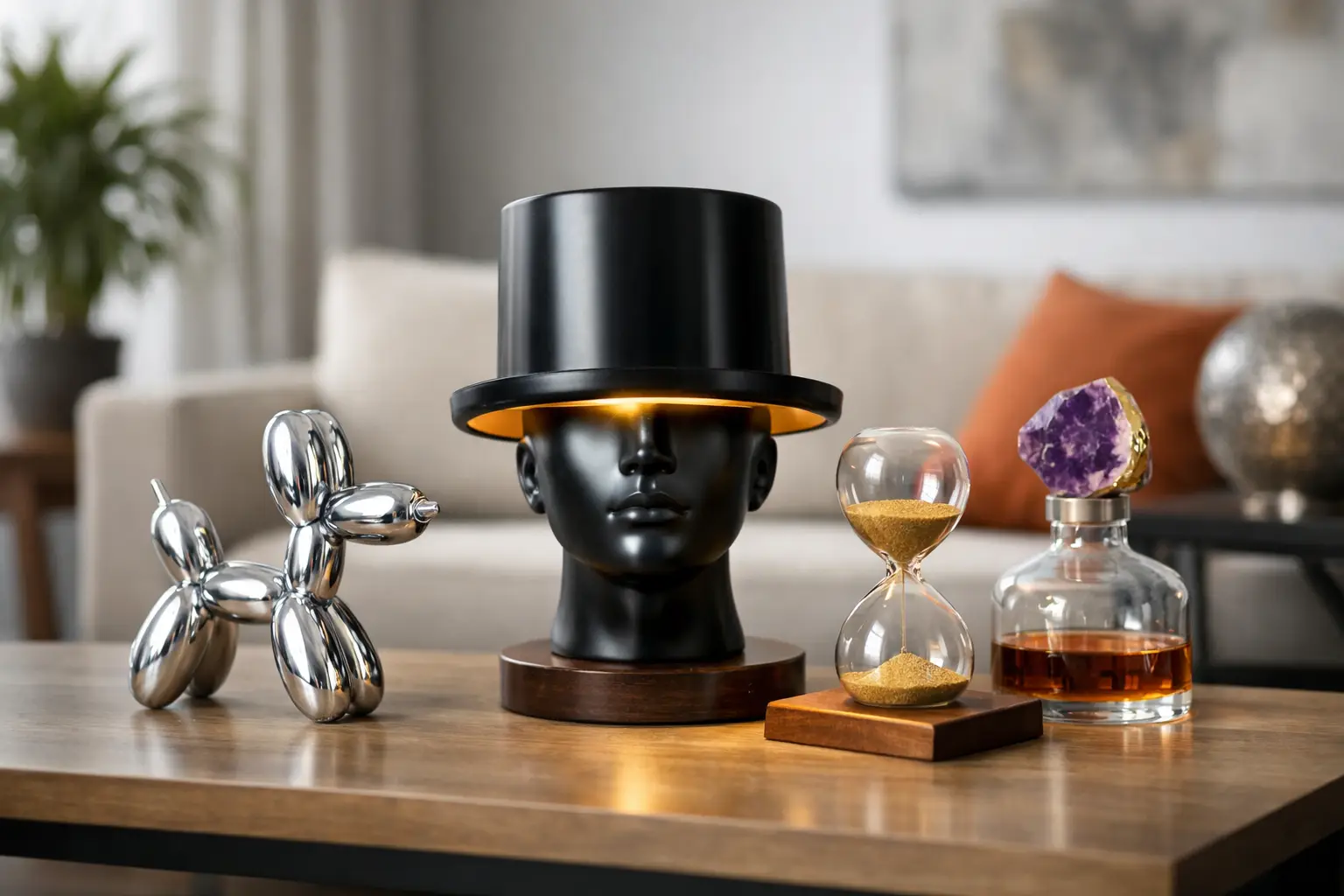
Some homes look polished, but say very little. Others hold your attention within seconds – not because they are perfect, but because something in the room has a story. A framed lyric that takes someone back to their first gig. A nostalgic print that sparks a laugh. A keepsake object on a shelf that makes guests ask, “Where did you find that?” That is the quiet power of conversation piece home accessories.
They do more than decorate. They reveal taste, memory, humour, heritage and the moments that matter. The best ones are not chosen to impress in a showy way. They are chosen because they mean something, and that meaning gives a space warmth that mass-produced décor rarely can.
What makes conversation piece home accessories special?
A conversation piece is not simply an unusual object. It is an item with presence. Sometimes that comes from bold design, but more often it comes from emotional pull. It might remind you of a favourite era, a beloved song, a family milestone or a personal obsession you are proud to put on display.
That is why the most memorable homes rarely feel over-styled. They feel lived in. Their accessories are not fillers. They act like little anchors of personality throughout a room.
A vintage-inspired music print can shift the mood of an entire hallway. A personalised artwork piece can turn a quiet corner into something deeply intimate. A nostalgic collectable on a mantelpiece can bridge generations, giving older memories and newer interiors a place to meet. The object matters, of course, but the reaction it creates matters just as much.
The difference between statement décor and a real talking point
Not every striking accessory becomes a true conversation piece. Some items are visually loud but emotionally empty. They catch the eye for a moment, then fade into the background because there is nothing behind them.
A real talking point has a layer underneath the look. It invites curiosity. There is context, memory or meaning attached to it. That might be a bespoke keepsake created to mark an anniversary. It might be memorabilia that reflects a lifelong love of music. It might be a piece of homeware that feels playful, nostalgic or rooted in a moment from the past.
This is where thoughtful curation matters. If every item in a room is shouting for attention, none of them truly land. Conversation piece home accessories work best when they are given space to breathe. One shelf, one wall, one side table – often that is enough.
Why personal meaning always outlasts trends
Trends can be fun. They can refresh a room and introduce new colours, shapes and moods. But trend-led décor often has a short emotional shelf life. What feels current one season can feel anonymous the next.
Pieces tied to personal memory behave differently. They tend to stay relevant because they are connected to identity rather than fashion. A framed reminder of a meaningful date, a nostalgic artwork inspired by a place you once loved, or a collectable that echoes your youth can continue to feel right even as everything else around it changes.
That does not mean every item has to be deeply sentimental. Sometimes charm is enough. Sometimes wit is enough. But when a home accessory carries some trace of your own story, it gains a kind of permanence. It becomes part of the home’s character rather than a temporary styling choice.
How to choose conversation piece home accessories without cluttering a room
There is a fine line between a characterful interior and one that feels crowded. If you love keepsakes, collectables and expressive styling, that balance matters.
The first question is not “Does this match?” but “Does this belong?” Belonging can come from colour, scale or theme, but it can also come from emotional logic. A room centred around music, memory or family history can hold more personality-led pieces because there is a thread connecting them.
Scale matters too. A single large artwork with a strong story can be more effective than five smaller objects competing for attention. Likewise, if you have a shelf full of meaningful treasures, simpler furniture and calmer wall colours will help those details stand out.
It also helps to vary the way stories appear in a space. Not every conversation piece has to be framed or displayed in the same format. Mixing artwork, decorative objects and personalised keepsakes creates rhythm. The room feels collected rather than staged.
The rooms where these pieces shine brightest
Some parts of the home naturally invite conversation. Hallways are one of them. People pause there, arrive there, leave from there. A memorable print or nostalgic object in that space can set the tone immediately.
Living rooms are the obvious home for character pieces because they are shared spaces. This is where guests notice details, where families relax, and where stories tend to resurface. A music-themed artwork, commemorative item or unusual decorative object often feels most at home here.
Dining areas work beautifully too, especially if you enjoy hosting. A room built for gathering deserves objects that encourage reminiscence and curiosity. Even a small shelf of meaningful collectables can make the space feel richer and more personal.
Bedrooms are quieter, but no less suited. In fact, this is often where the most intimate pieces belong. Personalised artwork, sentimental keepsakes and memory-led accessories can bring comfort as well as style, particularly when they reflect relationships, milestones or treasured passions.
Nostalgia gives a home soul
There is something special about living with reminders of another time. Nostalgia softens a room. It adds familiarity, warmth and a sense of continuity. It tells you that home is not only about where you are now, but also about where you have been.
That might mean displaying memorabilia that reflects a favourite decade, surrounding yourself with references to music that shaped your life, or choosing objects that echo childhood, family traditions or local history. These details often create the strongest emotional response because they connect decoration with memory.
Nostalgia does come with a trade-off, though. Too much can tip a space into museum territory if there is no contrast. The answer is not to avoid it, but to edit with intention. Pairing nostalgic accessories with fresh framing, clean lines or modern surroundings helps them feel alive rather than frozen in time.
Bespoke pieces tell the richest stories
There is a particular magic in owning something made with your story in mind. Bespoke accessories carry a different kind of energy because they could not belong to just anyone. They are rooted in a date, a song, a person, a place, a memory.
For gift buyers, that makes them especially meaningful. A personalised keepsake or commissioned artwork can hold far more emotional value than a generic decorative item, even if the price point is similar. It says, “I saw your story, and I wanted to honour it.”
For your own home, bespoke pieces can become the emotional centre of a room. They often do not need to be grand. A carefully designed print, a memory-led artwork or a commemorative object can carry enough feeling on its own. At RUhavinit?, that sense of personal storytelling sits at the heart of what makes a piece lasting rather than merely lovely.
Styling with heart, not just polish
The most memorable interiors are not built by following rules too rigidly. They are built by trusting what feels resonant. A home should reflect the people inside it, not just the pages of a catalogue.
That may mean displaying something a little unexpected. Something playful. Something beautifully specific to your life. Maybe it is a nod to a treasured artist, a milestone worth framing, or a collectable that still gives you that little rush of joy every time you pass it.
Good styling does matter, of course. Framing, placement and balance all help a piece shine. But polish should support personality, never replace it. If an item makes you smile, prompts a memory or invites a story, it is already doing the most important work.
The loveliest homes are rarely the ones with the most expensive things. They are the ones that leave an impression because they feel unmistakably personal. So when you choose accessories, choose the pieces that speak back to you – the ones with history, heart and just enough spark to start a conversation.
Leave a Reply