
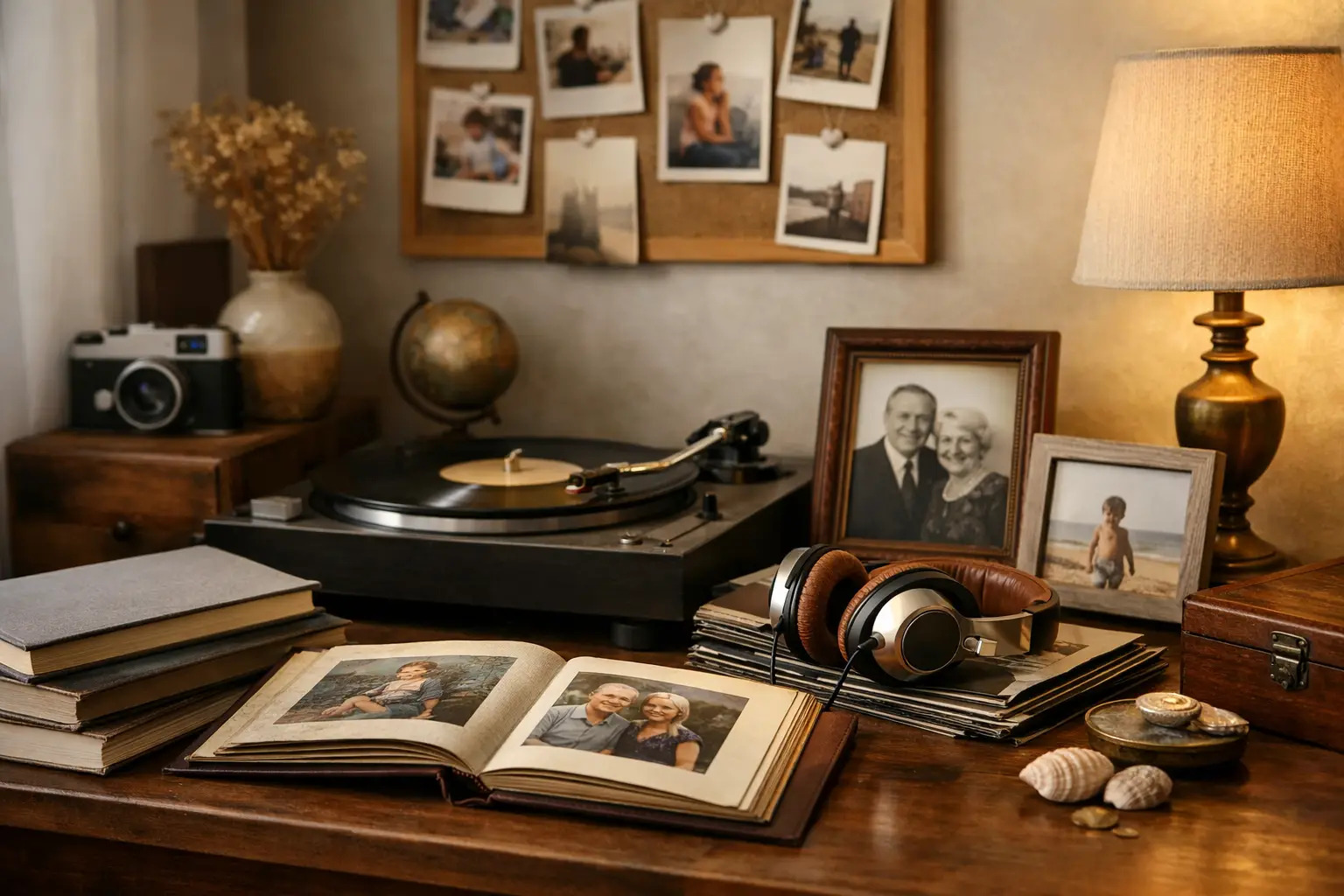
Some rooms look finished, but never quite feel like home. Then there are spaces with an old concert ticket framed on the wall, a record sleeve on a shelf, or a lamp that reminds you of your grandparents’ sitting room – and suddenly the whole place has a heartbeat. That is the charm of nostalgic home decor ideas. They do more than style a room. They bring your story into it.
The most memorable interiors are rarely built from trends alone. They are layered with pieces that mean something – objects that spark recognition, comfort, laughter, and the kind of quiet feeling that says, this is mine. Nostalgia in the home is not about recreating the past exactly as it was. It is about borrowing its warmth, texture, and emotion, then shaping it around the life you live now.
Why nostalgic home decor ideas resonate so deeply
Nostalgic decor has a different energy from purely aesthetic styling. A home can be beautifully designed and still feel distant if nothing in it reflects the people who live there. A nostalgic piece changes that. It can recall a first dance, a favourite band, a family holiday, a childhood kitchen, or the era that formed your taste.
That emotional pull is what makes it lasting. Trends move on, but memory-led interiors keep their place because they are personal. A framed lyric print might not match every design rule, yet if it brings back a chapter of your life every time you pass it, it earns its space far more honestly than a fashionable object bought to fill a corner.
There is a balance, of course. Too much nostalgia can tip a room into clutter or make it feel more like storage than sanctuary. The secret is curation. Choose pieces with meaning, then give them room to speak.
Start with one memory, not one style
When people think about nostalgic decor, they often begin with an era – the 70s, the 80s, mid-century, vintage cottage. That can work, but the more meaningful route is to begin with a memory. A style period gives you a look. A memory gives you soul.
Perhaps your starting point is music. Maybe it is family traditions, seaside holidays, old cinemas, dance halls, Sunday roasts, or the kind of floral wallpaper you swore you had outgrown until one day it felt comforting again. Once you know the feeling you want to keep close, the room begins to take shape with more clarity.
This also stops nostalgic styling from becoming costume-like. Your home does not need to become a museum of one decade. It should still support your life now, with comfort, practicality, and enough breathing space to feel calm.
1. Build a memory wall with intention
A gallery wall is one of the most natural nostalgic home decor ideas because it can hold many small stories at once. The key is to avoid making it look random. Mix framed photographs with ticket stubs, postcards, song lyrics, old family recipes, sketch-style prints, and personal artwork. If a piece carries a story, it belongs in the conversation.
Keep the frames connected in some way, whether through colour, material, or scale. That gives the display a curated feel, even when the contents are wonderfully eclectic. Black frames feel crisp and modern. A blend of brass, wood, and painted finishes feels softer and more lived-in.
Not every item needs to be old. Sometimes a newly made personalised artwork based on a cherished memory carries more presence than a faded original tucked away in a drawer.
2. Let music shape the room
For many people, nostalgia begins with a soundtrack. Music-themed decor can be powerful because it connects memory to mood so instantly. A favourite album, gig poster, lyric print, or vintage-inspired memorabilia can become the emotional anchor of a room.
This works especially well in lounges, home offices, and reading corners where personality matters. A record display shelf, framed sleeves, or a statement piece that nods to an artist or era you love can create atmosphere without overwhelming the space.
There is a trade-off here. Too many references can make a room feel themed rather than personal. Choose the pieces that still move you, not simply the ones that look retro. The difference shows.
3. Bring back comforting patterns and textures
Sometimes nostalgia lives less in objects and more in the feeling of a fabric, the glow of a lampshade, or the softness of a faded print. Florals, gingham, velvet, lace, warm wood, pleated shades, embroidered cushions, and richly textured throws all carry a sense of familiarity when used thoughtfully.
If you love the idea but do not want your home to feel old-fashioned, keep the backdrop simple. A neutral wall with one patterned armchair or a clean-lined sofa with vintage-inspired cushions can offer the right note without making the room feel heavy. Nostalgia is often strongest when it arrives in gentle touches.
4. Display keepsakes as part of everyday life
The pieces people treasure most are often hidden away for safekeeping. Yet nostalgic decor becomes most powerful when those keepsakes are allowed into daily view. A decorative shelf can hold old cameras, miniature collectables, family heirlooms, holiday finds, or little objects linked to personal milestones.
Grouping matters. A single keepsake can get lost. Three or five together create presence. Vary the heights, add a book or candle for balance, and leave some empty space around the arrangement so each item can be noticed.
This is where a curated approach matters most. Display what carries emotional weight, not everything you own. A room should feel reflective, not overfilled.
5. Use personalised art to preserve a moment
There is something quietly moving about seeing a personal memory translated into art. It might be a meaningful date, a beloved song, a place that changed your life, or a visual tribute to a shared story. Personalised artwork gives nostalgia a fresh form – one that feels lasting, stylish, and unmistakably your own.
This is especially useful if your treasured originals are fragile, mismatched, or difficult to display. Bespoke pieces can honour the memory while fitting beautifully into your home. For those who want decor to feel both artistic and heartfelt, this approach often strikes the perfect balance.
At RUhavinit?, this kind of memory-led creativity sits at the heart of what makes a home feel individual rather than assembled.
6. Create one corner that feels like a time capsule
Not every room needs to carry the full nostalgic story. Sometimes one dedicated corner does the job better. A reading chair beside a retro lamp, a shelf of treasured books, a framed print from your youth, and a side table with objects collected over time can form a small, intimate world within the larger room.
This works beautifully in homes where you want emotional richness without visual overload. It also lets you indulge a stronger aesthetic – perhaps a more vintage mood or a music-inspired setup – while keeping the rest of the space lighter and more contemporary.
The most successful corners feel edited. Think atmosphere, not accumulation.
7. Mix old and new for a lived-in look
A nostalgic home rarely feels right when everything in it is from one era or one shop. The charm comes from contrast. A sleek modern sofa can sit happily beside a vintage sideboard. Contemporary walls can hold old family photographs. A fresh, airy bedroom can still include a restored bedside lamp that feels wonderfully familiar.
This mix keeps nostalgia from feeling stuck in the past. It also makes older or sentimental items stand out more beautifully. When everything is vintage, nothing becomes special. When one or two meaningful pieces sit among modern elements, they take on more presence.
This approach is also practical for real homes and real budgets. You do not need to redecorate from top to bottom to bring memory into a space.
8. Tell stories through seasonal swaps
Nostalgia often changes with the time of year. Autumn may stir memories of school days, firesides, and old wool blankets. Christmas brings heirloom ornaments, familiar songs, and decorations that return like old friends. Summer might call for seaside finds, faded postcards, or picnic prints.
Rotating smaller decor pieces with the seasons keeps nostalgia fresh rather than static. It also allows different parts of your story to surface throughout the year. A home that evolves gently often feels more personal than one fixed look left untouched.
9. Choose conversation pieces, not filler
The best nostalgic decor has a magnetic quality. Someone notices it and asks, where did that come from? Then the story begins. Those pieces might be personalised, collectable, handmade, music-led, or simply unusual in a way that stirs recognition.
This is a useful test when styling your home. Does the object say something about you, or is it just filling space? Meaningful decor tends to outlast filler because it creates connection, both for you and for the people who visit.
Nostalgic home decor ideas should still feel like now
The goal is not to live in yesterday. It is to let yesterday add depth to today. The most beautiful nostalgic homes are not trapped in one moment. They are thoughtful, expressive spaces where memory sits comfortably beside modern life.
So if you are drawn to nostalgic home decor ideas, trust the pieces that stir something real. Start with one shelf, one wall, one corner, one song, one story. Home becomes far more special when it reflects not just your taste, but the moments that made you.
Leave a Reply