
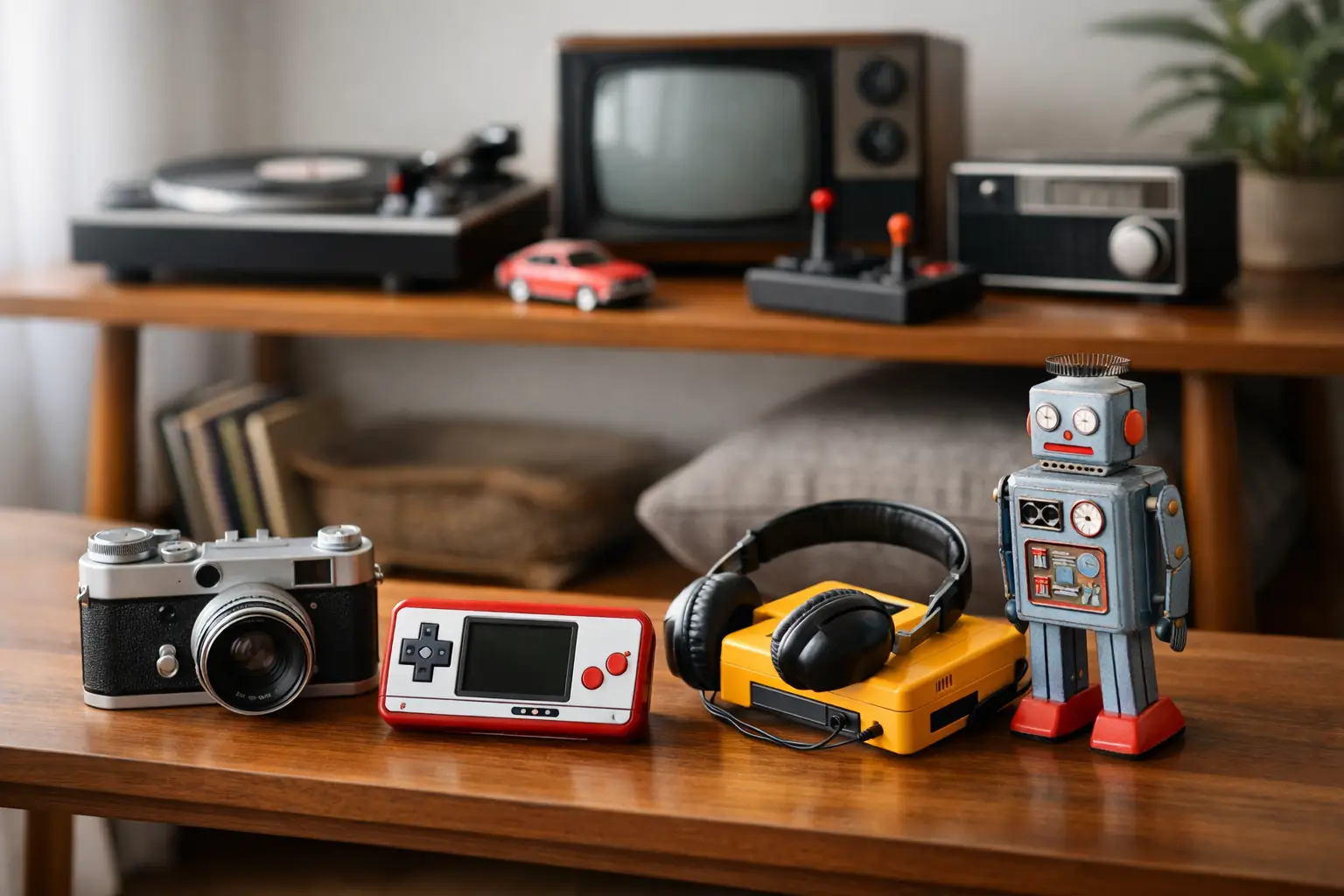
A faded gig ticket in a frame. A tin sign that once hung in a corner shop. A transistor radio that no longer plays, but still somehow fills a room with atmosphere. That is the quiet magic of retro collectables for display – they do more than decorate a shelf. They hold a feeling, a decade, a version of you.
The most memorable interiors rarely come from buying everything at once. They are built piece by piece, often around objects that mean something. Retro display pieces have that rare ability to add character without trying too hard. They soften a space, start conversations, and remind us that home should look lived in, loved, and unmistakably personal.
Why retro collectables for display feel so timeless
There is a reason vintage-inspired styling never truly disappears. Retro pieces carry visual warmth that many modern items cannot imitate. The worn edges, old typography, analogue details and familiar colours all speak to a time when objects were made to be kept, repaired and admired.
But the appeal is not only aesthetic. Nostalgia plays a powerful part. A record sleeve might remind you of your dad’s favourite album. An old biscuit tin may bring back your nan’s kitchen. A film poster, toy car or enamel sign can reconnect you with a chapter of life you thought had been packed away. Displaying these pieces is not about cluttering a room with old things. It is about giving memories a place to live.
That said, not every retro item belongs on show. Some objects are best stored, while others deserve pride of place. The difference often comes down to story, condition and how naturally the piece sits within your home.
Choosing retro collectables for display with meaning
The strongest displays usually begin with a theme, even if it is a loose one. Music memorabilia, old advertising, childhood toys, transport pieces, kitchenware, holiday souvenirs – each can create a different mood. When the items connect to your own life, the result feels far more moving than a shelf styled to follow a trend.
Music-themed pieces are often especially powerful because they tie memory to sound. Vinyl records, framed setlists, vintage-style concert imagery, cassette displays and retro microphones can all create a corner with real soul. They work beautifully in living rooms, hallways and home offices because they feel collected rather than manufactured.
Printed ephemera has a quiet charm too. Old postcards, matchbox labels, ticket stubs and magazine covers can be framed in groups to create a gallery wall that feels intimate and layered. These are often smaller pieces, but that can be an advantage. They invite people to step closer.
Then there are practical collectables that double as decor – typewriters, rotary phones, clocks, cameras, radios and old storage tins. These pieces bring shape and texture as well as nostalgia. Even if they are no longer used in the everyday sense, they still serve a purpose by grounding a room in personality.
The key is not to choose what looks oldest. Choose what stirs something.
How to style retro collectables for display without making a room feel crowded
A meaningful collection should feel curated, not crammed. This is where restraint matters. One striking object on a mantelpiece can carry more presence than ten smaller pieces squeezed together with no breathing room.
Start by thinking in layers. A framed print at the back, a smaller keepsake in front, and perhaps one object with height beside it can create depth without fuss. Grouping by colour, material or era can help a display feel intentional, especially if your collection spans different decades.
Shelving works well for collections that evolve over time. You can move pieces around, add seasonal finds, and keep the arrangement feeling alive. If your items are delicate or especially valuable, a glazed cabinet offers protection while still letting them be seen. This can be a lovely choice for signed memorabilia, miniature collectables or fragile ceramics.
Wall space is often overlooked. Framing retro paper items, vinyl sleeves or old photographs keeps them safe and turns them into art. In smaller homes, this is an elegant way to display meaningful pieces without sacrificing surfaces.
It also helps to balance retro items with cleaner, simpler surroundings. Too many competing patterns, colours or accessories can make a room feel busy. A few nostalgic pieces against calm walls, natural wood or soft textiles often have greater impact. The contrast lets each item speak.
The beauty of mixing old stories with modern interiors
One of the loveliest things about retro styling is that it does not require a fully vintage home. In fact, retro collectables often look even more striking in modern spaces. A sleek shelf with a weathered record player. A minimalist hallway with framed black-and-white music prints. A contemporary kitchen with a row of old advertising tins. These combinations feel fresh because they mix memory with the present day.
This is where personality has room to breathe. You are not trying to recreate a museum or lock your home into one era. You are choosing touchpoints from the past that still resonate now. That balance matters.
There is also freedom in mixing the polished with the imperfect. Scuffed edges, faded labels and signs of age are not flaws to hide. They are part of the piece’s history. Of course, condition still counts. If an item is damaged to the point that it looks neglected rather than characterful, it may need restoring, reframing or displaying more thoughtfully. It depends on the object and the feeling you want the room to hold.
What makes a display feel personal rather than performative
The most engaging displays tend to reveal something true about the person who created them. They are not assembled for effect alone. They say something about where you’ve been, what you love, who you miss, what music shaped you, or which little symbols of the past still make you smile.
That might mean pairing a vintage-style print with a personalised keepsake. It might mean placing your grandad’s old camera beside a framed lyric that always takes you back. It might mean building a display around one treasured object and letting everything else support that story.
This is often where bespoke pieces come into their own. A custom artwork inspired by a first dance, a favourite venue, a childhood street or a beloved song can sit beautifully among original retro items. The old and the newly made begin to speak to each other. At RUhavinit?, that blend of nostalgia and personal storytelling is exactly where display becomes something deeper than decor.
Where retro display pieces work best in the home
Living rooms are the natural heart of nostalgic styling because they invite conversation. A shelf of music memorabilia, framed prints above a sideboard, or a few treasured objects on a coffee table can make the space feel warm and unmistakably yours.
Hallways are brilliant for smaller displays. They set the tone the moment someone steps through the door. A cluster of framed retro pieces or a narrow shelf with a few carefully chosen collectables can create immediate charm.
Home offices benefit from character too. Retro desk accessories, old cameras, typewriters or record-related pieces can make the room feel more inspiring and less functional. Even a single object with personal meaning can shift the mood.
Bedrooms call for gentler nostalgia. Here, sentimental pieces often work best – framed photographs, postcards, keepsakes from concerts, or vintage-inspired art that carries emotional comfort rather than visual noise.
Collect slowly, display thoughtfully
There is no prize for filling every shelf quickly. The most beautiful collections often take time. They are gathered from markets, family homes, travels, chance finds and meaningful commissions. They change as life changes.
It is worth leaving space for that evolution. A display should not feel finished forever. One season you may lean into music memories, another into travel keepsakes or old family treasures. Let the arrangement move with you.
If you are just beginning, start with one piece you truly love. Build around it only when the right items come along. This keeps the collection honest. It also stops nostalgia from becoming visual noise.
Retro collectables for display are at their best when they make a home feel more human – layered, storied and full of little echoes from the past. Not everything old belongs on a shelf, and not every room needs a nostalgic corner. But when the right piece finds the right spot, it can change the whole feeling of a space. Sometimes all it takes is one object with history, and suddenly the room remembers something too.
Leave a Reply