
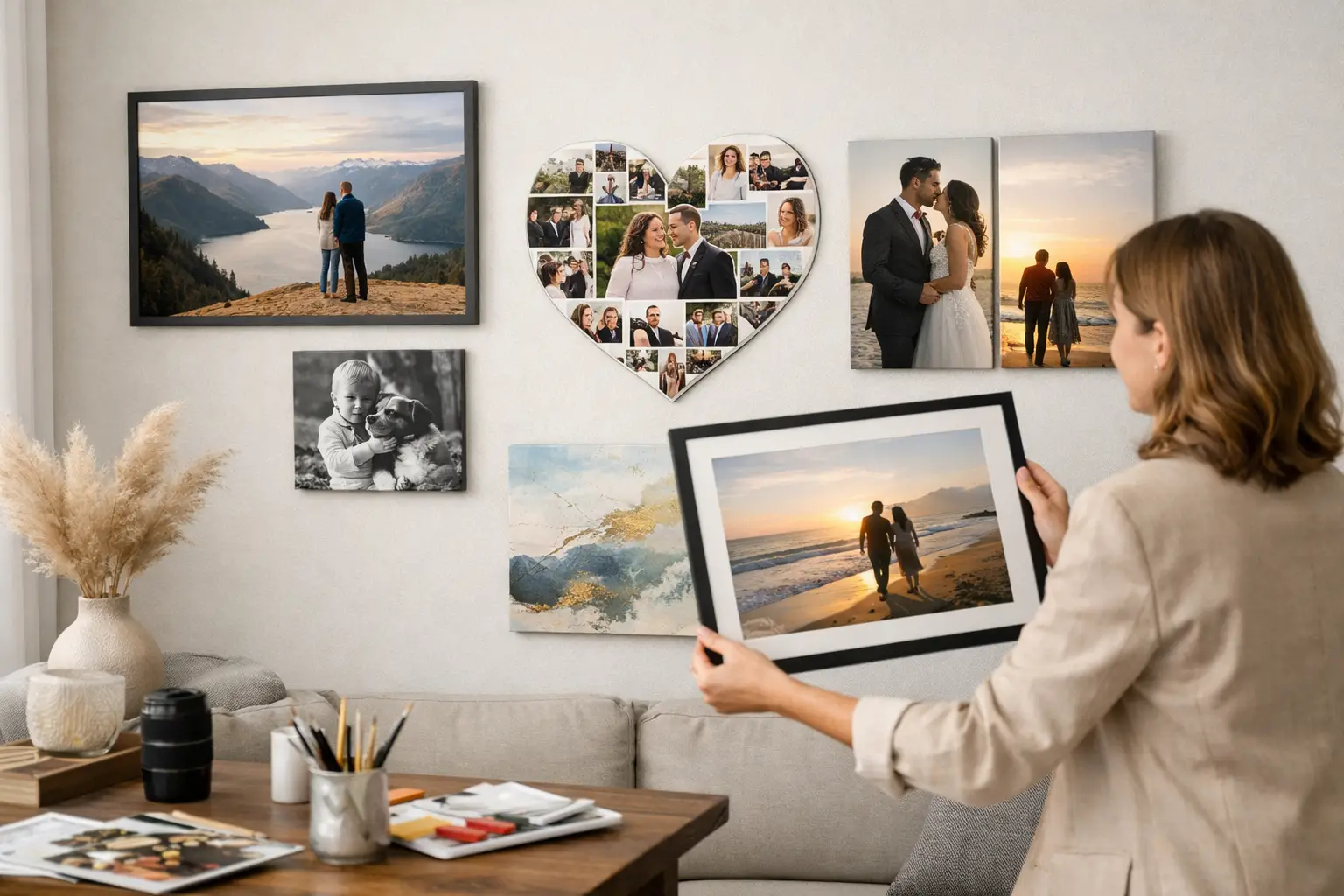
Some walls hold a room together. Others hold a life.
That is the quiet power of bespoke wall art. It does more than fill a blank space above a sofa or soften a hallway. It carries meaning into the everyday – a song that changed everything, a place you still think about, a date that deserves more than a line in a diary. When art is made around your memories, your style and your story, it becomes part of the home in a way off-the-shelf décor rarely can.
Why bespoke wall art feels different
There is nothing wrong with buying a print because the colours work with the curtains. Sometimes that is exactly what a room needs. But bespoke wall art speaks to something deeper. It turns decoration into connection.
A personalised piece often starts with a moment. It might be a wedding song, a favourite lyric, a treasured photograph, an old ticket stub, a family saying or a place tied to someone you love. These details may seem small on their own, yet together they create the sort of visual story that makes people stop, look twice and ask, “What is the story behind that?”
That is where the emotional weight comes in. A room begins to feel less styled and more lived in. More yours. The art is not there simply to match a scheme. It reflects identity, memory and taste in one piece.
The memories worth putting on the wall
The most moving artwork often comes from the things people already hold close. Music is a perfect example. A first dance track, the album that soundtracked your youth, a gig that still gives you goosebumps – these memories already live vividly in the mind. Giving them visual form makes them tangible.
Then there are family milestones. New babies, anniversaries, birthdays, retirements, first homes and golden moments that deserve more than a frame on a shelf. Bespoke artwork can capture these occasions with far more character than a standard photo print. It can blend names, dates, meaningful places and design details into something layered and lasting.
Nostalgia has its own charm too. Old streets, vintage references, sporting memories, childhood favourites, beloved films or cultural moments from a particular era all make rich starting points. For collectors and sentimental decorators alike, these are not random themes. They are pieces of personal history.
Bespoke wall art in a home that feels personal
Homes with soul are rarely built in one shopping trip. They come together over time through objects that mean something. That is why bespoke wall art works so beautifully in spaces that are meant to feel warm, individual and story-led.
In a living room, a custom piece can become the emotional centre of the space. It gives guests something to notice and gives you something to enjoy every day. In a bedroom, it can be softer and more intimate – perhaps a place, phrase or song that brings comfort. Hallways and landings are often overlooked, yet they are ideal for memory-led artwork because they naturally lead people through the story of a home.
Kitchens, home offices and music rooms can carry this idea just as well. A typographic piece based on a family recipe, a print inspired by a treasured record, or artwork marking a creative milestone can make these spaces feel less functional and more expressive.
The key is not to force sentiment into every corner. Too many heavily personal pieces in one room can feel crowded. It depends on the style of the home and how quietly or boldly you want the story to sit. Sometimes one carefully chosen artwork says more than a gallery wall ever could.
What makes a bespoke piece truly successful
Personal does not have to mean busy. In fact, the strongest bespoke work usually balances emotion with restraint.
A successful piece starts by knowing what matters most. Is it the wording? The date? The location? The mood of a song? The texture of a memory? Once that central idea is clear, the design can support it rather than compete with it. This is where bespoke work differs from simply adding a name to an existing template.
Colour matters too, but not only in a decorative sense. Soft neutrals can give a piece timeless calm. Rich tones may bring drama and nostalgia. Brighter palettes can capture celebration and energy. The right choice depends on both the room and the feeling you want to preserve.
Scale is just as important. A deeply meaningful piece that is too small can disappear. One that is too large may overpower the space. Bespoke art should feel considered, not squeezed in as an afterthought.
Then there is framing and finish. Clean, simple framing can let the story shine. More characterful finishes may suit vintage or music-inspired artwork. Neither is automatically better. It depends on whether you want the piece to blend into the room or announce itself proudly.
Choosing bespoke wall art as a gift
Some of the most cherished gifts are the ones that prove someone has really paid attention. Bespoke wall art does exactly that.
It is especially powerful for occasions that carry feeling but can be difficult to buy for – milestone birthdays, anniversaries, weddings, housewarmings, retirements and memorial tributes. A custom artwork says, “This moment mattered, and I wanted to honour it properly.” That is a very different gesture from buying something attractive but generic.
There is, however, a balance to strike. The best personalised gifts feel thoughtful rather than overdesigned. If the recipient prefers a minimal home, a loud collage of memories may not be right. If they are a music lover with a flair for the dramatic, something bolder could be exactly the point. Good bespoke gifting is not only about the story. It is about the person receiving it.
This is often why collaboration matters. When a maker listens carefully, the final piece can feel both deeply personal and beautifully resolved. At RUhavinit?, that meeting point between memory and artistry is where bespoke work becomes something more than a present. It becomes part of someone’s home and history.
How to commission bespoke wall art with confidence
The idea of commissioning something custom can feel slightly daunting at first, especially if you are not used to talking in design terms. The good news is that you do not need to arrive with a polished brief. What you do need is a clear sense of what the piece should honour.
Start with the story. Ask yourself what memory, person, place or passion you want the artwork to preserve. Then think about where it will live. A hallway piece may suit a different shape and tone from something intended for above a mantelpiece.
It also helps to gather reference points. These might be photographs, songs, dates, colours, phrases or objects connected to the memory. You do not need every detail, but a few strong anchors can guide the creative direction.
Be honest about style. If you prefer understated design, say so. If you love nostalgia, layered detail or a little visual drama, that matters too. Bespoke work should not reflect a trend you might tire of next year. It should feel like a natural extension of your taste.
Finally, leave room for interpretation. The beauty of commissioning art lies in the collaboration. If every element is rigidly fixed from the start, some of the magic can be lost. The strongest results often come when personal meaning meets creative instinct.
Why meaningful art lasts
Trends move quickly. One year it is abstract shapes, the next it is maximalist colour, then pared-back minimalism returns again. Bespoke wall art sits slightly outside that cycle because its value is not based only on what is fashionable. It lasts because the story lasts.
That does not mean every piece needs to be solemn or serious. Joy belongs on the wall as much as reverence does. So does humour, obsession, fandom and the playful kind of nostalgia that takes you straight back to a certain time of life. Meaningful art can be elegant, quirky, romantic or bold. What matters is that it rings true.
When people choose pieces that reflect who they are, their homes start to feel warmer and more memorable. Not staged. Not copied. Simply personal.
If a wall in your home has been waiting for something that feels more like a memory than a decoration, that is usually the sign to look beyond the ordinary and create something with a story worth keeping.
Leave a Reply