
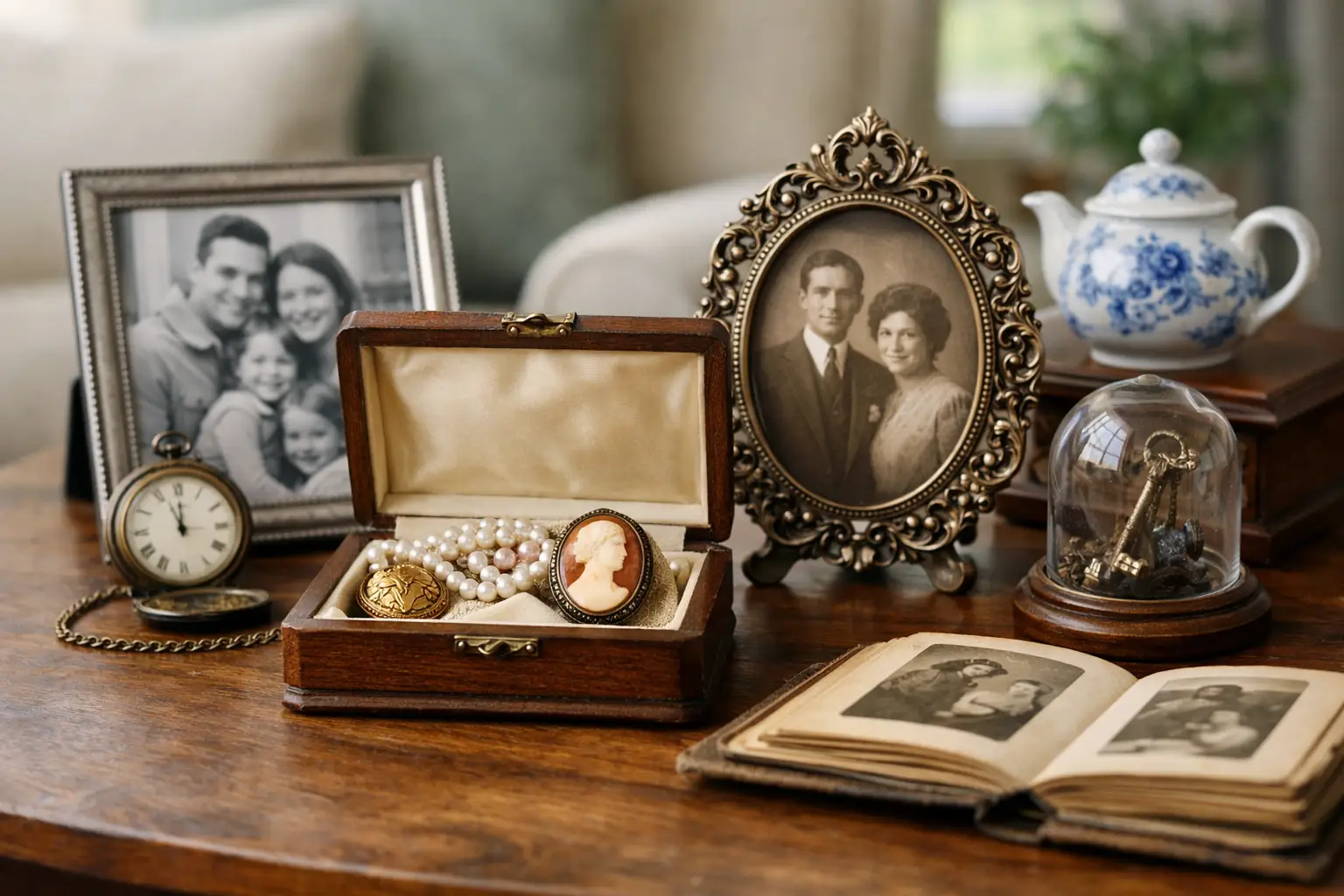
A pocket watch that stopped at the same minute for years. A set of mismatched teacups brought out only on Sundays. Your dad’s first gig ticket, creased at the edges but impossible to throw away. The most creative ways to showcase family heirlooms begin by seeing these pieces not as things to store safely out of sight, but as fragments of a story still worth telling.
An heirloom does not need to be expensive, antique or formally inherited to matter. It may be a recipe written in your nan’s handwriting, a beloved record collection, a wedding photograph, a military medal, or the little ceramic dog that always stood on a childhood mantelpiece. When displayed with intention, these objects give a home character that no catalogue can copy.
Let the story lead the display
Before choosing a shelf, frame or cabinet, pause over the memory. Who did this belong to? What does it represent? Why do you want to see it rather than keep it tucked away? A strong display has a point of view. It makes room for the object and the feeling it carries.
A handwritten label can be enough. Frame a short note beside a treasured photograph: a name, a date, a place, or one line of family lore. If your grandfather’s camera travelled with him on holiday, show it with a black-and-white print he took. If you have inherited jewellery that is too delicate for daily wear, place it in a small glass box with a copied photograph of the person who wore it.
This is not about turning your home into a museum. It is about giving visitors, children and future generations a way into the memory. The best pieces invite the question, “What is the story behind that?”
Create a gallery wall with a family pulse
Gallery walls are often filled with prints chosen for colour or style. A family gallery can hold something deeper. Mix old photographs with handwritten letters, concert stubs, postcards, sheet music, small sketches and copied recipe cards. The result can feel beautifully collected rather than overly formal.
Choose one linking thread so the arrangement feels calm. This might be black frames, warm oak, cream mounts, a shared palette, or a theme such as music, travel or family celebrations. You do not need every item to match. In fact, a little variation lets each memory keep its own voice.
For original photographs or papers, use conservation-friendly mounts and keep them away from direct sunlight. If an item is particularly precious, frame a high-quality copy and store the original safely. The display still tells the story, while the fragile piece gets the care it deserves.
Give everyday objects a frame-worthy moment
Not every heirloom was made to hang on a wall, yet many can be framed. A vintage silk scarf can become soft, colourful artwork behind glass. A collection of old keys can sit in a deep box frame. A child’s first pair of shoes, a wedding invitation, a pressed flower from a meaningful garden or a collection of badges can all become a small visual record of a life.
Deep frames are especially useful because they bring dimension without leaving objects exposed to dust. They are ideal for medals, miniature toys, ration books, treasured postcards and other little pieces that might otherwise disappear in a drawer.
Style a memory shelf, not a storage shelf
Shelves are where heirlooms can live most naturally. The key is editing. A row of every inherited object can look cluttered, while a few carefully chosen pieces become a scene with presence.
Start with one anchor item, perhaps an old radio, a family portrait or a favourite vase. Add two or three supporting pieces with contrasting heights and textures. A small stack of books, a framed photo, a candleholder or a sprig of dried foliage can soften the arrangement without taking focus away from the heirloom.
Leave breathing room. Sentimental objects are often visually rich already, with aged brass, faded paper, patterned china or intricate workmanship. Space allows their details to be noticed.
Rotate the display through the year if you own more pieces than your room can comfortably hold. Bring out festive decorations, summer holiday photographs or a special birthday keepsake when the season or occasion feels right. This keeps the collection alive instead of making it feel fixed behind glass.
Turn inherited textiles into art
Textiles are among the most personal heirlooms, and often the most difficult to display. A quilt made by a relative, embroidered table linen, a christening gown or a sports scarf may hold enormous meaning, but regular use can put it at risk.
A textile can be displayed over a wooden rail, folded at the end of a bed, or draped carefully over the back of a chair in a low-traffic room. For more fragile pieces, professional framing with archival materials is a thoughtful option. It turns needlework, lace or fabric into a focal point while reducing handling.
If the original is too precious or too large, consider using a small section only where appropriate, or photograph it in detail and make the image part of a wider display. That close-up of hand stitching can reveal the human touch behind an object people may otherwise glance past.
Give records, music and memorabilia centre stage
For many families, the heirlooms with the loudest emotional pull are music-related. A parent’s vinyl collection, a signed programme, a battered guitar case or tickets from a first concert can carry an entire era with them.
Display a few favourite album sleeves as changeable wall art rather than hiding every record in a unit. A narrow picture ledge makes it easy to swap them when your mood changes. Frame a special ticket or set list alongside a photograph from the night. Let a vintage instrument stand proudly in a corner, provided it is secure and protected from harsh heat or damp.
The aim is not to make every room look frozen in the past. Pair nostalgic memorabilia with contemporary art, clean-lined furniture or vibrant colour. The contrast makes a space feel personal and lived-in, not themed.
Make a cabinet of curiosities feel like home
A glass-fronted cabinet is a lovely answer for small collectables, delicate china, medals, cameras and objects that deserve protection. But it works best when it feels curated rather than crammed.
Group items by a shared story instead of strict category. A shelf might hold your aunt’s teacup, a photograph of her at the seaside and a shell collected on a family trip. Another might bring together a pocket compass, old maps and a travel diary. Small battery-operated lighting can add warmth, though avoid strong light around textiles, paper and photographs.
If you have several similar pieces, show a selection and keep the rest stored carefully. Editing is not disrespectful. It helps each object be seen.
Build a living heirloom table
Some memories deserve to stay in use. Serving Sunday lunch on inherited plates, pouring tea from a treasured pot, or playing old records on a quiet evening can be a more meaningful tribute than permanent display. The object continues its purpose while becoming part of new family rituals.
There is a trade-off, of course. Fine china chips, silver tarnishes and older objects can be fragile. Use what feels sturdy enough, and let the truly delicate pieces take pride of place behind glass. A little wear is not always a tragedy. Sometimes it is evidence that a loved object has kept company with real life.
A small console table is ideal for creating a changing memory moment. Place an heirloom at its centre, add a framed story or photo, then refresh the supporting details with the seasons. It becomes a quiet welcome home, one that says this space belongs to your people and their history.
Commission a piece that carries the memory forward
Not every heirloom can be displayed in its original form. A photograph may be fading. A sentimental song may exist only in someone’s memory. A treasured object may be too worn, too fragile or simply too small to make an impact on its own.
This is where creative interpretation can be especially moving. A bespoke artwork inspired by a favourite record, a family phrase, a handwritten note or the colours of a much-loved object can preserve the feeling without putting the original at risk. It also gives younger generations something personal to inherit in their own style.
At RUhavinit?, memory-led creations are made for exactly this kind of story: turning an occasion, passion or precious detail into something you can live with, look at and pass on.
The most beautiful heirloom display is not the one that looks perfect. It is the one that makes you stop for a second, remember someone clearly, and feel their place in the home you are creating now.
Leave a Reply