
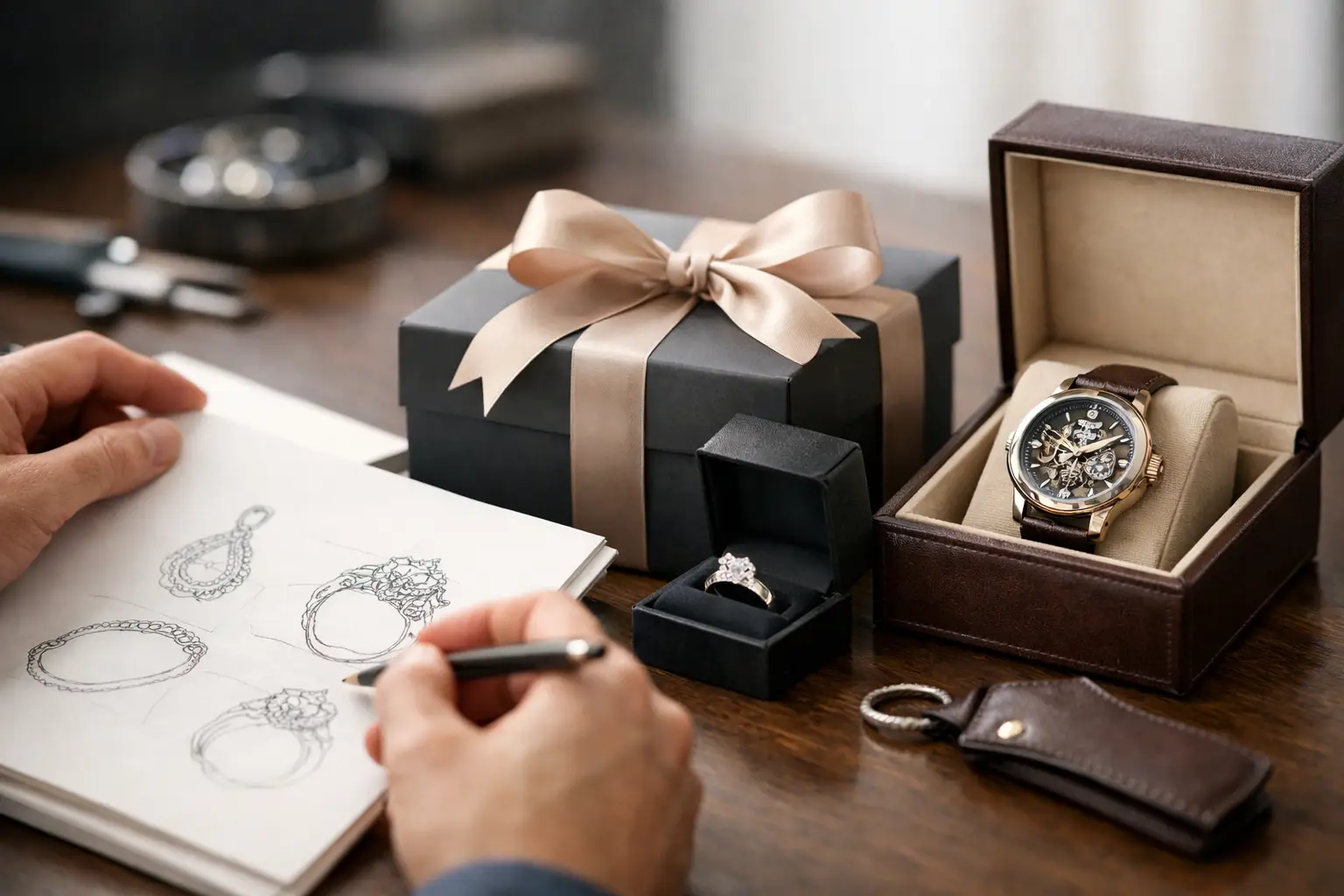
Some gifts are opened, admired and quietly folded into the background. Others stay in view for years because they hold a person, a place, a song, a season of life. That is where this guide to bespoke gift commissioning begins – not with shopping for a thing, but with recognising a story that deserves its own piece.
A commissioned gift feels different because it is built around meaning rather than trend. It might celebrate a first dance, a lifelong love of vinyl, a family saying, a treasured pet, a football memory, or a house filled with inherited rituals. The value is not only in the finished object. It lives in the thought behind it, the care in its making, and the feeling that no one else could have chosen quite the same thing.
Why bespoke gifts matter more than off-the-shelf presents
There is nothing wrong with a beautiful ready-made gift. Sometimes it is exactly right. But bespoke gifting comes into its own when the occasion carries weight or the recipient has a strong sense of identity. A standard present can be lovely. A commissioned one can feel like recognition.
That difference matters for milestone birthdays, anniversaries, memorial pieces, wedding gifts and retirement keepsakes. It also matters for the people who are hardest to buy for – the collectors, the memory-keepers, the ones whose homes are full of objects with a backstory. They are rarely looking for more stuff. They are looking for pieces with soul.
A bespoke commission also allows room for nuance. You are not forced to choose between sentimental and stylish, or nostalgic and contemporary. A good maker can hold those things together, so the final piece feels deeply personal without looking overly literal or overly sweet.
Start with the memory, not the product
The easiest mistake in bespoke gift commissioning is to begin with the item itself. A print, a keepsake box, a framed piece, a decorative object – these are formats, not starting points. The better question is simpler: what are you trying to preserve?
Perhaps it is a moment. Perhaps it is a shared obsession. Perhaps it is a life chapter that changed everything. When you start there, the commission has direction.
Think about the emotional centre of the gift. Is it joy, comfort, pride, tribute, humour, gratitude? A wedding commission might be rooted in romance, but it could just as easily centre on friendship, family history or the song that pulled two people together. A birthday gift might celebrate achievement, but it may carry a stronger note of nostalgia.
This is often where the best ideas emerge. A person who loves music may not want a generic music-themed present. They may want something that echoes the exact record sleeve they played to exhaustion at eighteen, or a visual piece that captures the venue where they saw their favourite band. The more specific the emotional reference, the stronger the result.
How to shape an idea for bespoke gift commissioning
You do not need to arrive with a fully formed creative concept. In fact, many of the best commissions begin as fragments – a photograph, a phrase, a date, a colour palette, a feeling. What helps is gathering those fragments into something a maker can respond to.
Start with the essentials. Who is the gift for? What is the occasion? Why does this memory or theme matter? Then think about the details that bring the story to life. These may include favourite songs, places, family references, treasured hobbies, visual styles, important dates, or objects already meaningful to the recipient.
It also helps to consider where the piece will live. A keepsake for a bookshelf may call for different choices from a wall piece designed to become part of a sitting room. If the recipient leans towards bold conversation-starting décor, the commission can be more expressive. If their taste is quieter, the design may need a gentler hand.
This is where personal curation matters. Brands such as RUhavinit? understand that a commissioned piece should feel lived-in and story-rich, not simply personalised for the sake of it. The aim is not to add a name and date to an object. It is to create something that feels as though it belongs to a life already being lived.
Writing a brief that gives the artist room to create
A strong brief is generous with meaning and clear on practicalities. It does not need to be formal. It just needs to help the maker understand both the emotional purpose and the boundaries.
Share the story behind the gift in plain language. Explain what you love about the idea and what absolutely needs to be included. Then be honest about what is flexible. If the exact lyric matters, say so. If the overall mood matters more than specific imagery, say that instead.
Reference images can be helpful, but too many can create confusion. A handful of examples is usually enough to show tone, colour direction or atmosphere. If you have source material such as photographs, ticket stubs, handwritten notes or record labels, include only what strengthens the story.
Budget and timing should also be part of the conversation early on. Bespoke work takes thought, revisions and making time. If you need something for a birthday in two weeks, that may limit materials, scale or complexity. The earlier you commission, the more freedom there is to make something truly considered.
What to expect from the commissioning process
Every maker works differently, but most bespoke projects move through a similar rhythm. There is usually an initial conversation, then concept development, then some form of approval before the final piece is completed. That process can feel exciting, but it may also ask for patience.
This is worth remembering: bespoke does not mean instant control over every tiny detail. You are commissioning creative interpretation, not ordering a factory-perfect replica of the picture in your head. That is part of the beauty, and occasionally part of the challenge.
The best results come from trust on both sides. You bring the memory, references and intention. The artist brings materials, composition, proportion and instinct. If every decision is over-directed, the final piece can lose its spark. If the brief is too vague, it can miss the mark. The sweet spot sits somewhere between clarity and creative space.
Trade-offs worth thinking about
A bespoke piece is not always the right answer, even for a special occasion. If the recipient prefers practical gifts, a deeply sentimental commission may feel more intense than welcome. If you are working to a tight deadline, a beautifully chosen ready-made piece could be a wiser and kinder choice than rushing a commission.
There is also the question of taste. A gift can be emotionally rich and still feel wrong for the person receiving it if their style has not been considered. This matters especially for homeware and display pieces. The aim is to create something meaningful enough to keep, but beautiful enough to live with.
Price is another honest consideration. Commissioned work often costs more because you are paying for originality, time and artistic labour. That does not mean it has to be extravagant, but it does mean you should budget for craft rather than compare it with mass-produced gifting.
The details that turn a good commission into a cherished one
Often, it is the quieter choices that make a bespoke gift unforgettable. A background colour lifted from an old family kitchen. A lyric that only two people would recognise. A date included subtly rather than boldly. A texture that echoes worn album sleeves or seaside postcards or school exercise books. These details create intimacy.
Restraint matters too. Not every memory needs every reference included. A piece can say more by selecting the right symbols rather than using all of them. Good bespoke design leaves room for feeling. It does not explain everything at once.
Presentation also shapes the experience. If the gift arrives with a note sharing why it was commissioned, the emotional connection deepens before the piece is even unwrapped. That note does not need to be grand. A few sincere lines can be enough to anchor the moment.
A guide to bespoke gift commissioning for different occasions
Different milestones call for different emotional registers. Wedding and anniversary gifts often suit pieces that feel timeless and layered, with references that reveal themselves over time. Birthday commissions can be more playful, especially when they celebrate a defining interest such as music, film, collecting or travel.
Memorial and remembrance gifts need the most sensitivity. Here, subtlety is usually kinder than heavy symbolism. The best pieces offer comfort and presence without forcing emotion. New home commissions often work well when they connect a person’s style with family history, place or a memory they want to carry into a new chapter.
For collectors, the most successful gifts usually respect the world they already love. Rather than choosing something adjacent, commission something that speaks directly to the era, scene or cultural moment that means the most to them.
Choosing something that lasts beyond the occasion
The finest commissioned gifts do not peak on the day they are given. They gather meaning afterwards. They become part of the room, part of the routine, part of the way a person tells their own story. That is why bespoke gifting is less about spectacle and more about permanence.
If you are considering a commission, trust the quieter instinct that brought you there. Follow the memory that keeps returning. Choose the detail that would make the recipient stop, smile and say, how on earth did you think of that?
That is usually the sign you are not just buying a gift. You are giving someone a piece of themselves back, in a form they can hold onto.
Leave a Reply