
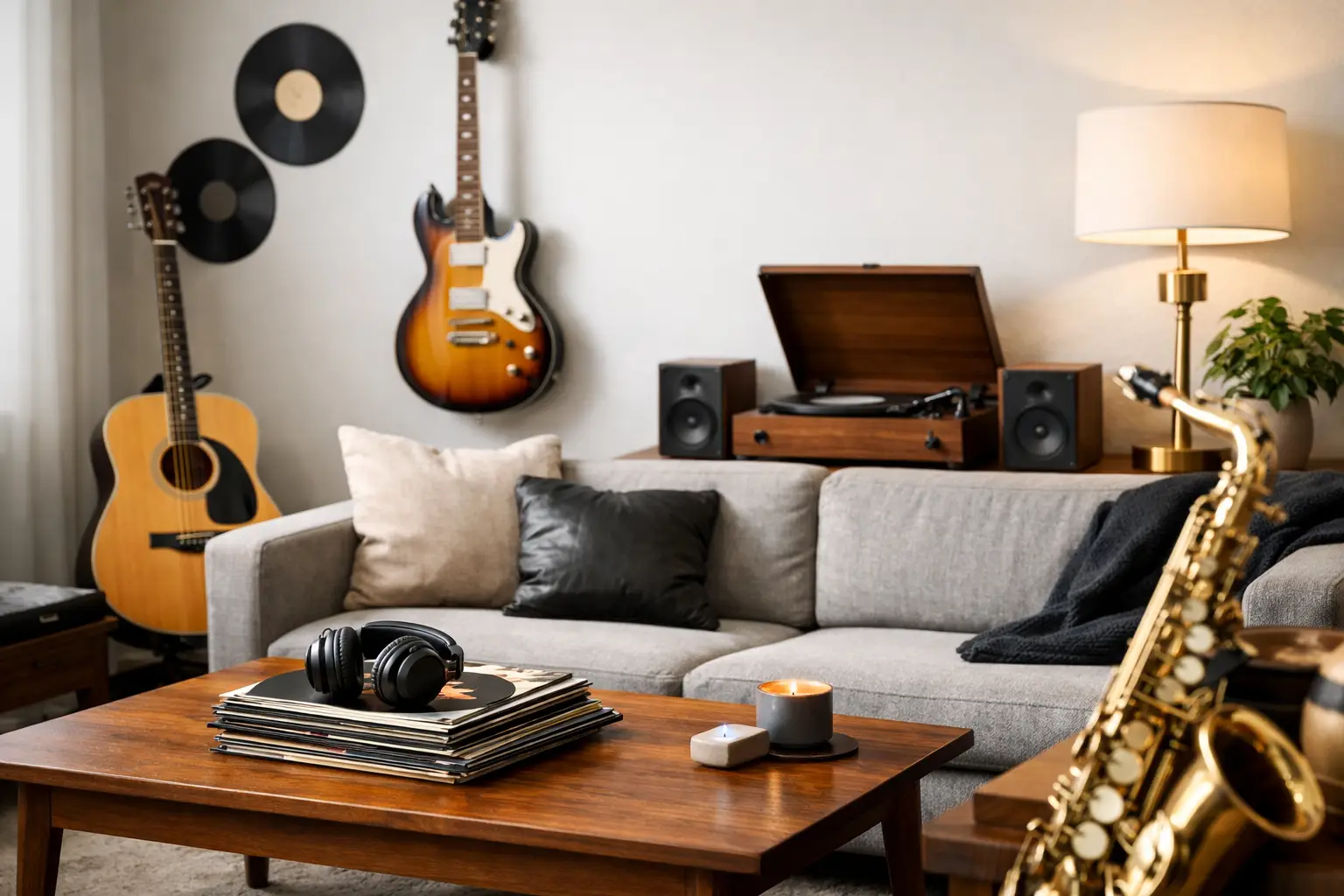
The record sleeve propped beside the turntable. The ticket stub from the gig that changed everything. The song lyric that still takes you straight back to a particular person, place or summer. A guide to music inspired home styling begins here: not with matching cushions or a theme, but with the sounds and stories that have stayed with you.
A music-led home should feel collected rather than staged. It can be bold, quiet, glamorous, raw, playful or deeply nostalgic. Most importantly, it should sound like you, even when the speakers are switched off.
Begin with the music that means something
Before choosing a frame, a shelf or a colour, think about the music already woven into your life. Perhaps your home belongs to a lifelong soul fan, a devoted vinyl collector, a former club kid, a guitarist, or someone whose happiest memories sit inside the lyrics of one much-loved band. These are not small details. They are the starting point for a room with genuine character.
Choose one or two emotional threads rather than trying to display every genre at once. A jazz-inspired corner might lean into warm walnut, soft lamp light and black-and-white photography. A room shaped by 1980s pop could welcome bright colour, chrome details and graphic artwork. For an indie record collection, relaxed textures, faded posters and mismatched frames can feel more truthful than a perfectly polished display.
This does not mean every object has to be music-related. In fact, the most memorable spaces let musical pieces live alongside books, family photographs, ceramics and objects found on holidays. The contrast gives treasured memorabilia room to breathe.
Make your collection part of the room
Records, instruments and gig keepsakes deserve better than being hidden in a cupboard. When displayed with care, they become part of the atmosphere of a home. The key is to treat them as personal artefacts, not clutter.
Give vinyl a proper place
Vinyl brings instant warmth because it is both visual and tactile. A small, regularly played selection can sit in a record crate, cabinet or low shelving unit near the player. Arrange the sleeves with their artwork facing forward from time to time, as you might display a favourite book. Rotating the cover on show keeps the space feeling alive and gives old favourites their moment again.
Avoid filling every surface with records. A packed collection has its own beauty, but it benefits from structure. Store most albums safely upright, away from direct sunlight and radiators, then let a handful of covers take centre stage. The difference is between a storage solution and a visual story.
Frame the moments around the music
A concert ticket, backstage pass, handwritten playlist or set list can carry as much feeling as a signed album. Framing these smaller pieces turns fleeting moments into lasting reminders. Pair them with a photograph from the night, a lyric print, or a date and place written neatly beneath the frame.
You do not need museum-perfect condition for an item to matter. A creased ticket from a first date or a faded flyer from a local venue may hold more life than a pristine poster. Use archival-style mounts where possible, especially for delicate paper, but let the imperfections remain visible. They are part of the memory.
Choose a focal point, not a themed room
The most successful guide to music-inspired home styling advice is simple: create a focal point, then build gently around it. A signed guitar on a wall, a turntable station, a gallery wall of record sleeves or a bespoke piece of lyric artwork can anchor a space without turning it into a rehearsal room.
If you rent, or prefer to keep walls clear, a sideboard can become your music focal point instead. Place a record player there with a lamp, a few chosen albums and one sentimental object. It could be a framed ticket, a miniature instrument, an old radio or a photograph of someone you shared the music with. A small arrangement often feels more intimate than a large display.
For larger rooms, divide the story into zones. The listening area might be warm and inviting, while a hallway gallery can introduce concert memories as guests arrive. This keeps the look considered. It also means your collection can grow without the whole house feeling overwhelmed by one idea.
Let colour follow the feeling
Music can influence colour without becoming literal. You do not have to paint a wall electric purple because a favourite album has a purple cover, although there is no rule against it. Think instead about mood.
Deep greens, tobacco browns, burgundy and brass suit a late-night listening room with a vintage feel. Cream, ochre, rust and soft blue work beautifully with folk, acoustic and classic rock collections. High-gloss black, silver, red and saturated pink can bring the energy of disco, pop or electronic music into a more contemporary space.
If you are nervous about committing to a bold colour, bring it in through a record sleeve, artwork, lampshade, rug or cushion. Small echoes of colour make a room feel connected without forcing it into a rigid scheme. It depends on how much visual noise you enjoy living with. Some people find a wall of vivid album artwork energising; others prefer one striking sleeve against calm, neutral surroundings.
Mix eras so the room feels lived in
Nostalgia is most powerful when it has a little contrast. A mid-century record cabinet can sit beautifully beneath a modern art print. A vintage concert poster can look even more special in a sleek contemporary frame. An old family photograph beside a newly commissioned keepsake creates a conversation between then and now.
This is particularly useful if different people share the home and their musical tastes are far apart. Rather than choosing one decade as the winner, let each person add a note. A 1960s single, a 1990s Britpop poster and a recent festival photograph can belong together when the framing, scale or colour palette offers a common thread.
Be selective with replicas. Reproductions can add colour and humour, but the room gains its heart from things connected to real experience. If an item has no personal link, choose it because you genuinely love the image, the artist or the era it represents, not simply because it fills a gap on the wall.
Style instruments with respect
A guitar, trumpet or keyboard can be a beautiful visual feature, but it should still be easy to use. If an instrument is played often, keep it accessible on a suitable stand rather than placing it high up as decoration. Music is more likely to remain part of daily life when it is within reach.
For instruments with deep sentimental value but no longer in use, consider a protected display position away from damp, heat and harsh sunlight. A guitar inherited from a parent, for example, may carry the story of a whole household. Display it with a small photograph or short caption nearby if the story deserves to be shared.
Do not force every instrument onto the wall. Some rooms need quiet areas, and some pieces are too precious or too awkward to display safely. A beautifully kept case, placed beneath a bench or beside a cabinet, can be just as evocative.
Build a listening corner people want to stay in
The best music-inspired styling invites participation. Create one comfortable place where listening feels intentional: a chair with good support, a small table for a drink, soft light and easy access to the music. It need not be a dedicated music room. A spare corner of the lounge, bedroom or study can become a little sanctuary.
Layer the practical details. Keep cables tidy, make storage easy to reach and use warm lighting rather than one harsh overhead bulb. Add texture through a wool throw, velvet cushion, woven rug or old wooden furniture. These touches soften the technology and make the experience feel less like a setup and more like a ritual.
If sound quality matters, avoid placing speakers purely for appearance. Symmetry may look pleasing, but room shape, furniture and wall materials affect what you hear. Let performance guide the final position, then style around it. A home should look good, but it should also let your favourite song land as it should.
Leave room for the next memory
The loveliest homes are never finished. Keep one shelf, frame or corner open for the next concert, the next discovered record, the next song that becomes part of your story. At RUhavinit?, we believe the objects worth keeping are the ones that carry a feeling forward.
Let your home hold the chorus you still know by heart, the people you danced with, and the music that helped you become yourself. Then put the record on and make room for what comes next.
Leave a Reply