
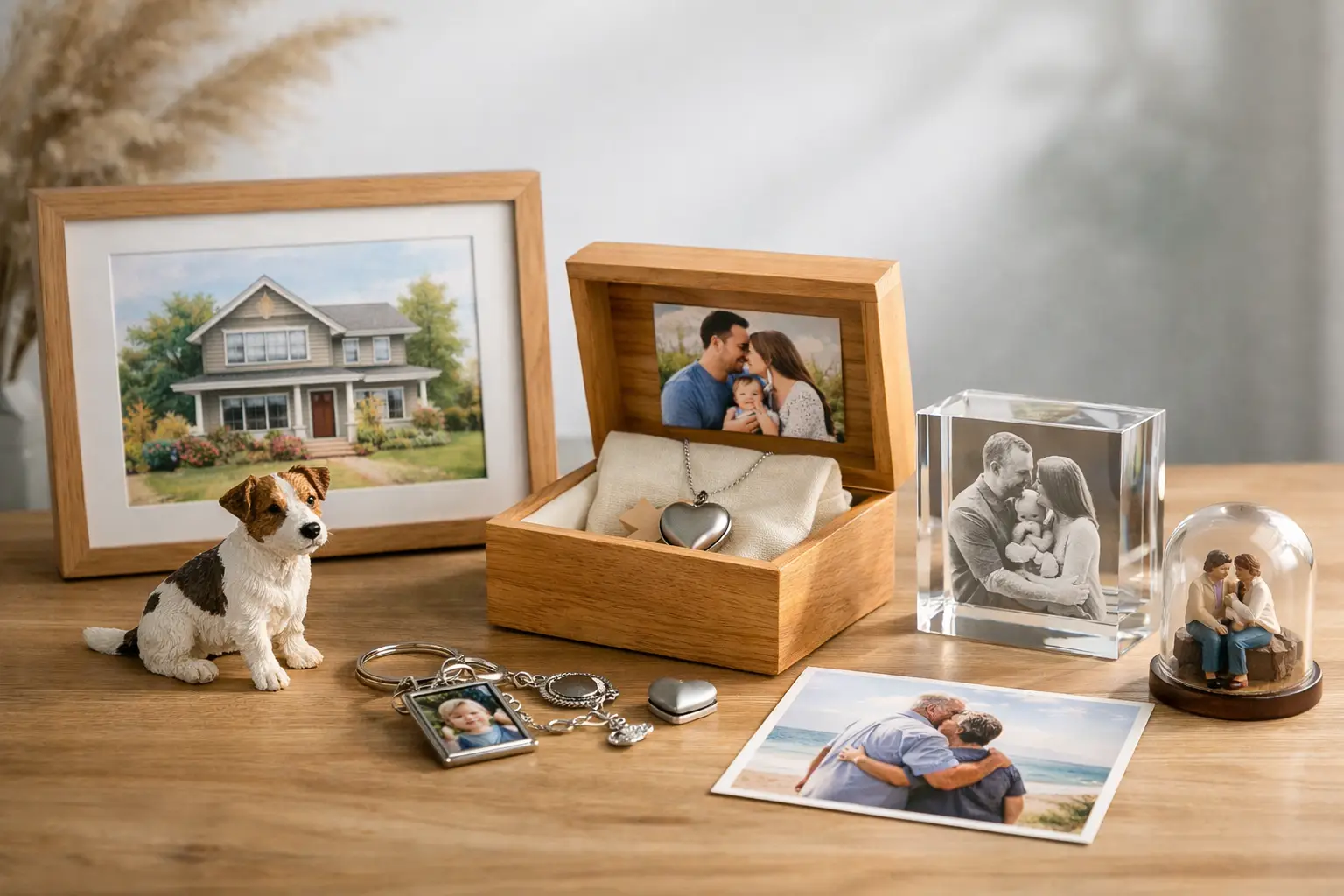
Some pieces do more than fill a space. They hold a song, a milestone, a family story, a face you never want to forget. That is why a guide to personalised keepsake commissions matters – because the best bespoke pieces are not chosen in haste. They are shaped with care, memory and a clear sense of what you want to preserve.
A commissioned keepsake is not simply a personalised product with a name added at the end. It is a creative collaboration. The difference matters. When a piece is commissioned properly, it captures atmosphere as much as detail. It can reflect the mood of a first dance, the pride of a sporting moment, the comfort of a childhood home, or the thrill of a favourite artist who soundtracked a chapter of your life.
That is also why people sometimes feel unsure before they begin. They know the memory matters, but they are not yet sure how to turn it into something visual, lasting and beautiful enough to live with every day. The good news is that you do not need to arrive with a finished concept. You only need the heart of the story.
What makes a keepsake commission feel personal?
The most meaningful commissions are rarely the busiest. Personal does not mean adding every possible date, colour and phrase. Often, the strongest pieces are guided by one central idea – a person, a place, a song, an era, a moment.
If you are commissioning something to mark an anniversary, for example, the emotional anchor might not be the wedding date itself. It might be the venue where you first met, the lyric that always brings you back to that time, or the little visual details that belonged only to the two of you. A keepsake starts to feel personal when it reflects identity rather than just information.
This is where nostalgia has real power. Old ticket stubs, treasured records, local landmarks, family photographs, handwritten notes and even colours linked to a certain decade can all help a commission feel rooted in lived experience. The aim is not to recreate the past exactly. It is to honour it in a way that still feels at home in the present.
Start with the story, not the object
One of the easiest ways to approach a guide to personalised keepsake commissions is to stop asking, “What should I order?” and start asking, “What do I want this piece to remember?”
That shift changes everything. Instead of focusing too quickly on size, frame or finish, you begin with feeling. Is this piece meant to comfort, celebrate, surprise or commemorate? Is it for your own home, where it needs to sit naturally within a room, or is it a gift designed to stop someone in their tracks the moment they open it?
When you lead with the story, practical choices become easier. A music-inspired commission might call for bold visual references and a sense of energy. A memorial piece may need a softer, quieter treatment. A family milestone might suit layered detail, while a gift for a collector could lean more into rarity, period style or display impact.
The story gives the commission its direction. Without it, even the most beautifully made piece can feel generic.
How to prepare for personalised keepsake commissions
Preparation does not have to be formal, but it should be thoughtful. The more clearly you can share the memory behind the piece, the more likely the final work will feel like it truly belongs to you.
Start by gathering what you already have. This might include photographs, dates, names, song titles, venue details, favourite colours, objects with symbolic meaning or references that capture the mood you love. You do not need to use everything. In fact, too many elements can sometimes dilute the emotional focus. But collecting them in one place helps you see what matters most.
Then think about where the keepsake will live. A commission for a hallway, music room or reading corner may need a different presence from one intended for a shelf, mantelpiece or private study. Scale, tone and finish all change according to setting. A statement piece can be wonderful, but there is also beauty in something more intimate.
Budget matters too, and it is worth being honest about it from the beginning. Bespoke work reflects creative time, materials and collaboration. A larger budget may allow for more intricate detail or premium finishing, but a smaller budget does not mean a piece cannot be special. Sometimes a simpler concept, done well, carries more feeling than a grander one trying to do too much.
Choosing the details that truly matter
This is often the point where a commission either becomes deeply moving or slightly overworked. The temptation is understandable. If a memory is precious, you may want to include every part of it. But keepsakes are strongest when the details have been chosen with intention.
Try to separate essential details from supporting ones. The essential details are the parts without which the piece would lose its meaning. Supporting details add atmosphere, context or charm. Both matter, but they do not carry equal weight.
A commission inspired by a beloved concert might need the date and venue because they ground the memory. The exact pattern on the outfit worn that night may be less important unless it holds specific emotional value. Likewise, a family home commission may need the shape of the front door and the garden gate because those are instantly recognisable, while other features can be softened for artistic balance.
This is where trust in the creative process comes in. A good bespoke commission is not a database of information. It is an interpretation. Sometimes removing one detail allows the real feeling of the piece to come forward.
Style matters as much as sentiment
Even the most emotional commission needs to work visually. After all, the beauty of a keepsake is that it becomes part of your surroundings and your story at once.
Think about the atmosphere you want. Do you lean towards vintage charm, bold music-led graphics, soft romantic tones, heritage-inspired detail or something more contemporary with a nostalgic thread? Your personal style should shape the final piece just as much as the memory itself.
There can be a quiet tension here, and that is normal. Some people want a piece to feel obviously sentimental. Others want the sentiment tucked into a more design-led finish. Neither is wrong. It depends on how you live with objects and what feels authentic to you.
For collectors, display value may matter more. For gift buyers, emotional reveal might come first. For home stylers, the piece needs to sit naturally among existing textures, colours and treasures. A successful commission respects both the heart and the room.
The value of collaboration
A personalised keepsake commission works best when it feels like a conversation rather than a transaction. You bring the memory. The maker brings creative judgement, visual storytelling and the ability to shape your ideas into something coherent and lasting.
That means openness helps. Share not only what happened, but why it matters. Mention the details that still make you smile, the things you always remember first, the reasons the piece needs to exist. Those emotional cues often guide the most memorable creative choices.
At the same time, allow room for interpretation. If you commission bespoke work, you are not buying an off-the-shelf result. You are inviting artistry into your memory. That can feel vulnerable, especially if the occasion is deeply personal, but it is often what gives the finished piece its life.
Brands such as RUhavinit? understand that balance well because the best commissions are built not just around products, but around people and the stories they want to hold onto.
When a keepsake commission is the right choice
Not every occasion needs a bespoke piece. Sometimes a ready-made item says exactly what it needs to say. But certain moments ask for more. They ask for something no one else could have chosen because no one else lived that exact memory.
Personalised keepsake commissions are especially powerful when the story is layered, when the recipient is hard to buy for, or when the emotional meaning would be lost in something generic. Anniversaries, memorial tributes, milestone birthdays, music memories, retirement gifts, new home pieces and collector-inspired displays all lend themselves naturally to custom work.
They are also worth considering when you want a piece that lasts beyond the occasion itself. A good keepsake does not feel relevant for a week and then fade into the background. It becomes part of the home, part of conversation, part of how a memory continues to live.
A final thought on creating something worth keeping
The most treasured commissions are not always the grandest or the most elaborate. They are the ones that feel honest. The ones that catch something fleeting and give it shape. If you begin with a real memory, choose your details with care and leave space for creativity, you are far more likely to end up with a piece that feels less like an order and more like a small piece of your life, made visible.
Leave a Reply