
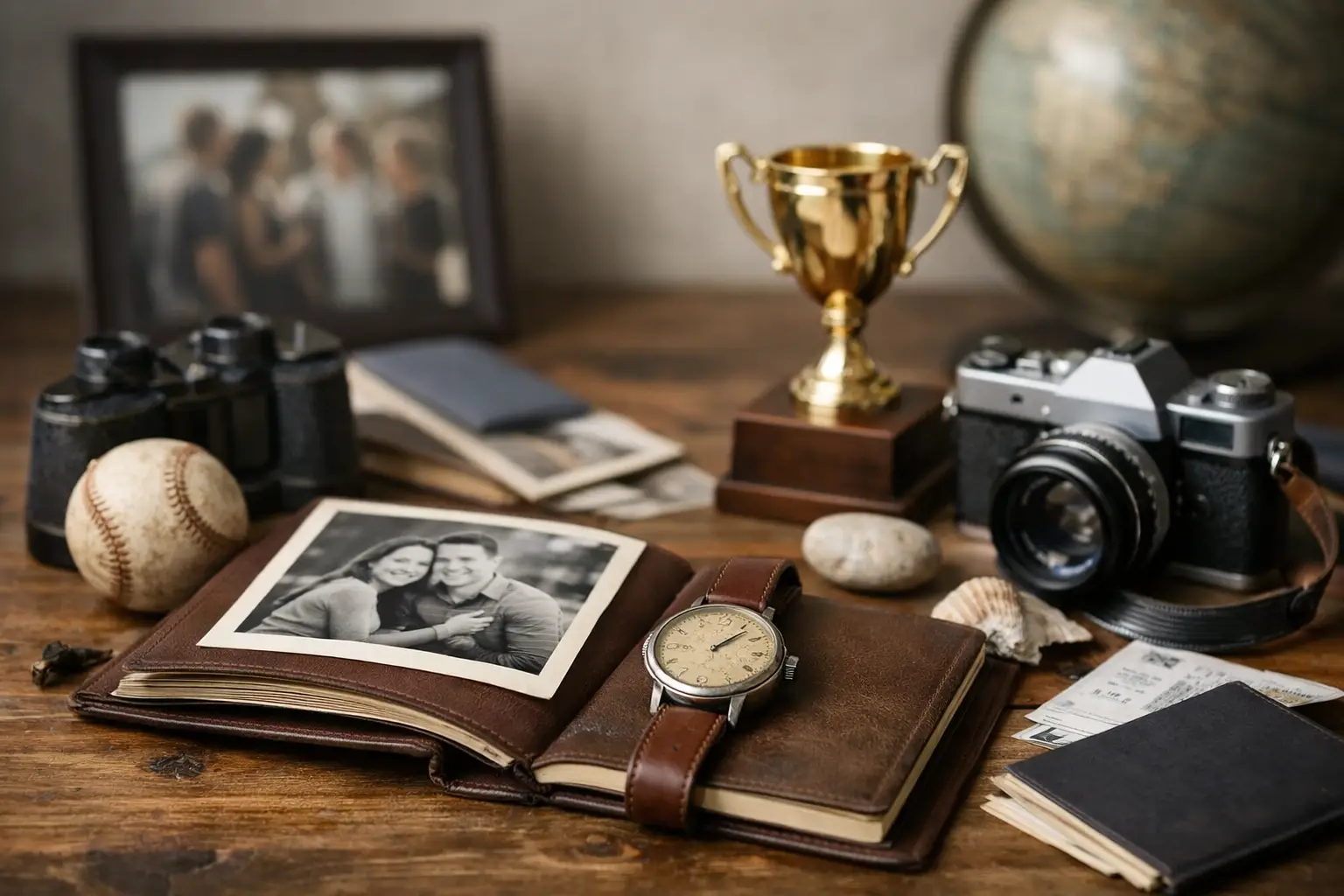
A framed ticket from the gig that changed your life will always say more than a trendy print bought in haste. That is the heart of how to choose meaningful memorabilia – not by asking what looks impressive on a shelf, but by asking what still stirs something in you years later.
The best memorabilia does not simply fill space. It holds a feeling. It marks a chapter, a person, a soundtrack, a turning point. Whether you are building a collection, choosing a gift, or finding a piece for your home, meaning matters more than rarity alone. The pieces worth keeping are usually the ones with a story attached.
Why meaningful memorabilia matters
Memorabilia becomes powerful when it acts as a bridge between the past and the present. A concert keepsake can bring back the noise, the lights, the company you kept. A personalised artwork can preserve a date, a place, or a phrase that still feels like yours. Even a small collectable can become part of your home in a way that feels deeply personal rather than purely decorative.
This is why the most memorable collections rarely look identical. One person treasures music history, another leans towards family milestones, and someone else surrounds themselves with pieces that reflect beloved films, sporting moments, or local heritage. Meaningful memorabilia is not about following someone else’s taste. It is about recognising your own emotional landmarks.
How to choose meaningful memorabilia that feels personal
Start with memory before object. That sounds simple, but it changes everything. Instead of searching broadly for something nostalgic, think about the moments, people, and passions that genuinely shaped you. Often, the strongest ideas come from very specific memories – your first festival, your parents’ wedding song, the pub where your friends always met, the football season you still talk about, the seaside town you returned to every summer.
When you begin there, the object becomes a vessel for something larger. A print, plaque, lyric piece, photo-based keepsake, or vintage collectable all carry more weight when they are tied to a lived memory. Without that connection, memorabilia can feel pleasant but hollow.
It also helps to ask what you want the piece to do in your life now. Some memorabilia is private and reflective. Some is made to start conversations. Some works best as part of your everyday surroundings, adding warmth and identity to a room. Other pieces are better suited to a protected display, especially if they are delicate or historically significant. There is no single right choice, but there is a right fit for the role the piece will play.
Choose resonance over hype
Not every valuable item is meaningful, and not every meaningful item is conventionally valuable. That distinction is worth holding onto. A heavily marketed collectable may rise in popularity, but if it has no personal relevance, its appeal can fade quickly. By contrast, a modest item linked to a treasured memory may become priceless to you.
This is especially true when buying for the home. Pieces chosen purely for trend often age faster than those chosen for emotional connection. A keepsake that reflects your story tends to settle into a space more naturally. It belongs there.
Let your passions lead
The easiest way to choose well is to pay attention to what already lights you up. Music lovers might gravitate towards lyric art, set-list inspired pieces, era-specific collectables, or memorabilia that captures the atmosphere of a beloved artist or venue. Sentimental gift buyers may be drawn to dates, names, locations, or visual references that celebrate anniversaries, friendships, and family history.
Collectors often know their theme straight away, but even then it helps to stay selective. A focused collection with emotional logic behind it usually feels richer than one built around quantity. If every piece speaks to a different part of your story, the collection becomes more than a display. It becomes a portrait.
The balance between beauty and backstory
A meaningful piece still needs to work visually. That does not mean it has to match everything perfectly or blend into the background. It means the object should feel good to live with. If a piece carries emotional significance but is so awkward in scale, style, or condition that it ends up hidden away, its impact is reduced.
This is where thoughtful curation matters. Consider where the item will sit, how often you want to see it, and what atmosphere you want it to create. A bold music-themed piece may deserve pride of place in a living room or hallway. A softer, more intimate keepsake may belong in a bedroom, study, or reading corner. Meaning thrives when it has room to be seen.
There is also a trade-off between authenticity and presentation. Some people love the worn edges and age marks of vintage memorabilia because those signs of time are part of the story. Others prefer bespoke or restored pieces that preserve the sentiment in a cleaner, more display-friendly way. Neither approach is more meaningful than the other. It depends on whether you want raw history, artistic interpretation, or a blend of both.
When personalised memorabilia means more
Sometimes the most powerful memorabilia is not found, but made. Personalised pieces can capture stories that would otherwise be difficult to hold onto in a tangible form. A shared lyric, a meaningful postcode, a wedding location, a handwritten note, or a date that changed everything can all become part of an object that feels entirely your own.
This is often the answer when the memory matters more than the market. Bespoke memorabilia allows you to honour a moment that may not have official artefacts attached to it. It can also make a thoughtful gift, especially when you want to show that you have remembered the details that matter to someone else.
The key is to avoid overloading the piece. Personalisation works best when it is intentional. One carefully chosen reference can say far more than a crowded design filled with every possible detail. Leave space for emotion to breathe.
Questions worth asking before you buy
If you are unsure whether a piece is truly meaningful, pause before purchasing and sit with a few honest questions. Does it remind you of a specific memory, person, or passion? Can you imagine wanting to keep it in five or ten years? Would it still matter if nobody else saw it? Those questions quickly separate lasting keepsakes from impulse buys.
It also helps to consider provenance and quality, particularly with older or collectable items. A touching story can draw you in, but the piece should still be well made, accurately represented, and suitable for the way you plan to enjoy it. Meaning and craftsmanship are not opposing ideas. The strongest pieces often carry both.
How to choose meaningful memorabilia as a gift
Choosing for someone else requires gentleness and attention. The best gifts of this kind are not generic symbols of nostalgia. They are rooted in something recognisable and true to the recipient. Think about their favourite song, a place they talk about often, a milestone they cherish, or a hobby that has shaped who they are.
Subtlety usually wins here. You do not need to explain every emotion. A beautifully chosen piece that nods to a shared memory can be far more moving than something overly obvious. If the gift feels as though it could belong to anyone, it is probably not personal enough.
For this reason, brands like RUhavinit? resonate with people who want keepsakes to feel like little chapters of real life, not off-the-peg decoration. The most treasured gifts are often the ones that show someone has truly seen your story.
Give yourself permission to choose slowly
There is no prize for building a collection quickly. In fact, the most characterful homes and collections tend to come together over time. They are layered with moments, not rushed into existence in a weekend. Waiting for the right piece can be part of the pleasure.
Choosing slowly also protects against sentimental clutter. Not every memory needs an object, and not every object deserves a permanent place. The pieces that stay are the ones that continue to earn their keep emotionally, visually, or both.
If you feel torn between several options, return to the simplest test. Which one tells your story most clearly? Which one would you still miss if it were gone? Meaningful memorabilia should feel less like a purchase and more like recognition.
The right piece has a quiet certainty about it. It does not need to shout. It simply brings a memory back into the room and lets it live there with you.
Leave a Reply