
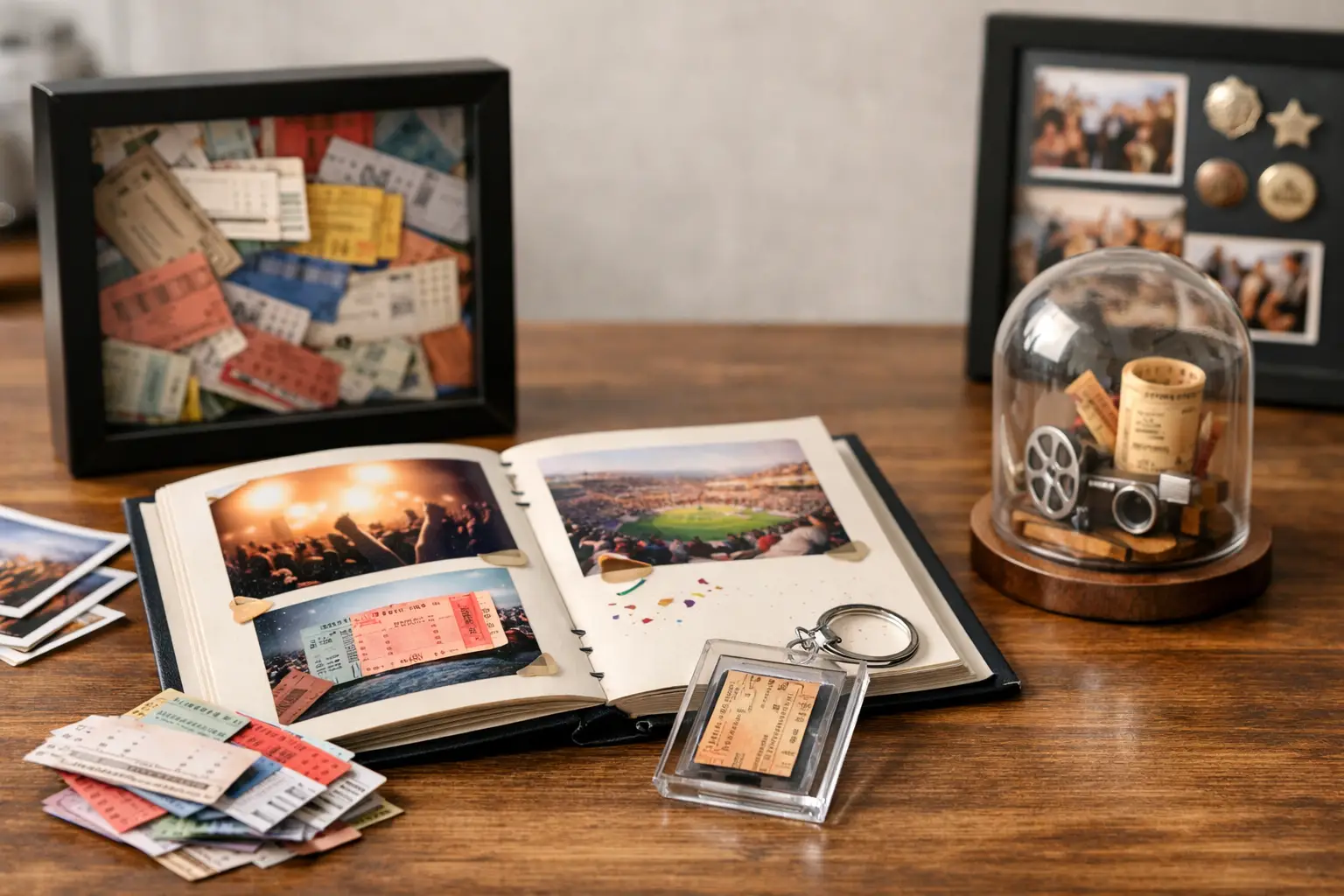
Some ticket stubs spend years tucked inside drawers, old handbags or the pages of a book you have not opened in ages. Then one day you find them again and the whole moment comes rushing back – the first gig, the long-awaited theatre night, the football match that meant everything, the train journey that started a life-changing weekend. Knowing how to turn ticket stubs into keepsakes means giving those tiny paper fragments the place they deserve.
A ticket stub is never just paper. It holds atmosphere. It carries dates, venues, faded ink, and all the feeling attached to where you were and who you were with. That is what makes it worth preserving thoughtfully, rather than simply storing it away and hoping it survives.
Why ticket stubs deserve more than a memory box
There is nothing wrong with a memory box. In fact, for some people it is the right choice. If you love the ritual of lifting the lid and sorting through old treasures by hand, a box keeps things intimate and private. But ticket stubs are especially visual. They often have striking typography, venue names, logos, colours and dates that tell a story at a glance.
When they are displayed well, they become part of your home rather than leftovers from an evening out. They can spark conversation, soften a shelf, personalise a hallway, or add real emotional character to a music corner or reading nook. A framed set of gig tickets says something different from generic wall art. It says this life was lived.
That is usually the real shift. You are not asking how to store paper. You are asking how to honour a moment.
How to turn ticket stubs into keepsakes that feel personal
The best keepsake ideas start with the memory itself. Before you choose a frame, album or artwork format, think about what the stub represents. Was it one unforgettable event, a relationship, a family tradition, or years of seeing your favourite band whenever they came through town? The answer shapes the piece.
If the ticket marks one standout memory, a single framed display often works beautifully. You can pair the stub with a photograph, a short quote, the date, or even the setlist if it was a concert that never left you. This approach feels clean and intentional, and it gives one moment room to breathe.
If you have a collection, grouping them together can be far more moving. A run of theatre tickets from annual Christmas outings, festival wristbands and stubs from your twenties, or football tickets shared with a parent all tell a richer story when seen side by side. The keepsake becomes less about one event and more about a chapter of life.
There is no single right format. The best one is the one you will actually want to keep looking at.
Framed ticket art for the wall
Framing is often the most lasting choice, especially if the tickets are tied to music, travel or major life milestones. It turns something small and fragile into a finished piece with presence.
A simple mount and frame can be enough if the stub has good colour or graphic appeal. If it is faded or plain, layering in other elements helps bring the memory forward. A photograph of the venue, a map snippet, a lyric, or the date printed in elegant type can add context without overwhelming the original piece.
The trade-off with framing is permanence. Once something is mounted, you are less likely to handle it again or rearrange it often. For some memories, that is perfect. For others, especially if you keep adding to a collection, a more flexible display might suit better.
Shadow boxes are especially lovely if you have more than just the ticket. They can hold a wristband, badge, confetti, a guitar pick, a pressed flower from the evening, or a small flyer. This works well when the memory has texture and atmosphere, not just a date on card.
If you are preserving older paper tickets, ask for acid-free materials and UV-protective glazing where possible. Sunlight and ordinary adhesives can quietly damage them over time. Sentiment deserves a bit of care.
Choosing a style that suits your home
A keepsake should feel like part of your space, not an afterthought hung out of guilt. If your home leans minimal, a crisp black or oak frame may let the ticket take centre stage. If you love eclectic interiors, layered collages, vintage-style mounts or mixed memorabilia can feel more natural.
Music lovers often enjoy designs that nod to the era or genre of the event. A punk gig ticket, for example, can carry a different visual energy from an opera programme or a West End show stub. Let the mood of the memory guide the finish.
Albums, scrapbooks and memory journals
Not every keepsake needs to go on the wall. If you prefer something tactile, a scrapbook or memory journal can be a beautiful answer to how to turn ticket stubs into keepsakes without making them part of your décor.
This format works especially well for people who like storytelling. You can place each ticket beside a few handwritten lines about the day, what you wore, who came with you, what song made the room erupt, or why that match mattered. Years later, those details often mean more than the event itself.
A journal also gives you room to grow. You can keep adding pages as life unfolds, which makes it perfect for recurring traditions such as annual festivals, family pantomimes, train trips, museum visits or date nights.
The only drawback is visibility. A scrapbook keeps memories safe, but tucked away. If you want those stories to become part of everyday life, a displayed piece may feel more satisfying.
Creative ways to use ticket stubs in bespoke keepsakes
Some memories call for something more imaginative than standard framing. If the event changed your life, marked a milestone, or belongs to a shared love story, bespoke artwork can transform the stub into something truly one of a kind.
A ticket can be incorporated into a personalised collage with song lyrics, meaningful dates and location details. It can become part of a house display marking the city where you met, a wedding gift built around the first concert you attended together, or a memory print celebrating years of following one band from venue to venue.
This is where keepsakes become deeply individual. The ticket is still there, but it is no longer the whole story. It becomes a centrepiece within a wider piece of personal history.
For gift-giving, this approach is especially thoughtful. A single old ticket stub from a first date, honeymoon theatre trip or milestone match can become far more moving when presented as finished artwork rather than found loose in a card.
A creative brand like RUhavinit? naturally sits in this space, where nostalgia, home styling and personal storytelling meet. The best bespoke pieces do not just preserve memorabilia. They help it speak.
What to do if your ticket stubs are fading
A lot of modern tickets are printed on thermal paper, which is notorious for fading. If you have ever found an old ticket turning pale or blank, you are not imagining it. Heat, light and time all work against it.
If the print is still visible, scan or photograph the ticket sooner rather than later. A high-quality digital copy gives you options, whether you decide to reproduce it in artwork, print a duplicate for display, or keep the original safely stored away from light. This is not cheating. It is preserving what the eye can still see before it disappears.
If the ticket is already faint, surrounding details can still carry the memory. Venue names, dates from your photos, related posters, confirmations and captions all help rebuild the story. Sometimes a keepsake becomes less about preserving the exact object and more about preserving the feeling attached to it.
Small details that make a keepsake feel special
The difference between a craft project and a keepsake often comes down to editing. Not every element needs to be included. In fact, less can be more.
Choose details that deepen the story: the date, the place, a line from a song, the names of the people who went, or a short phrase that means something only to you. If you add too much, the emotional centre can get lost.
Texture matters too. Beautiful paper, thoughtful mounting, a frame that suits the room, or handwriting instead of printed text can change the whole feel. These finishing touches are quiet, but they are often what make a piece feel enduring rather than temporary.
And if you are making something for someone else, think about their style as much as the memory. A sentimental gift lands best when it feels like them.
Some memories belong in a box, some belong in a book, and some deserve a place on the wall where they can keep telling their story. Start with the moment, not the method, and the right keepsake usually reveals itself.
Leave a Reply