
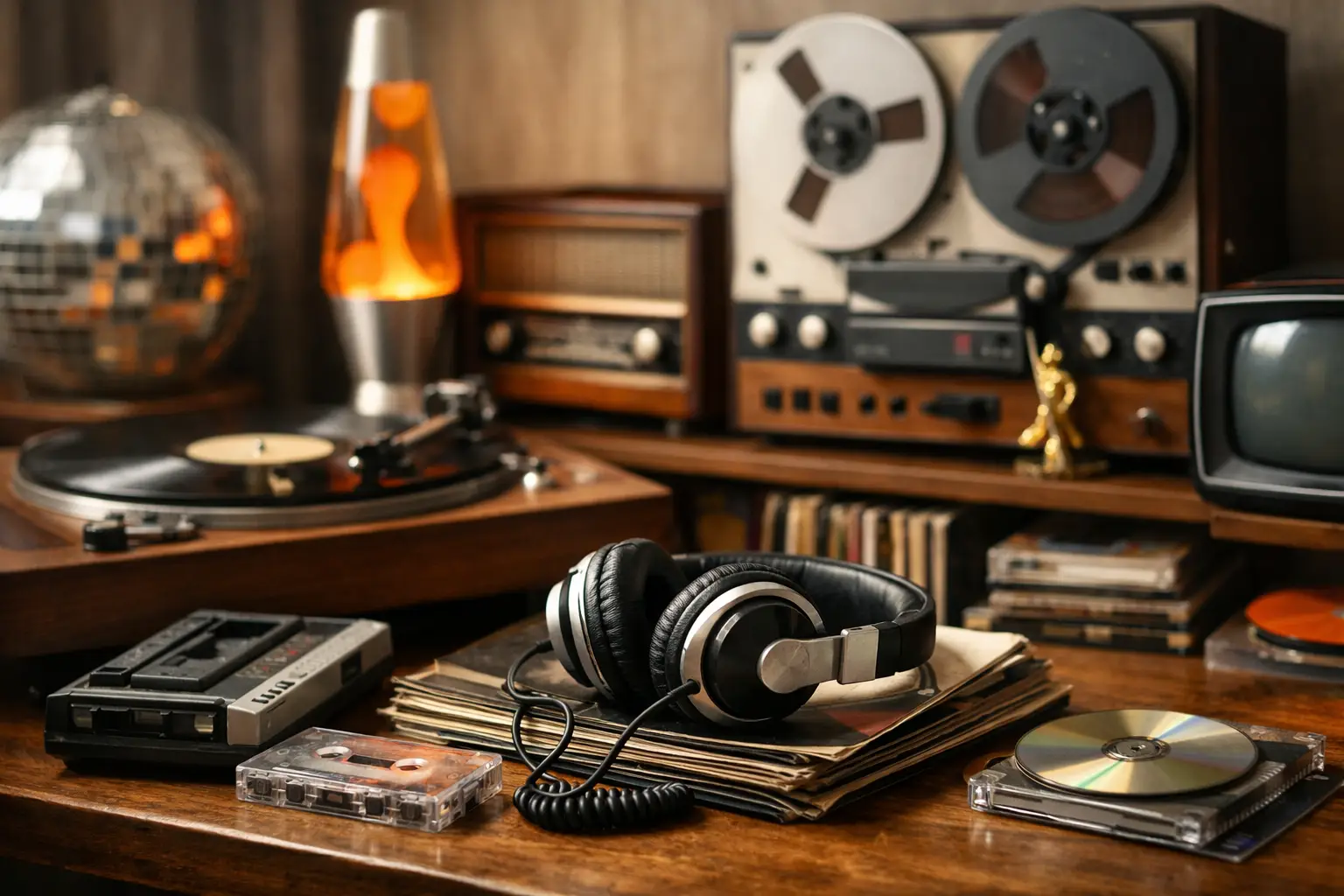
The best music rooms never feel staged. They feel lived in, loved, and full of echoes – the album that changed everything, the first gig ticket you kept, the corner where a record player still makes evenings feel slower. That is why retro music room accessories have such lasting appeal. They do more than decorate a wall or fill a shelf. They bring history, personality and feeling into the room.
For anyone creating a music-inspired space at home, retro style offers something richer than trend-led décor. It lets you build around memory. A room can nod to vinyl culture, jukebox glamour, soul-era elegance, mod energy, or the golden warmth of old radios and analogue details. The joy is not in making it perfect. It is in making it recognisable as yours.
Why retro music room accessories work so well
Music already carries emotion. Add objects with age, character or a sense of another era, and the room starts telling a fuller story. A vintage-look record clock, framed lyric art, retro concert-inspired prints or old-style storage tins can make a space feel collected over time rather than bought in one afternoon.
That sense of history matters. Even reproduction pieces can create it when they are chosen with care. The look of worn wood, classic typography, muted colours, brass touches or bold mid-century shapes all help a room feel rooted. For many people, that atmosphere is just as important as the music equipment itself.
There is also a practical reason these accessories work. Music rooms can easily tip into clutter, especially if you collect records, memorabilia or instruments. Retro-inspired pieces often soften that. They add charm to storage, warmth to display, and structure to what might otherwise feel scattered.
Choosing a mood, not just matching objects
A memorable room usually starts with a feeling. Not a shopping list. Before choosing accessories, it helps to decide what kind of nostalgia you want the space to hold.
Some rooms suit the soft glamour of a 1950s lounge, with polished finishes, creamy tones and hints of chrome. Others come alive with 1960s and 70s influence – burnt orange, mustard, geometric prints, and a little more boldness. Then there are spaces that lean into the rougher edge of retro music culture, where distressed signs, darker woods, monochrome photography and gig-inspired wall art feel more honest.
It depends on the room and on your own story. If your love of music began with Motown Sundays at home, one look may feel right. If it came through Britpop posters, pub jukeboxes or late-night vinyl sessions, another might fit better. The strongest interiors are not the ones that copy a decade exactly. They borrow the right emotional notes and let the rest follow.
The accessories that give a music room its soul
Wall art often does the heaviest lifting. It sets the tone in seconds and gives the eye somewhere to rest. Framed record sleeve art, personalised lyric prints, retro typography, music patent-style illustrations and nostalgic memorabilia displays all bring a room to life. These pieces feel especially powerful when they connect to a real memory rather than a generic music theme.
Shelving matters more than people think. Open shelves can become a quiet archive of favourite albums, vintage-style radios, cassette displays, miniature instruments or treasured gig souvenirs. The trick is not to crowd every inch. A little breathing room gives each piece more presence.
Lighting can completely change the mood. A room with a warm lamp glow, a vintage-look sign or a softly lit corner for listening feels inviting in a way overhead lighting rarely does. If the space is for winding down as much as for playing music, this detail is worth getting right.
Then there are the smaller finishing touches. Retro coasters, old-fashioned storage boxes, statement clocks, decorative cushions with musical motifs, and display trays for keepsakes can all add texture without overwhelming the room. These are often the pieces that make guests smile because they reveal character in a more intimate way.
When nostalgia becomes personal
The most moving interiors are built around meaning. A retro music room can look lovely with era-inspired décor alone, but it becomes special when the accessories reflect lived experience.
That might mean framing a favourite first dance lyric in colours that suit the room. It could be displaying a keepsake from a parent who passed down their love of records. It may even be commissioning a bespoke artwork piece inspired by a particular concert, song or milestone. Personalisation does not make a room busier. Done well, it gives the room a heartbeat.
This is where many people find the difference between decoration and keepsake styling. One fills space. The other preserves something. A retro room can celebrate the wider culture of music, but the pieces that stay with you are usually the ones tied to a voice, a moment, or someone you still think about whenever that song plays.
Balancing vintage charm with comfort
There is a fine line between atmospheric and overly themed. A room full of retro references can quickly feel more like a set than a home if every object tries to say the same thing.
It helps to mix statement pieces with quieter ones. If you have bold wall art, keep nearby accessories simpler. If a shelf is packed with memorabilia, balance it with softer textures such as fabric, wood and warm lighting. A good retro space feels layered, not crowded.
Comfort matters too. Music rooms are often places to sit, listen, reminisce and stay a while. Accessories should support that mood rather than compete with it. Cushions, throws, practical storage and gentle lighting are not the most dramatic choices, but they often make the room more usable and more loved.
Retro music room accessories in small spaces
You do not need a dedicated studio or lounge to create this effect. A spare corner, reading nook, hallway turntable station or even part of a living room can hold the same sense of identity.
In smaller spaces, choose accessories with emotional impact rather than sheer quantity. One framed print with personal meaning can do more than a cluster of generic signs. A compact shelf with favourite vinyl, a small lamp and one or two nostalgic objects can create a complete little world if the pieces belong together.
Mirrors with vintage styling can help open up the room, while vertical wall displays make use of limited floor space. Multi-purpose pieces are especially useful here. Decorative storage that hides cables or keeps records tidy lets the room feel curated rather than cramped.
What to look for when buying pieces
Not every retro-style item will feel authentic to you, and that is perfectly fine. The goal is not historical accuracy. It is emotional truth.
Look for accessories that spark a reaction straight away. A familiar colour palette, a phrase from a beloved song, a design detail that reminds you of an old family home, a print that captures the energy of a particular era – those instinctive responses usually matter more than whether something is technically vintage.
Quality also counts. If a piece is meant to honour memory, it should feel lasting. That does not always mean expensive, but it should feel considered. Materials, finish and craftsmanship shape whether an object feels like a treasure or a placeholder.
This is one reason curated brands and bespoke makers have such appeal. They offer a route away from flat, mass-produced décor and towards pieces with atmosphere. At RUhavinit?, that sense of story-led styling sits at the heart of the experience, with music, memory and individuality woven together in a way that feels far more personal than off-the-shelf design.
A room that sounds like you
A retro music room should never feel like someone else’s idea of cool. It should feel like a visual soundtrack to your life – familiar, expressive, a little nostalgic, and full of details that mean something when the room falls quiet.
So if you are choosing accessories, trust the pieces that pull you back to a moment. The print that reminds you of home. The keepsake that marks a turning point. The vintage-inspired accent that makes the whole space feel warmer. Start there, and let the room grow around what you love.
Leave a Reply