
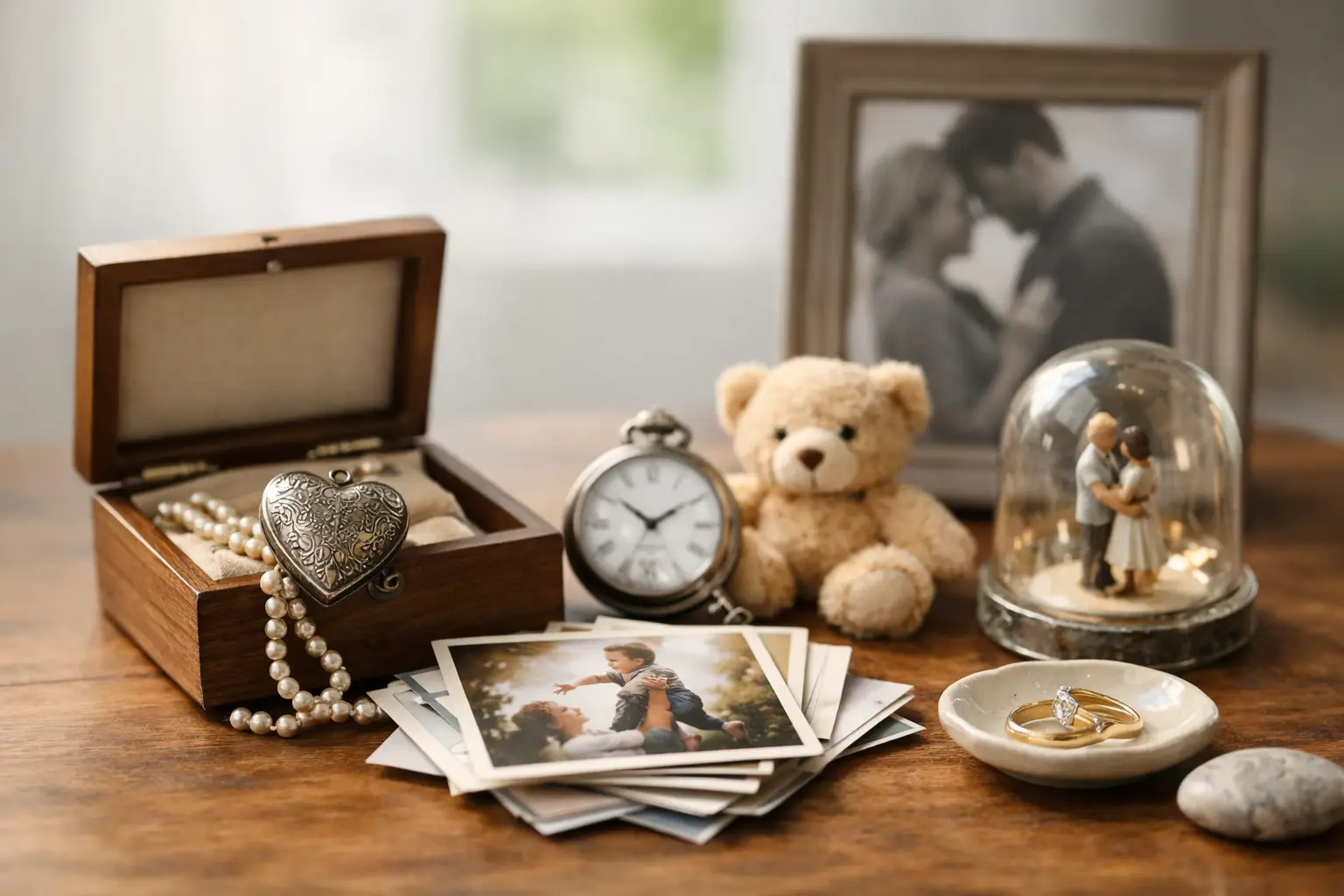
A concert ticket tucked inside a frame. A record that instantly recalls a first dance. A handwritten recipe, slightly floury at the edges, that brings someone back into the kitchen. What makes a keepsake feel special is rarely its price or polish alone. It is the feeling that lives inside it – the quiet proof that a moment, a person or a passion mattered.
The best keepsakes do more than sit on a shelf. They start conversations. They catch your eye on an ordinary Tuesday. They make a house feel more like your home because they reflect the life that has been lived within it.
What Makes a Keepsake Feel Special?
A keepsake becomes precious when it carries a story that cannot be copied. Two people might own the same vinyl album, vintage poster or framed photograph, but the meaning is entirely different when it is tied to your favourite artist, the gig you travelled across the country to see, or the person who played it constantly at home.
That is why mass-produced does not always mean meaningless, and handmade does not automatically mean heartfelt. The object is only one part of the picture. Its emotional weight comes from the connection between the item and the person holding it.
A special keepsake often holds several layers at once. It may mark a date, reflect a hobby, honour a loved one and suit the room where it is displayed. The more naturally those layers meet, the more personal the piece feels.
It connects to a real moment
Milestones matter because they give us a place to return to. A wedding date, a new baby, a hard-won achievement, an unforgettable holiday, a beloved pet or a friendship that has lasted through every version of life – these are not simply events. They become part of who we are.
A keepsake gives that memory a physical form. It does not need to explain every detail to everyone else. In fact, the most powerful pieces often have a private meaning. A set of lyrics may look like beautiful typography to a visitor, while for its owner it is the chorus that played at exactly the right time.
This is also why a keepsake can be wonderfully understated. Not every meaningful object needs names, dates and a large declaration across the front. Sometimes a colour, a familiar phrase, a place name or a recognisable silhouette says enough.
It reflects identity, not just an occasion
The gifts that stay with us tend to say, “I see you.” They recognise a person’s enthusiasm for Northern Soul, their devotion to a football club, their eye for mid-century design, or their habit of finding beauty in old photographs and forgotten ephemera.
Personalisation works best when it goes beyond adding a name. A name can be lovely, especially for a birth, anniversary or new home. But a truly individual piece considers the recipient’s world: the music they collect, the era they adore, the sayings they use, the colours they surround themselves with and the stories they tell again and again.
For a collector, this may mean finding a piece that sits naturally alongside treasured records, prints or memorabilia. For someone styling a new home, it might be artwork that feels like a window into their past rather than an accessory chosen to fill a blank wall.
The Beauty Is in the Detail
Meaning needs a form worthy of it. Thoughtful craftsmanship does not have to be flashy, but it should feel intentional. The weight of a frame, the texture of paper, the choice of typeface, the richness of colour and the finish of a printed image all influence whether a keepsake feels temporary or made to stay.
Small details have a particular kind of magic. A date placed subtly beneath an image. Song lyrics arranged in a way that echoes the rhythm of the track. A palette inspired by a favourite album sleeve. A carefully selected photograph that shows personality rather than perfection. These choices tell the recipient that someone has paid attention.
There is a balance to strike. Too much detail can make a piece feel crowded, especially if it is intended to live in a calm, carefully styled space. Too little can leave it feeling generic. The right approach depends on the story. A bold music-themed artwork may call for expressive colour and attitude, while a memorial piece might feel more fitting with gentle tones and room to breathe.
Imperfection can make it more human
A pristine object can be beautiful. Yet a little evidence of life often makes a keepsake more moving: the creased edge of an old note, the grain in a scanned photograph, the faded colours of a vintage design, or the uneven handwriting of somebody dearly missed.
These marks remind us that memory is not a showroom display. It is textured, imperfect and alive. Preserving that character can make a bespoke piece feel more truthful than trying to smooth every trace away.
Of course, not every original item is suitable for daily display. Fragile letters, treasured tickets and family photographs may need protecting from sunlight or handling. Reproducing them in artwork can be a thoughtful compromise: the story remains visible, while the original is kept safe.
Why Display Matters as Much as the Object
A keepsake hidden in a drawer can still be deeply meaningful, but displaying one changes its role. It becomes part of the atmosphere of a room and an invitation to remember more often.
Where you place it should feel natural. Music memorabilia might belong near a turntable or record collection, where the story can be played as well as seen. A family piece may suit a hallway, where it welcomes people in, or a living room, where it becomes part of everyday life. A smaller personal token might belong by the bedside, held close rather than shared widely.
The surrounding objects matter too. A framed photograph beside a favourite book, a candle picked up on holiday, and a vintage collectable can create a small personal landscape. It does not need to look perfectly coordinated. The aim is not a catalogue page. It is a home that feels layered with your history.
A keepsake should have room to grow with you
Some gifts are perfect for one season and then lose their relevance. Others deepen with time. The best keepsakes make space for changing meanings. A print commissioned for a first home may later remind you of the beginning of a long shared life. A piece bought to celebrate a parent’s favourite song may become a family heirloom, carrying their voice into the future.
This does not mean every keepsake must be designed to last forever in a literal sense. Tastes change, homes change and some memories are meant for a particular chapter. But choosing a piece with emotional honesty gives it a better chance of remaining loved, even as its place in the home shifts.
Choosing or Creating a Keepsake With Heart
When you are selecting a keepsake for someone else, begin with the story rather than the product. Think about what they return to: a place, a band, an era, a person, a ritual or a proud moment. Listen for the details they mention without realising they are repeating them.
Then consider how visible the sentiment should be. Some people love a bold, joyful statement piece. Others prefer an inside reference that only they will understand. Neither is more meaningful. The right choice is the one that feels like them.
Bespoke work can be especially powerful when the memory is hard to find in ready-made form. Perhaps you have an idea built around a treasured photograph, a favourite lyric, a collection of old tickets or a family saying. Collaboration allows the finished piece to hold the essence of that story while still feeling beautifully at home on the wall or shelf.
At RUhavinit?, the most memorable creations begin in exactly this place: with the details that make a life recognisable. Not a generic gesture, but a piece of personal history made visible.
A special keepsake is not there to impress everyone who sees it. It is there to make one person feel known, remembered or joyfully understood. Choose the story that deserves to be held onto, and let it take up a little space in the home.
Leave a Reply