
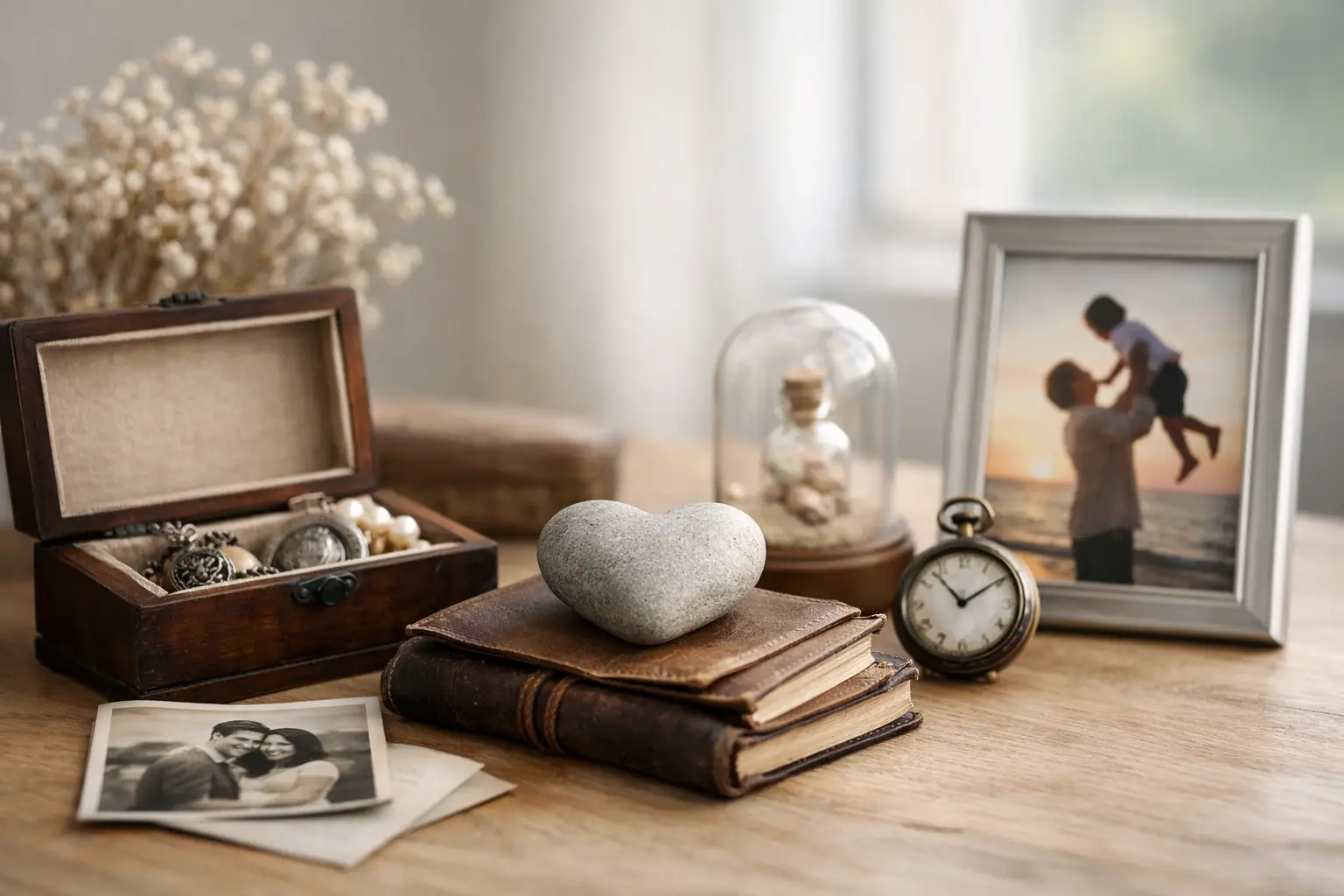
A concert ticket tucked inside a drawer. A framed lyric that still gives you goosebumps. Your grandad’s old record sleeve, slightly worn at the corners, but impossible to throw away. If you have ever wondered what makes a meaningful keepsake, the answer rarely sits in its price tag or polish. It lives in the feeling it carries back into the room.
A keepsake matters because it holds more than itself. It becomes a marker of love, identity, celebration, grief, growth, or simply a moment that changed how life felt. Some pieces are beautiful from the start. Others become beautiful because of what they witness. That is why the most treasured objects in a home are so often the ones with a story attached.
What makes a meaningful keepsake feel lasting?
The most meaningful keepsakes tend to do one thing exceptionally well – they make memory tangible. They give shape to something you cannot otherwise hold: a first dance, a family saying, a favourite album, a city you fell in love with, a person you miss, a version of yourself you never want to forget.
That emotional pull is what separates a keepsake from an ordinary gift or decorative object. A generic item may look lovely on a shelf, but a meaningful keepsake asks for more. It reflects a real connection. It says, this mattered. It still matters.
That does not mean every keepsake must be deeply solemn or life-changing. Joy counts. So does humour. So does the wonderfully specific charm of an object that only makes sense to two people. A framed in-joke from a friendship, a print inspired by a shared song, or a nostalgic piece that recalls childhood Saturdays can carry just as much meaning as a major milestone gift.
The story is often the soul of it
When people talk about treasured possessions, they usually start with the story rather than the object itself. They do not say, it is a ceramic plaque, or it is a print in an oak frame. They say, this was made from our wedding song. This reminds me of my mum. I found this after years of searching. It takes me straight back to that night.
That is the heart of it. Story gives an object emotional depth.
The richer the personal story, the more likely the keepsake is to stay. This is why personalised pieces can feel so powerful when done thoughtfully. Names and dates matter, of course, but personalisation works best when it reveals something true. A line from a letter, a place name, a meaningful lyric, a treasured photograph, a historical detail from a family memory – these are the touches that make a keepsake feel intimate rather than decorative.
There is a trade-off here, though. Not everyone wants their memories expressed in obvious ways. Some people love bold, direct sentiment. Others prefer subtle references that feel private, almost coded. A meaningful keepsake does not have to explain itself to everyone in the room. In many cases, its quietness is part of its beauty.
Memory matters more than perfection
Keepsakes are rarely meaningful because they are flawless. In fact, signs of age, wear, and use often make them more special. A little fading. Slightly uneven edges. A song title handwritten years ago. These details can make a piece feel human.
That is especially true with nostalgic objects. Collectables, music memorabilia, and vintage-inspired pieces often carry the emotional charge of another time. They remind us not only of an event but of atmosphere – the wallpaper in your childhood home, the smell of records and magazines, the energy of your first live gig, the way a room looked when someone you loved was still in it.
This is why sentimental value can far outweigh monetary value. A costly item with no personal connection may never become more than a possession. A modest piece tied to a real memory can become irreplaceable.
What makes a meaningful keepsake personal rather than generic?
Personal meaning comes from specificity. The more a keepsake reflects a real person, passion, or moment, the less likely it is to feel interchangeable.
That could mean it connects to someone’s identity. Music lovers often treasure pieces linked to the songs, artists, and eras that shaped them. A collector may value an item because it completes part of a larger story they have been building over years. A family may hold on to a bespoke artwork because it captures something no off-the-shelf item ever could – the texture of their history, not just the facts of it.
It also helps when the object suits the person’s life, taste, and home. Meaning is emotional, but it is practical too. A keepsake has a better chance of becoming part of everyday life if it feels at home in the spaces people actually live in. Something can be deeply heartfelt and still beautifully curated. In fact, that balance often gives it staying power.
A keepsake that is all sentiment but no thought for style may end up stored away. One that blends memory with artistry is more likely to be displayed, revisited, and talked about. That matters. Meaning grows when an object remains present.
The best keepsakes invite feeling again and again
A meaningful keepsake is not just about remembering once. It creates repeat moments of connection.
You pass it in the hallway and smile. A guest asks about it and you tell the story. A difficult day feels softer because that piece is in the room. Years later, it still returns something to you.
This is part of what makes keepsakes so different from trend-led buying. Trends come and go, and there is nothing wrong with enjoying them. But keepsakes are chosen for longer. They carry emotional weight that survives changing tastes. Even if your décor evolves, a truly meaningful piece usually finds its place again.
That is also why bespoke creations can feel so special. When an item is made around a memory, a hobby, a person, or a meaningful milestone, it becomes more than a purchase. It becomes a collaboration between memory and craft. For many people, that process is part of the value. Feeling seen matters. Feeling that your story has been turned into something tangible matters even more.
At RUhavinit?, that meeting point between nostalgia, artistry, and personal story is exactly where a keepsake begins to feel timeless.
Meaning can come from celebration, but also from comfort
Many people think of keepsakes as gifts for happy occasions – anniversaries, birthdays, weddings, new homes. And yes, they are wonderful for marking joyful milestones. But some of the most meaningful keepsakes exist because life is complicated.
They help us hold on. They honour someone no longer here. They mark a chapter we survived. They celebrate a passion that carried us through difficult years. They turn memory into something steady and visible.
This is where sensitivity matters. Not every meaningful keepsake needs grand emotional language. Sometimes the strongest pieces are gentle. A favourite phrase. A familiar image. A quiet nod to a shared past. Meaning often sits in restraint.
It depends on the person and the moment. A memorial keepsake may need softness and space. A birthday piece for a lifelong music fan might call for bold nostalgia and joy. The common thread is care. The object should feel chosen, not just bought.
How to recognise a keepsake worth keeping
If you are choosing a keepsake for yourself or someone else, it helps to ask a few simple questions. Does it connect to a real memory? Does it reflect personality rather than just occasion? Does it feel distinctive enough that it could belong to this person and almost no one else?
Then ask something equally important: will it still feel relevant in five or ten years? The answer does not need to be certain, but meaningful keepsakes usually have an emotional root that outlasts the moment they were given.
That is why the best pieces often sit at the intersection of memory, beauty, and truth. They are expressive without feeling forced. Personal without becoming impersonal through over-customisation. Distinctive without losing warmth.
And sometimes, you simply know. Some objects arrive with an instant sense of recognition. They feel like a memory already waiting for a place in your home.
A meaningful keepsake is not defined by scale, trend, or expense. It is defined by resonance. It carries a story you want to keep close, and it keeps offering that story back to you over time. If a piece makes you pause, remember, smile, or feel a little more connected to who you are and where you have been, that is usually all the proof you need.
Leave a Reply