
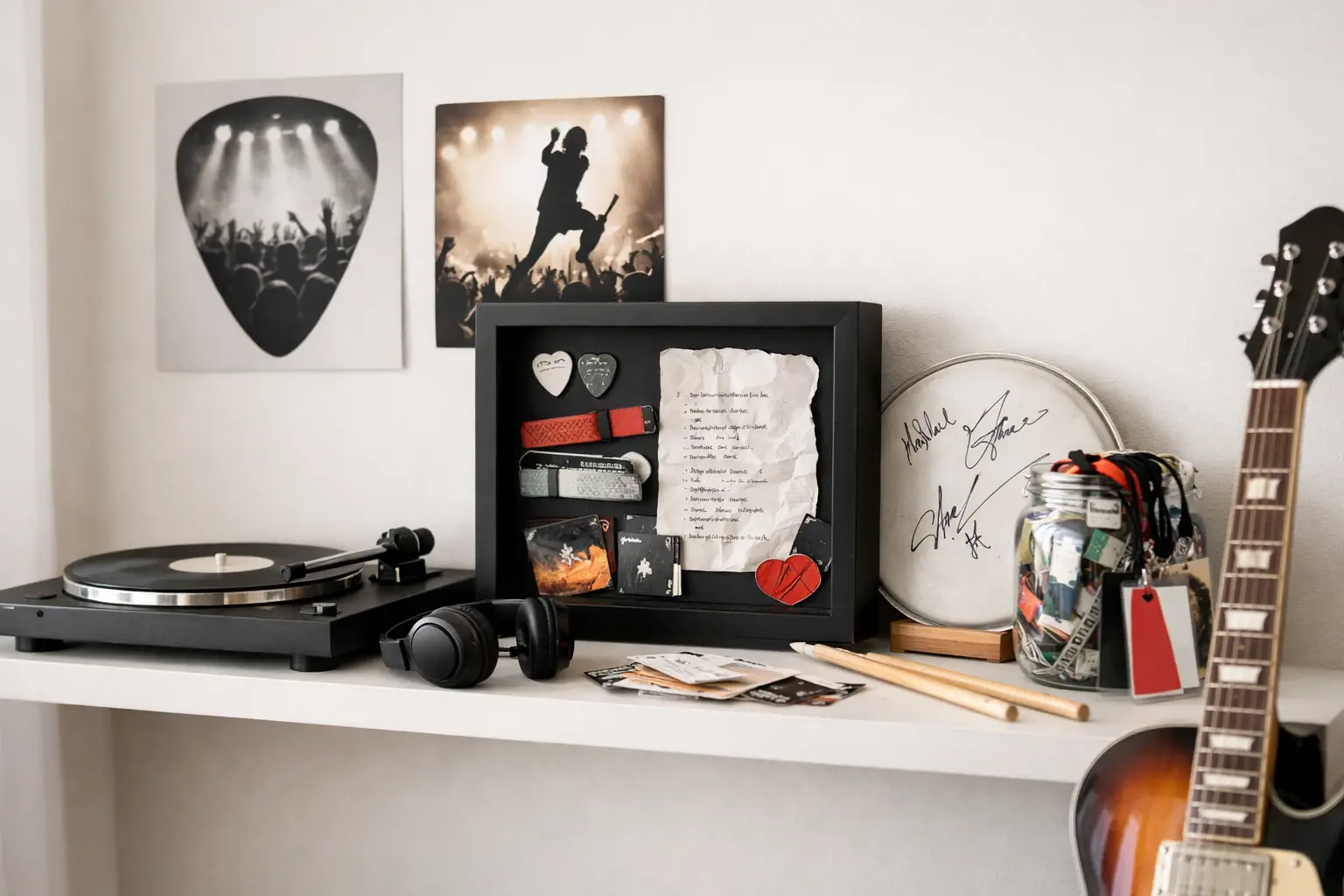
The wristband is still curled at the bottom of a drawer. The ticket has softened at its folds. Somewhere, a setlist, a faded programme or a handful of confetti is waiting to be seen again. To display concert keepsakes stylishly is to give those small, precious remnants the space they deserve: not as clutter, but as evidence of a night that changed your mood, your soundtrack, perhaps even your life.
A great music display should feel personal before it feels polished. It can be bold and colourful, or quiet and considered. The aim is not to recreate a museum cabinet. It is to build a corner of home that brings the feeling back whenever you pass it.
Start with the story, not the stuff
Before choosing a frame or clearing a shelf, gather the pieces from one memorable gig, tour or musical era. Look beyond the obvious ticket. A concert story might include a wristband, photographs, a handwritten setlist, travel stubs, a band tee, a lyric that stayed with you, or the little badge you bought at the merch stand.
The strongest displays have a point of view. Perhaps it was the first gig you attended alone, the festival where your friends became family, or the show you shared with someone who always knew every word. That emotional thread makes decisions easier. It tells you what belongs together and what can stay safely stored away.
Try editing with care. A handful of meaningful pieces usually has more impact than every item from every event pressed into one crowded frame. Let one keepsake lead the story, then choose two or three supporting details that add colour, texture and context.
Frame concert keepsakes as miniature artworks
A deep box frame is one of the loveliest ways to preserve pieces with dimension. It gives a ticket, guitar pick, wristband and photo room to breathe while protecting them from dust and everyday knocks. Arrange the objects with a little negative space around them, rather than filling every corner. That pause is what makes each detail feel intentional.
For a pared-back look, mount a ticket alongside a printed concert date, venue name and favourite lyric. Choose a neutral backing board if the memorabilia is bright, or a rich colour that echoes the artwork of the album or tour poster. A black frame feels timeless; warm oak softens a display in a relaxed living room; a coloured frame can turn a small ticket into a joyful focal point.
Original posters deserve special care. Keep them away from direct sunlight, which can fade inks and paper over time. If a poster is fragile, consider displaying a quality reproduction while storing the original flat in acid-free tissue. There is no loss of sentiment in protecting something irreplaceable. The memory is still on show, while the object itself is given a longer life.
Let the layout feel like a memory, not a scrapbook
Symmetry suits a classic, gallery-like arrangement. Place the ticket centrally, with matching objects balanced either side. But a slightly off-centre composition often feels more alive, especially for a punk, indie or festival memory. Layer a photograph behind the ticket, allow a wristband to curve naturally, and leave the setlist a little imperfect. Concerts are not neat occasions. Your display does not need to be either.
If you are framing items that have been signed, use a mount or fixings that do not cover the autograph. It may sound obvious, yet a signature can easily become an afterthought when it should be the heartbeat of the piece.
Create a music wall that grows with you
One framed memento can hold a room beautifully. A collection of frames can become something even more special: a visual record of your musical life. Start with a central piece, perhaps a favourite gig poster or a bespoke artwork inspired by a beloved song, then build around it slowly.
Mixing sizes stops the wall from feeling too formal. A large print can sit beside smaller ticket frames and square album-inspired artwork. Keep one repeating element to bring everything together, such as matching black frames, a shared colour palette or consistent spacing. You want the memories to be varied, not visually chaotic.
There is also beauty in leaving room for what has not happened yet. An expanding display acknowledges that your soundtrack is still being written. It means the brilliant night last summer is not frozen in the past. It has a place beside the gig you will remember next year.
Display concert keepsakes stylishly on shelves
Not every concert keepsake belongs behind glass. Shelves, mantels and sideboards are ideal for objects that need a little more presence: vinyl records, tour books, instruments, framed photographs, gig souvenirs and lyric-led artwork.
The trick is to create layers. Stand a record sleeve or framed print at the back, then place a smaller object in front, such as a ticket in a mini frame or a favourite pick on a small display stand. Add one non-music piece, perhaps a candle, trailing plant or ceramic vase, so the arrangement feels part of your home rather than a merchandise stall.
Keep precious paper items protected. A ticket can sit in a small acrylic holder or a tabletop frame, while a programme can be opened to a favourite page only if its spine allows. If something is delicate, display it for a season, then return it to storage and rotate another treasure in. This keeps the shelf fresh and reduces light exposure.
Vinyl deserves a practical balance between display and play. Show a much-loved sleeve in a record stand, but avoid leaning a stack of records at an angle for long periods. If the record is one you play often, make it easy to reach. A display is at its best when it supports the rituals you still enjoy.
Make colour and texture do the emotional work
Concert memorabilia already carries its own visual language. Neon festival bands, monochrome ticket stubs, glossy album covers and handwritten notes do not need to match perfectly. Instead, look for a feeling that links them.
A display inspired by a soulful evening at a theatre might suit deep green, velvet textures and aged brass. A sunlit festival collection could lean into warm wood, bright artwork and weathered denim. For a beloved rock gig, let black frames, red accents and raw textures create a stronger edge. These choices do not need to be expensive. They simply give the memories a setting that feels true to them.
Lighting matters, too. A soft lamp nearby can make a music shelf feel inviting after dark, while a picture light adds a gentle sense of occasion to a framed display. Avoid placing lights close enough to create heat or fade paper. The mood should be warm, never harsh.
Give personal details room to speak
The keepsakes themselves are only half the story. Add a small caption if it helps bring the moment back: the venue, date, city, tour name or the person you went with. A handwritten note is especially moving. It can say something as simple as, “We sang this all the way home.”
This is also where bespoke pieces come into their own. A personalised print featuring a meaningful lyric, coordinates of the venue or a date in a style that suits your home can sit alongside the original artefacts without competing with them. It offers a way to celebrate a memory when the physical ticket is lost, damaged or was never issued in the first place.
For gifts, think beyond the headline artist. The most touching piece may be a framed ticket from a couple’s first concert together, a print marking a teenager’s first festival, or a collection of family gig memories arranged as a shared timeline. Meaning is rarely found in the most valuable object. It lives in the detail that only the recipient understands.
Protect the pieces you cannot replace
Sentiment and preservation should go hand in hand. Avoid attaching paper keepsakes with standard sticky tape, which can yellow and damage them. Photo corners, archival mounts and acid-free backing materials are kinder choices. Keep framed pieces out of damp rooms, direct sun and spots above radiators.
For items you are not ready to display, create a simple memory box. Store tickets and paper flat, separate fabrics from inks where possible, and photograph arrangements before changing them. That way, you can refresh your display without losing the version you loved.
Most of all, trust your own eye. A concert keepsake does not need to be rare, expensive or perfectly preserved to be worth displaying. If it takes you back to the first note, the crowd rising together, or that walk home with your ears still ringing, it has earned its place. Let it live where it can make you smile.
Leave a Reply