
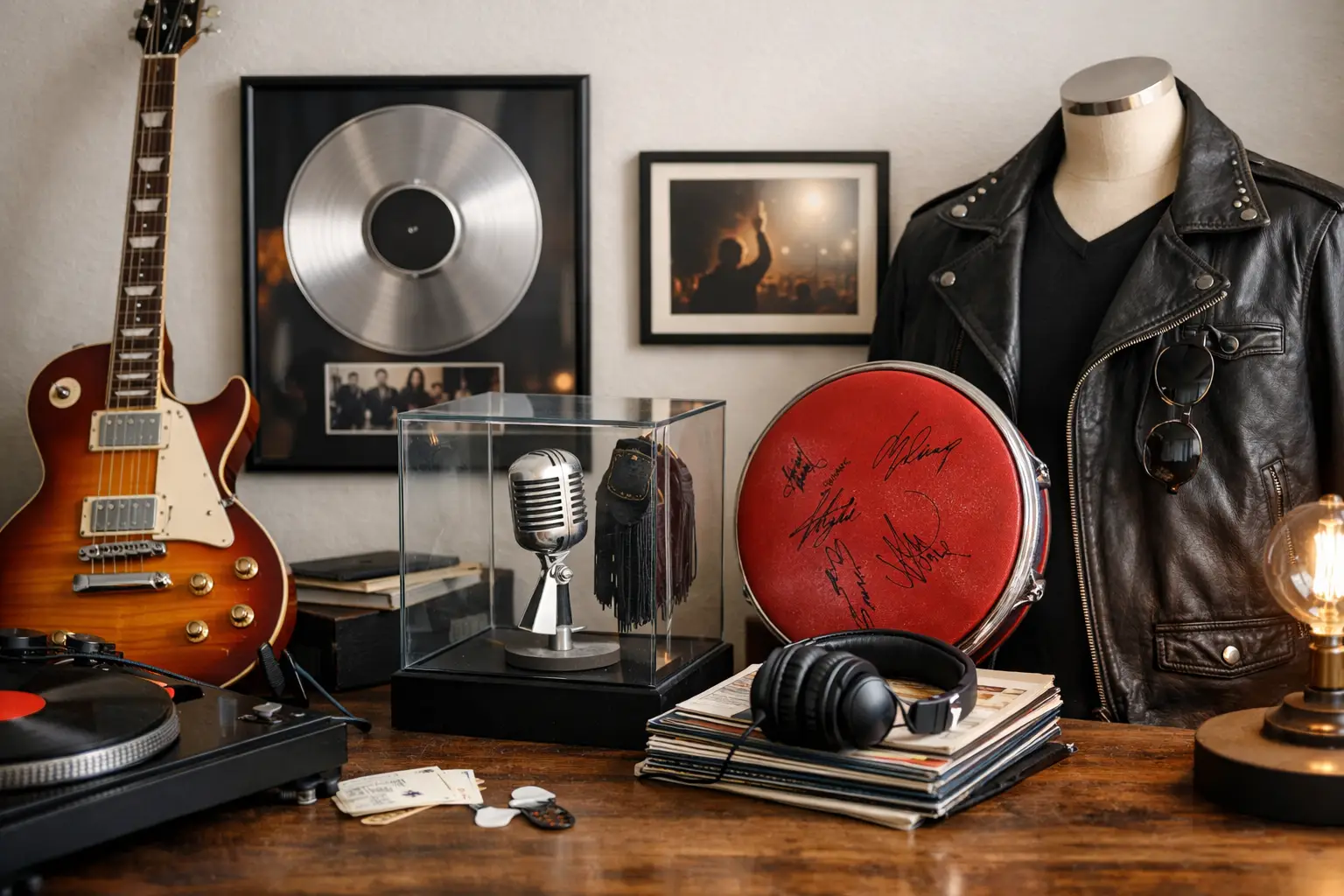
Some homes tell you who lives there within seconds. Not through expensive furniture or perfectly matched accessories, but through the pieces that carry a pulse of memory. A guide to styling music memorabilia starts there – not with rules, but with the feeling you want a room to hold when someone steps inside.
Music memorabilia is rarely just décor. It is the gig ticket kept in a wallet for years, the sleeve art that defined a chapter, the signed print that still makes your heart lift, the lyric that says what ordinary conversation never quite can. Styling these pieces well means giving them space to breathe, to be noticed, and to feel like part of your home rather than clutter from a former life.
Why music memorabilia deserves thoughtful styling
The most moving interiors are not built around trends. They are shaped by personal history. Music memorabilia has a particular magic because it connects identity, nostalgia and atmosphere all at once. A framed setlist can remind you of youth, friendship, freedom, grief, love or reinvention. A vintage record can instantly soften a room and give it soul.
That is why styling matters. If treasured items are stacked in a drawer or squeezed onto an already crowded shelf, their emotional value gets lost in the visual noise. When they are placed with intention, they become part of the room’s story.
There is a balance to strike, though. Too little presence and the display feels apologetic. Too much, and it can start to resemble a themed pub corner rather than a home with personality. The sweet spot sits somewhere between curated and lived-in.
A guide to styling music memorabilia without making it feel forced
The easiest mistake is treating every item as if it needs equal attention. In reality, some pieces want to lead and others work best as supporting details. Start by choosing the memorabilia that stirs something immediate in you. Not the most expensive piece, not necessarily the rarest – the one that still means the most.
Once you have that anchor item, build around it. A framed album cover might become the visual centre of a wall, while smaller tickets, backstage passes or lyric prints sit nearby with a lighter touch. If your focal point is a signed guitar or a striking piece of vintage music advertising, let it hold the room rather than competing with multiple statement pieces.
This approach keeps the display emotional instead of overloaded. It also gives your home a more natural rhythm. Every room benefits from a place for the eye to land.
Choose pieces that suit the room’s mood
Not every keepsake belongs everywhere. A lively gallery wall of festival wristbands, bright poster art and bold typography may feel brilliant in a snug, music room or hallway, but too energetic for a restful bedroom. Likewise, a softly framed black-and-white concert photograph or a favourite lyric can feel intimate and calming in a bedroom or reading corner.
Think about how you want the room to feel. A sitting room may suit conversation-starting pieces with a little drama. A home office might benefit from memorabilia that inspires focus or reminds you why creativity matters. In a kitchen or dining area, smaller nostalgic touches often work better than grand statements.
Style should serve atmosphere. That is what makes a display feel at home rather than simply placed.
Blend memorabilia with everyday décor
The most beautiful displays do not isolate memorabilia as something separate from the rest of the room. They weave it into the home alongside books, ceramics, candles, vintage finds and artwork. This softens the display and gives it texture.
A stack of records beneath a side table can look rich and inviting when paired with a lamp and a small plant. A shelf with a framed ticket stub gains warmth beside a few well-loved books and an object with contrasting shape, like a sculptural vase. The mix matters. Flat items need height nearby. Bold graphics benefit from quieter neighbours. Glossy frames often look better balanced with natural materials such as wood, linen or aged metal.
If everything in the arrangement shouts, the room becomes tiring. If every item is too restrained, the display can lose its spark. Contrast is what creates charm.
Framing changes everything
Framing is often the difference between memorabilia that feels temporary and memorabilia that feels treasured. A concert poster tucked to the side may be forgotten. The same poster in a thoughtfully chosen frame suddenly becomes part of the home.
That does not mean every frame should match exactly. In some spaces, especially modern or minimal interiors, a consistent frame style brings calm and cohesion. In others, a more eclectic mix feels warmer and more personal. It depends on the pieces and the room. Vintage flyers, handwritten lyrics and older photographs can look wonderful in mismatched frames with a collected feel, while contemporary music prints often suit cleaner lines.
Scale matters too. A tiny ticket in an oversized mount can feel far more special than if it is pressed into a busy collage. Giving small pieces room around them creates presence.
Use colour and texture to connect the story
If you want your display to feel intentional, repeat colours already found in the memorabilia elsewhere in the room. The deep red from an album sleeve might appear again in a cushion, a throw or a lamp base. A monochrome photograph may sit beautifully with black accents and soft neutrals. These echoes create harmony without making the theme too obvious.
Texture can do just as much work as colour. Music memorabilia often includes paper, vinyl, glossy finishes and metal. Pairing these with tactile materials such as velvet, wool, wood or rattan adds depth and keeps the display from feeling flat.
This is especially useful if you are styling a room with sentimental pieces from different decades or genres. A punk flyer, a soul record and a classical concert programme can absolutely share a space – but they need a common thread. Often that thread is not the music itself. It is palette, frame style or material.
Let collections breathe
Collectors often have a lovely problem: too much to show. The temptation is to put everything out at once. Usually, less is stronger.
Instead of displaying every treasured piece in one room, rotate items with the seasons or with your mood. A small changing arrangement can keep your space feeling alive and allow each keepsake its moment. This also protects delicate paper items from constant light exposure.
When grouping several pieces together, pay attention to spacing. Crowding can make even beautiful memorabilia feel accidental. A little empty space helps each item speak.
Styling music memorabilia in a way that still feels grown-up
There is sometimes a quiet worry around displaying music keepsakes in adulthood. People want their homes to feel polished, not like a teenage bedroom recreated at forty. The answer is not hiding what you love. It is presenting it with care.
Think quality over quantity. One beautifully framed print above a console table can feel far more sophisticated than an entire wall packed edge to edge. Mixing memorabilia with art books, soft lighting and timeless furniture immediately changes the mood. So does avoiding novelty overload. If every cushion, mug, sign and shelf references music, the room can tip into gimmick. A few meaningful pieces usually carry more emotional weight.
Sentimental styling works best when it feels honest. Not staged for approval, not stripped of feeling in the name of chicness. Just edited enough to let the story come through clearly.
Make space for bespoke and personal pieces
Some of the most special displays are not built from official merchandise at all. They come from commissioned artwork, personalised lyric prints, recreated gig memories, or keepsakes designed around a song that marked a wedding, a first dance or a life-changing moment. These pieces often blend more naturally into the home because they are already made with interior style in mind.
That is where a creative, memory-led approach can be especially meaningful. A bespoke piece inspired by a favourite track or artist can sit beautifully alongside original memorabilia, giving the whole display a more intimate and artistic feel. It turns collection into storytelling.
There is something lovely about seeing memory translated into a form that belongs in your everyday space. Not hidden away. Not saved for someday. Part of home.
Start with the feeling, not the shelf
If you are unsure where to begin, do not start by buying storage, frames or furniture. Start by gathering the pieces that still make you pause. Lay them out. Notice which ones belong together. Notice what chapter of your life they speak to.
The best interiors are not assembled like catalogues. They are layered from memory, instinct and affection. Music memorabilia deserves that kind of treatment because music itself lives that way in us – attached to places, people, eras and versions of ourselves we never quite leave behind.
Style it with care. Let it be beautiful. Let it mean something. Your home will feel warmer for it.
Leave a Reply