
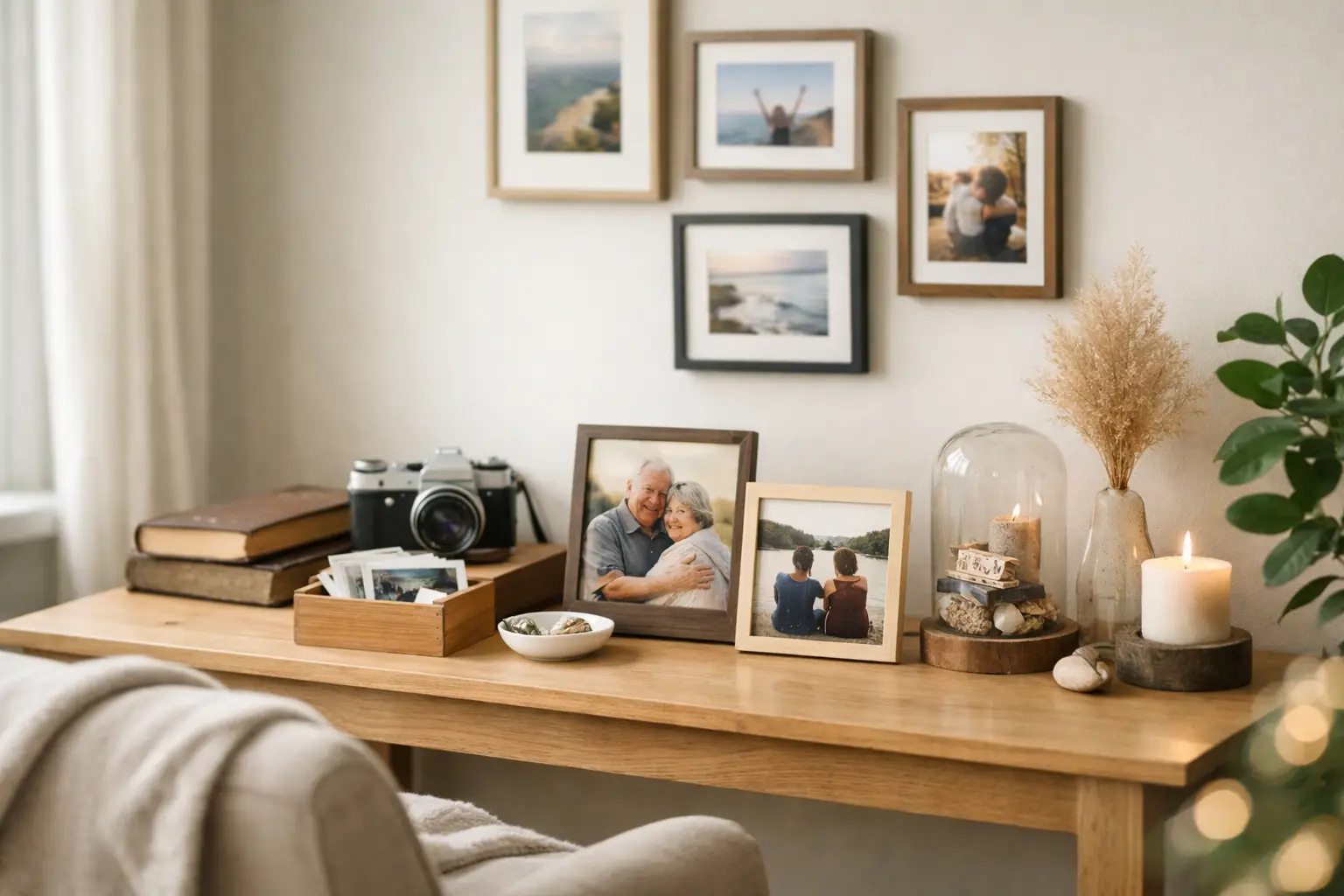
A memory corner is not a showroom display. It is the place where the gig ticket you could never throw away, the photograph that makes everyone smile, and the song that takes you straight back finally get the attention they deserve. Learning how to create a memory corner is really about giving your story a physical home – one small, beautiful space that feels unmistakably yours.
It might live on a hallway console, a shelf beside the record player, the quiet end of a mantelpiece, or a corner of a bedroom that has been waiting for purpose. The size matters far less than the feeling. Done thoughtfully, it becomes a daily reminder of people, places, passions and moments worth holding close.
Start with the story, not the stuff
The most moving memory corners have a thread running through them. Before gathering objects, decide what you want the space to remember. Perhaps it is a favourite decade, your family’s seaside holidays, a much-loved musician, a wedding, a grandparent’s life, or the small adventures that shaped a friendship.
A broad theme can work beautifully, but it needs a point of view. “Travels” may be too wide unless you focus it: the first trips you took together, a particular city, or holidays from childhood. “Music” becomes more personal when it centres on the artists who carried you through a certain chapter of life.
Think of the corner as a visual sentence. Every piece should add a word, rather than repeat one. A framed photograph might say who. A vinyl record or concert pass might say when. A handwritten note, postcard or small found object can reveal the detail that makes the memory real.
There is no need to display every sentimental item you own. In fact, restraint lets individual pieces breathe. Keep the rest safely stored and rotate them with the seasons, anniversaries or changing moods. A memory corner should feel alive, not like an archive you are afraid to touch.
Choose a corner that invites a pause
The best location is somewhere you naturally linger. An entrance hall works well for a welcome that feels personal. A living-room shelf can spark conversation over a cup of tea. A bedside corner offers a quieter, more private kind of comfort.
Consider light before committing. Direct sunshine can fade photographs, paper keepsakes, album sleeves and fabric, particularly near a south-facing window. If a bright spot is the only option, use UV-protective frames where possible and display reproductions of fragile originals. Keep precious handwritten letters, irreplaceable photographs and delicate tickets stored away from light, moisture and heat.
Scale is worth considering too. A tiny shelf needs one or two meaningful focal points, whereas a console table can hold a fuller arrangement. If your home is rented or wall space is limited, lean framed artwork against the wall, use picture ledges, or build the display on a tray that can move with you.
Build your memory corner in layers
A thoughtfully arranged display has depth. Begin with one anchor piece: a framed print, a favourite photograph, a record sleeve, a personalised artwork, or a mirror that reflects the objects beneath it. This gives the eye somewhere to land and stops the arrangement feeling scattered.
Next, add a middle layer with pieces that have shape or height. A small lamp, a stack of books, a vase of dried flowers, a candleholder, or a record displayed on a stand can create a softer sense of rhythm. Then place smaller treasures in front: a ticket stub, a miniature souvenir, a badge, an old key, a pebble from a meaningful beach, or a treasured photograph in a smaller frame.
Varying heights makes even a modest collection feel considered. If everything is the same size and pushed flat against the wall, it can look more like storage than storytelling. Aim for a loose triangle of tall, medium and small pieces. It does not need to be perfectly symmetrical. A little imbalance often feels more relaxed and collected over time.
Colour can quietly hold the display together. You might pull a warm sepia tone from old photographs, use the bold colours of a beloved album cover, or keep frames in black, oak and brass for a timeless feel. Matching every frame is not essential. A gentle connection between materials is enough.
Let photographs feel present, not precious
Photographs are often the heartbeat of a memory corner, but they do not all need to be formal portraits. The slightly blurry image from a birthday night, an old family snapshot with the date written on the back, or a picture of a familiar street can carry just as much feeling.
Mix one larger image with smaller photographs rather than lining them up like a gallery wall. A single oversized black-and-white print can give weight to a collection of tiny coloured snapshots. If you have only digital images, choose one or two that genuinely stir something in you and have them printed properly. Memories deserve more than a forgotten camera roll.
For extra intimacy, include words alongside the image. A short date, place name, song lyric, or line someone always used to say can turn a photograph into a fuller story. Keep the wording brief. The point is not to explain every feeling, but to leave room for it.
Bring in the sounds, textures and symbols of your life
Some memories are visual. Others arrive through sound, touch and ritual. This is where a memory corner becomes more than a collection of framed pictures.
For music lovers, a favourite record sleeve, a setlist, a gig wristband or a lyric-inspired art piece can bring back the atmosphere of a particular night. If the original item is too valuable or fragile to display, frame a quality copy and keep the original protected. The emotional connection remains, while the piece is cared for.
Objects with texture make a display feel especially human. A knitted item made by a relative, a vintage scarf, a pressed flower, a piece of sea glass or a small ceramic keepsake can soften the clean edges of frames and books. Use a shallow bowl, cloche or small box for tiny objects so they look intentional rather than lost.
Scent can be used carefully, too. A candle that recalls a holiday, a vase with seasonal foliage, or a favourite incense can make the corner part of a small ritual. Just keep flames well away from paper, fabric and record sleeves, and avoid placing scented products directly beside delicate memorabilia.
Make room for the people behind the memories
A meaningful display should not only show the polished highlights. The character often lives in the imperfect details: a silly postcard, a scribbled recipe, an old map with creases in it, or a photograph where nobody is looking at the camera.
If you are creating a memorial corner for someone you miss, move gently. You do not need to make it sombre unless that feels right. Include an object that reflects their humour, their favourite song, their garden, their team, or the way they made ordinary days feel special. A memory corner can hold grief, but it can also hold warmth, gratitude and the continuing presence of a life well loved.
When the story belongs to more than one person, invite contributions. Ask family members to choose a photograph or write a few words about a shared moment. For a partnership, each person might add one object that tells the story differently. Those contrasting memories are often the most beautiful part.
Know when to commission something personal
Some moments deserve a piece made especially for them. A bespoke artwork can bring together names, dates, places, lyrics or a meaningful image in a way that feels cohesive rather than crowded. It is particularly useful when the original objects are too fragile to display, when you are marking a milestone, or when you want to honour someone without relying solely on photographs.
The strongest commissions begin with feeling rather than a shopping list. Share the story: the song played on the first date, the football ground visited with Dad, the holiday where a proposal happened, or the decade that still shapes your style. At RUhavinit?, this is the spirit behind memory-led creations: turning personal history into something made to be seen, shared and kept.
Keep it evolving
A memory corner is allowed to change. Add a new gig ticket after an unforgettable night. Swap in a winter photograph when the weather turns. Bring out a birthday card on an anniversary, then return it to safe keeping. These small changes prevent the space becoming invisible through familiarity.
Give it a quick dust now and then, check frames for fading, and resist adding something simply because there is an empty patch. Space is part of the design. It lets the most meaningful objects speak without competition.
Your memory corner does not need to impress everyone who sees it. It only needs to make you stop for a second and remember something worth carrying forward. Begin with one piece that has a story, place it where you will notice it, and let the rest of the corner reveal itself in its own time.
Leave a Reply