
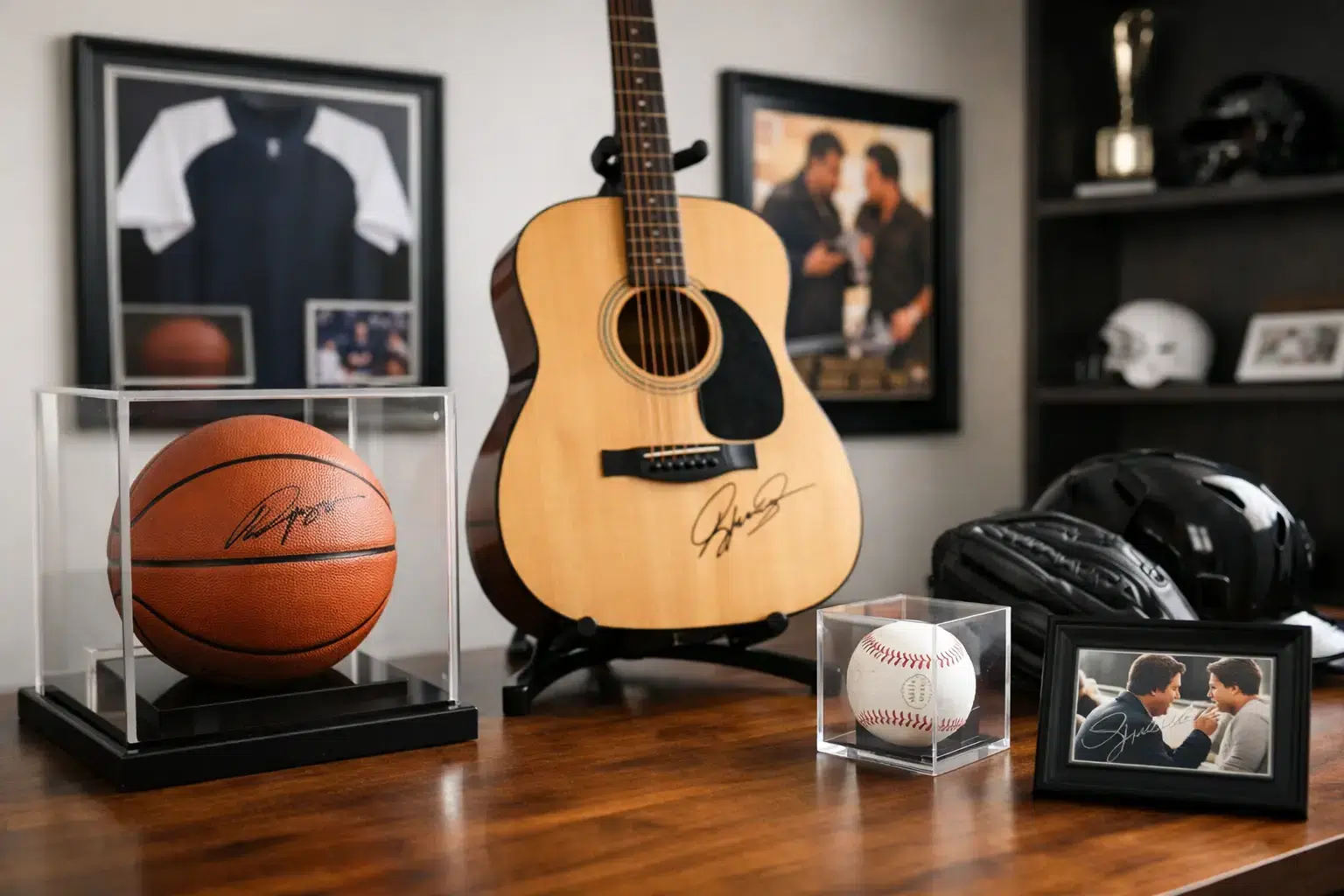
A signature is more than ink. It is a small, extraordinary trace of a person, a performance, a season of life or a moment you will always remember. Learning how to display signed memorabilia beautifully means giving that story room to breathe, rather than leaving it hidden in a drawer or lost among everyday clutter.
Whether it is a signed vinyl sleeve from the artist whose songs carried you through university, a football shirt from a treasured match, or a photograph signed on a once-in-a-lifetime evening, the best display feels personal. It should look at home in your space while still making you pause whenever you walk past.
Start with the story, not the frame
Before choosing colours, mounts or wall space, ask what the piece means to you. A signed album may call for a music-led corner with concert photographs, ticket stubs and a favourite lyric. A signed sporting item might deserve a cleaner, gallery-like presentation that lets the name and the shirt do all the talking.
This first decision helps you avoid a common mistake: treating every autograph as though it belongs in the same black frame. A simple frame can be beautiful, of course, especially when the item is striking in its own right. But a display becomes memorable when its materials, scale and setting echo the character of the keepsake.
Think about the mood you want to create. Do you want a calm, curated wall with one treasured centrepiece? A joyful corner that feels like a personal hall of fame? Or a layered memory shelf that encourages guests to lean closer and ask, “Where did you get that?” There is no single right answer. The display should feel like part of your home, not a museum borrowed from somebody else.
How to display signed memorabilia beautifully with framing
For signed photographs, posters, album sleeves, programmes and paper items, framing is usually the most elegant starting point. It creates presence, gives the item a clear boundary and offers valuable protection from dust, handling and sunlight.
Choose a mount that gives the autograph some breathing space. White or soft cream suits many photographs and vintage pieces, while black can make a bold signature feel dramatic and contemporary. For music memorabilia, a mount in a shade pulled from the album artwork can be a subtle way to bring the whole composition together. The goal is to support the item, not compete with it.
Be mindful of materials. Sunlight can fade ink, paper and printed colour over time, particularly if a treasured autograph sits in a bright south-facing room. UV-protective glazing and acid-free mounts are worthwhile for pieces you want to preserve for years to come. Keep framed memorabilia away from damp rooms, radiators and direct light where possible.
A deep box frame is ideal when the object has texture or dimension. It can hold a signed vinyl record, a plectrum, a lanyard, a concert wristband or a small handwritten note without flattening the magic out of it. With a little space between the object and the glass, the display feels more like a tiny stage than a flat picture.
Let the signature lead
Position matters. If the autograph sits in one corner of a photograph, do not crop it out in pursuit of perfect symmetry. If a signed shirt includes a message across the back, show the back. It sounds obvious, but the signature is often the emotional centre of the piece. Make sure it can be seen clearly from the natural viewing distance in the room.
For an especially meaningful item, consider adding a discreet caption beneath or beside it. A date, venue, match, song title or a few words about why it matters can turn a beautiful object into a story somebody else can enter. Keep it brief. The memory should still feel like yours, not an exhibition label trying too hard.
Build a display around the room you actually live in
Signed memorabilia deserves attention, but it does not need to dominate every wall. Start by noticing where your eye naturally lands: above a sideboard, beside a record player, at the end of a hallway or over a reading chair. These are natural homes for pieces that invite a second look.
A single large framed item can anchor a room beautifully. Hang it at a comfortable eye level, rather than too high above furniture, and allow a little empty wall around it. That quiet space gives a special item the importance it deserves.
If you have several related pieces, a gallery arrangement can create a richer sense of history. The key is connection. Group signed gig posters with a framed set list and a few record sleeves. Place sporting photographs alongside a shirt or scarf from the same era. Let one larger piece lead, then build outward with smaller pieces in a loose grid or an intentionally relaxed cluster.
Matching frames create a polished, collected feel. Mixing frame finishes can work too, especially in homes with vintage furniture or an eclectic creative style, but retain one visual thread. It might be a repeated mount colour, a shared black border or a similar warm wood tone. Without that thread, a meaningful collection can start to look accidental.
Bring depth to shelves and sideboards
Not every keepsake belongs on the wall. Signed books, helmets, boots, microphones, balls and instruments often look their best displayed with depth. A shelf, cabinet or sideboard can make room for the object and the atmosphere around it.
Start with one hero piece, then add only a few companions. A signed football can sit in a clear case beside a framed photograph from the match. A signed book might rest on a small stand, with an old theatre ticket tucked into a nearby frame. A vinyl record can be displayed upright in a stand, with the signed sleeve protected behind it or framed above.
Avoid filling every inch. Empty space is not wasted space. It is what lets the eye recognise that this object is special.
If you have young children, pets or a particularly lively household, a closed display cabinet may be the more practical choice. It keeps fragile items safer from curious hands, dust and everyday knocks, while allowing the collection to remain part of the room. For valuable pieces, secure wall fixings and lockable cases offer extra reassurance without sacrificing beauty.
Use lighting as a gentle spotlight
Good lighting can change a display completely. A warm picture light or a softly angled lamp will bring out texture in a signature, a worn record sleeve or the weave of a shirt. It creates that lovely pause in the evening, when an ordinary corner suddenly feels full of memory.
Keep lights low-heat and avoid aiming harsh beams directly at ink for long periods. The aim is atmosphere, not glare. If you use a glass frame, test the position at different times of day so reflections do not obscure the autograph.
Add personal layers without losing the autograph
The most moving displays often include clues to the wider story. A photograph taken at the event, a reproduction of the ticket, a handwritten note about who gave you the item or a small piece of artwork inspired by the occasion can add warmth and context.
This is especially lovely for gifts. Instead of presenting a signed item on its own, create a finished piece that holds the memory of the moment it represents. A signed music photograph could sit alongside the date of the first concert you attended together. A framed sporting signature could include the score from a match watched with a parent or grandparent. These details turn a collectable into an heirloom.
There is a balance, though. Too many additions can distract from the signature and make the arrangement feel crowded. Give each element a role. If it does not add to the story, save it for another display.
For pieces that are irreplaceable, consider showing a high-quality reproduction while the original is stored safely in archival conditions. This can feel like a compromise, but it is often the kindest choice for delicate paper, fading ink or highly valuable memorabilia. You still get to live with the image and the memory, while protecting the original for the future.
Make it a living collection
A beautiful display does not have to be permanent. Rotate smaller pieces with the seasons, after a new concert, around a major sporting anniversary or when a particular memory feels close. This keeps your home personal and gives forgotten treasures their moment again.
At RUhavinit?, we believe the things you choose to display should say something true about you. Not simply what you collect, but the songs, people, places and turning points that helped shape you.
Give your signed memorabilia a little intention, a little protection and a place where it can be seen. Every glance can become a return journey to the moment that made you keep it in the first place.
Leave a Reply