
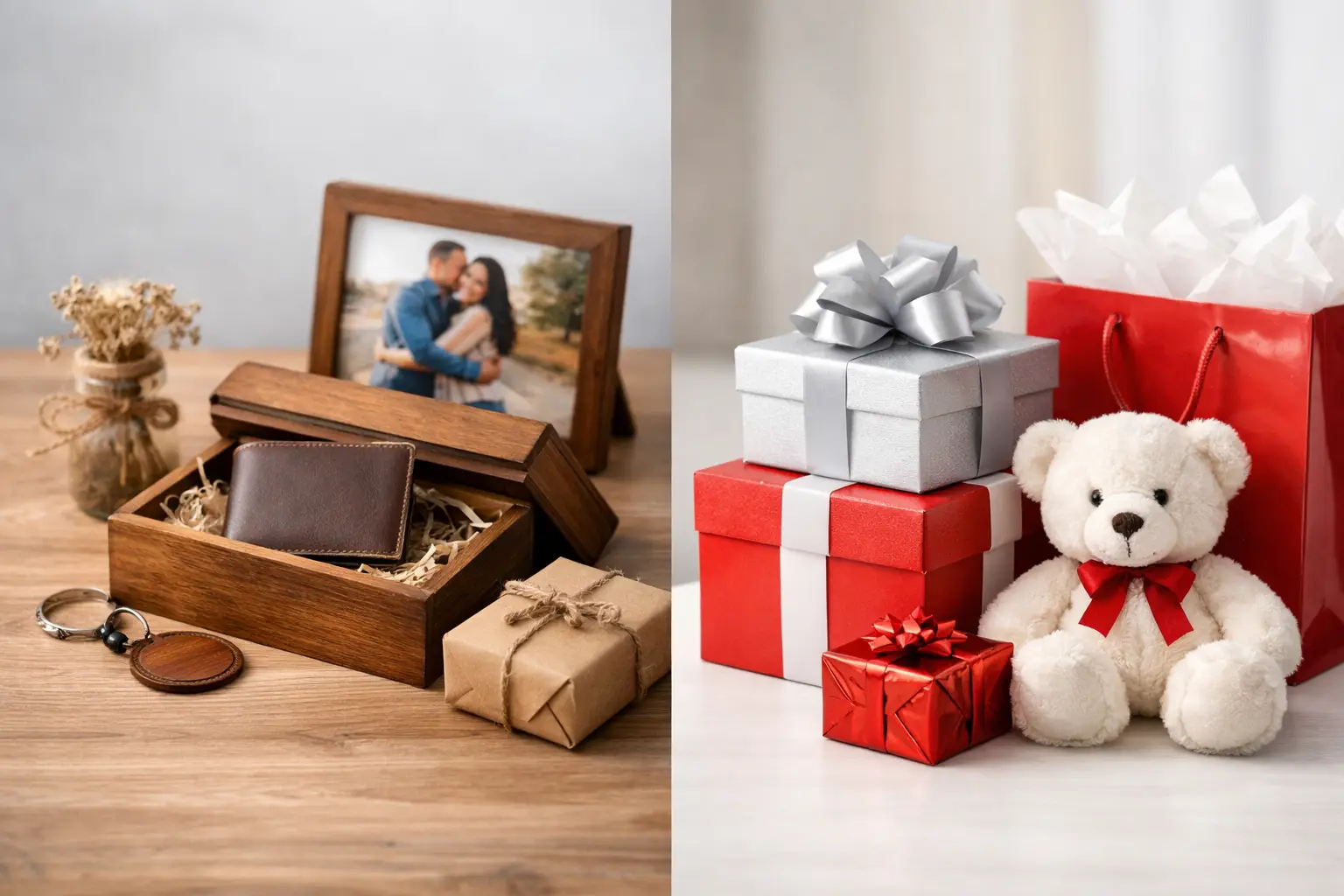
A framed lyric from the song that played at your wedding. A print that captures the street where someone grew up. A keepsake that quietly says, I know your story. That is where personalised gifts vs mass produced products stop being a simple shopping choice and start becoming something far more personal.
Most of us have given both. A quick, useful present picked up in a rush. A carefully chosen piece made with one person in mind. Both have their place. But they do very different jobs, and understanding that difference matters if you want your gift to be remembered long after the wrapping paper has gone.
Why personalised gifts vs mass produced feels so different
A mass-produced gift is built for broad appeal. It is designed to work for thousands of people at once, which is exactly why it can be practical, affordable and easy to buy. If you need something polished, quick and accessible, it often makes sense.
A personalised gift begins somewhere else entirely. It starts with a person, a memory, a date, a lyric, a place, an inside joke, a family story or a lifelong passion. Rather than asking, what sells well for everyone, it asks, what would mean something to them?
That shift changes the emotional weight of the gift. A mass-produced item may still be lovely, stylish or useful. But a personalised piece carries recognition. It tells the recipient they were seen properly. Not just remembered, but understood.
That is often why personalised gifts stay in homes longer. They do not feel interchangeable. They become part of the atmosphere of a room, the story of a family, or the memory of a milestone.
The strength of mass-produced gifts
There is no need to pretend mass-produced gifts have no value. They do, and sometimes they are exactly the right choice.
If you are buying for a colleague, a distant relative or someone whose tastes you do not know well, a well-made ready-to-shop gift can be a kind and sensible option. There is comfort in choosing something classic and usable. A candle, a mug, a framed print or a decorative piece can still bring pleasure, especially when selected with care.
Mass-produced gifts also tend to be quicker to buy and easier on the budget. That matters. Not every occasion calls for a commission, and not every shopper has weeks to plan ahead. Convenience is not thoughtlessness. Sometimes life is busy, and a present bought quickly is still given with genuine warmth.
The trade-off is memorability. If the gift could just as easily have been given to ten other people, it may not leave quite the same mark. It can still be appreciated, but perhaps not cherished in the same way.
What personalised gifts give that standard gifts often cannot
A personalised gift creates emotional detail. It anchors itself to a real moment or identity.
That could be a music-inspired artwork tied to a first dance, a nostalgic print that brings back childhood holidays, or a bespoke keepsake celebrating a birthday with details no shop shelf could ever predict. These are not just objects. They become prompts for conversation, memory and feeling.
For sentimental gift buyers, that difference is everything. The right personalised piece does more than sit neatly on a shelf. It says, this mattered. You mattered. This memory deserves space in your home.
There is also a creative pleasure in giving something one of a kind. It feels less like selecting stock and more like curating a moment. For people who love home styling, collecting or surrounding themselves with meaningful pieces, that individuality has real value. It can turn a gift into part of a personal world rather than another item in it.
Personalised gifts vs mass produced for milestone moments
Some occasions almost demand more heart. Weddings, anniversaries, landmark birthdays, memorial tributes, first homes and retirement gifts often carry too much emotional weight for something generic to feel quite right.
These are the moments when people naturally look for depth. They want gifts that reflect history, personality and shared experience. A bespoke piece can hold details that would otherwise disappear into time – a date, a venue, a meaningful phrase, a beloved song, a cherished place.
That is why personalised gifting often feels especially powerful during life transitions. It helps people hold on to what matters while marking the start of something new.
Mass-produced gifts can still work beautifully here if they are chosen with real sensitivity. But if the aim is to move someone, surprise them, or create an heirloom quality feeling, personalisation usually carries more emotional reach.
When mass-produced is the better option
There are also times when custom is not the smartest route.
If someone prefers minimal, functional living and does not enjoy display pieces or sentimental objects, a personalised keepsake may miss the mark. If the occasion is casual, the budget is tight or the timing is short, a mass-produced gift may simply be more realistic.
There is another point worth mentioning. Personalisation only works when it is thoughtful. Adding a name to something ordinary does not automatically make it meaningful. The best personalised gifts are built around story, not just surface detail. Without that, they can feel forced rather than heartfelt.
So the question is not whether personalisation is always better. It is whether the gift reflects the person and the moment well enough to feel genuine.
The role of nostalgia in meaningful gifting
Nostalgia changes how a gift is received. A present tied to memory has a way of travelling deeper than one chosen purely for usefulness or trend.
That is especially true for people who connect strongly with music, era-specific design, family history or places that shaped them. A keepsake inspired by a favourite band, a beloved hometown, a historical moment or a treasured personal memory can feel instantly intimate. It reminds the recipient who they are, where they have been and what has stayed with them.
This is where creative gifting becomes more than commerce. It becomes storytelling.
For a brand like RUhavinit?, that space matters deeply. People are not only looking for things to buy. They are looking for pieces that preserve a feeling, celebrate identity and make a house feel more like their home.
Choosing between personalised and mass-produced gifts
The best choice often comes down to three things: the relationship, the occasion and the emotional intention.
If the relationship is close, the occasion meaningful and the intention sentimental, a personalised gift usually offers more room for connection. It feels considered in a way that standard gifting rarely can.
If the relationship is lighter, the timeline tighter or the purpose more practical, a mass-produced gift may be absolutely right. There is grace in choosing something simple and lovely without forcing significance where it is not needed.
A useful way to decide is to ask one quiet question: do I want this gift to be appreciated, or remembered?
Appreciated gifts serve the moment well. Remembered gifts often carry a story.
What people keep, and why
Look around someone’s home and you will usually spot the difference. The pieces people keep for years are rarely the most generic. They are the concert print that marks a life-changing night. The commemorative artwork made for an anniversary. The object that sparks, every single time, the words let me tell you about this.
That does not happen by accident. It happens when a gift reflects something personal enough to outlast trends.
Mass-produced décor may suit a season. Personalised keepsakes often stay because they belong to someone’s narrative. They gather meaning over time rather than losing it.
And that may be the clearest answer in the personalised gifts vs mass produced conversation. One is made to fit many lives. The other is made to honour one.
If you are choosing a gift and wondering which path to take, think less about what looks impressive at first glance and more about what will still feel special a year from now. The most lasting gifts are rarely the loudest. They are the ones that quietly keep a memory alive.
Leave a Reply