
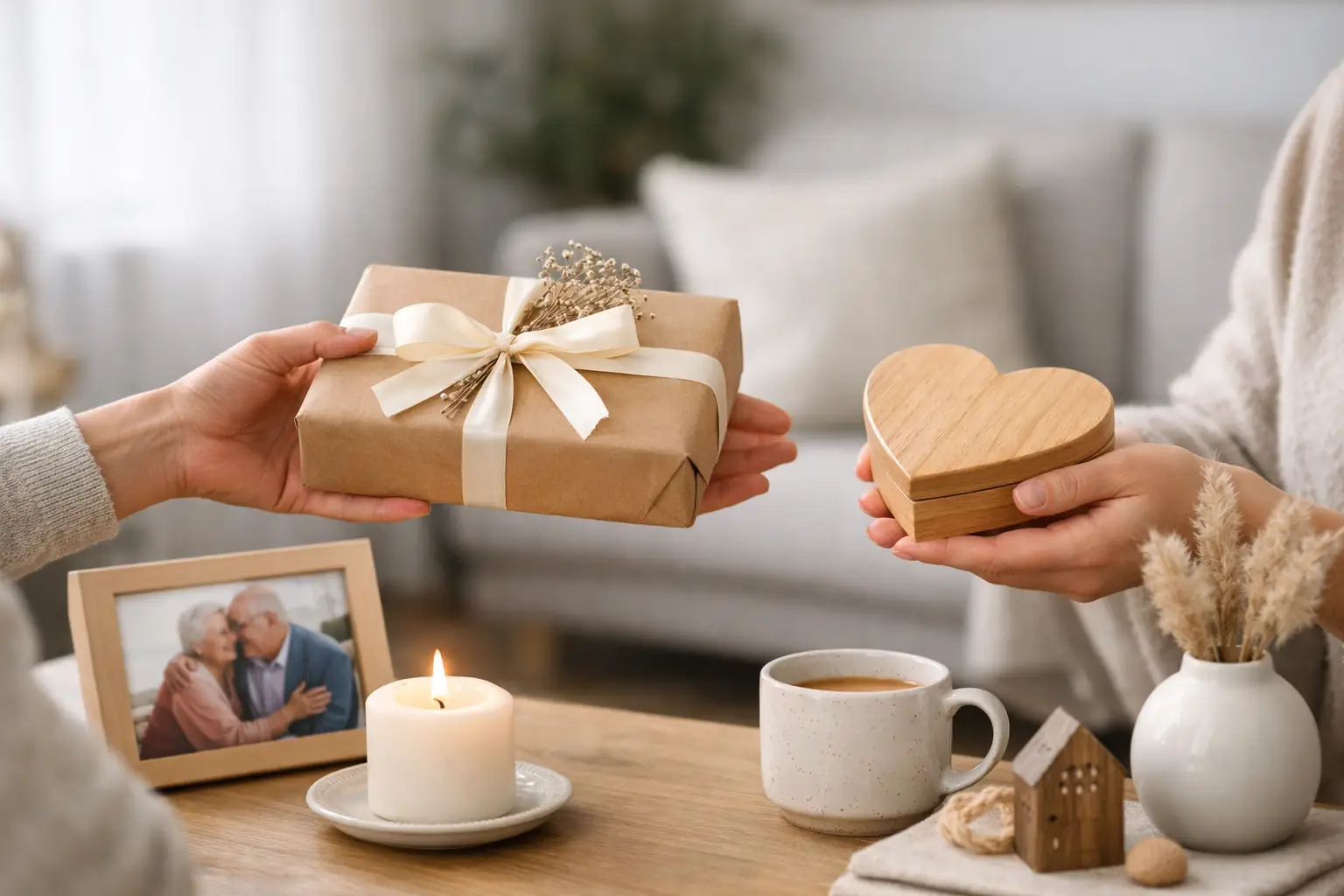
Some gifts get opened, admired, and quietly forgotten by the following week. Sentimental homeware is different. If you are wondering how to gift sentimental homeware, the real answer is not to start with the object at all. Start with the memory it will hold, the story it will tell, and the feeling you want it to bring back each time it is seen on a shelf, wall, or side table.
That is what makes this kind of gift so lasting. It lives in the home, but it also lives in the heart. A well-chosen piece can remind someone of a first dance, a family kitchen, a favourite record, a beloved place, or a person they never want to stop thinking about. The object matters, of course, but the emotional thread matters more.
Why sentimental homeware means more than décor
Homeware becomes sentimental when it carries identity. It reflects who someone is, where they have been, what they love, and which moments shaped them. A framed lyric print, a personalised keepsake dish, a commemorative ornament, or a nostalgic piece inspired by a shared era can all do this beautifully.
The reason these gifts resonate so deeply is simple. They are seen often. Unlike flowers that fade or novelty presents that end up in a drawer, homeware becomes part of daily life. A meaningful piece catches the light in the hallway, sits beside the bed, or anchors a room with quiet significance. Over time, it becomes part of the home’s emotional landscape.
That said, sentimental does not automatically mean successful. A gift can be deeply personal to you and still miss the mark for the person receiving it. That is why thoughtfulness needs a little structure.
How to gift sentimental homeware with real thought
The strongest sentimental gifts usually sit at the intersection of memory, style, and usefulness. If one of those is missing, the piece can feel slightly off.
Memory is the first layer. Think about a moment, passion, place, or relationship that genuinely matters to them. This could be a wedding song, a childhood town, a beloved pet, an anniversary date, a favourite decade of music, or a family tradition that still makes everyone smile. Specificity is your friend here. General sentiment can feel vague, while one sharply observed detail can feel astonishingly personal.
Style is the second layer. A meaningful item still needs to belong in their space. Someone with a calm, minimal home may not want something overly ornate, however heartfelt it is. A collector of vintage pieces may adore nostalgia-rich design, while another person may prefer a cleaner interpretation of the same memory. Paying attention to their colours, textures, and the things they already display makes a real difference.
Usefulness is the third layer, though usefulness does not always mean practical in the strict sense. A gift can be useful because it is functional, like a personalised tray or memory-led wall art that completes a room. It can also be useful because it offers comfort, conversation, and presence. Even decorative pieces earn their place when they make someone feel seen.
Begin with their story, not your shopping list
A lovely way to choose sentimental homeware is to ask yourself one question: what part of their story deserves a place in their home?
For one person, that might be music. A piece inspired by a life-changing concert, a treasured vinyl era, or the song that played at a milestone moment can feel deeply intimate without being overly obvious. For someone else, it might be heritage, travel, or family. A keepsake that nods to where they grew up or the home they built can feel quietly profound.
The best ideas often come from details people mention in passing. The pub where they met their partner. Their nan’s blue-and-white kitchen. The seaside town they still call home even though they moved years ago. These are not just anecdotes. They are clues.
This is where bespoke or personalised homeware can be especially powerful. A tailored piece allows you to honour the exact memory rather than buying a generic version of the feeling. RUhavinit? sits beautifully in this space, where homeware and keepsakes are treated less like stock items and more like story-holding pieces.
Choosing the right kind of sentimental homeware
Not every sentimental gift needs to announce itself loudly. In fact, the most treasured pieces are often the ones with a quieter emotional charge.
Wall art works well when the memory is visual or text-based. Song lyrics, meaningful dates, locations, family names, and subtle references to a shared moment can all be transformed into something elegant and lasting. This suits people who like their homes to reflect their personality in an artistic way.
Decorative keepsakes are ideal when the feeling is more symbolic. An ornament, display piece, or commemorative item can mark a birth, anniversary, move, retirement, or remembrance. These gifts tend to shine when the occasion itself carries emotional weight.
Functional homeware can be the sweetest option of all because it blends memory into ordinary life. Think of pieces used every day or displayed in active spaces. The sentimental element feels woven into the rhythm of home rather than reserved for a special shelf.
It depends, though, on the person. Some people love visible sentiment and storytelling pieces that invite questions. Others prefer meaning that is more private. There is no single right approach. There is only the right fit for the life they actually live.
When personalisation adds magic, and when it can be too much
Personalisation can transform a beautiful object into a deeply loved one, but it needs restraint. Names, dates, lyrics, coordinates, inside references, and meaningful wording can all elevate a gift if they are chosen carefully.
The key is avoiding detail for detail’s sake. If every possible memory is squeezed into one design, the result can feel cluttered rather than touching. Usually, one or two meaningful references are enough. A date paired with a place. A lyric paired with a name. A motif paired with a shared memory.
There is also a difference between private sentiment and public display. A mug with an in-joke might delight someone in a kitchen. The same joke printed huge across a statement wall piece may not suit their home. Consider how visible the item will be and how comfortably they wear their emotions in their space.
The emotional balance of nostalgia
Nostalgia is often at the heart of sentimental homeware, but it works best when it feels warm rather than heavy. A nod to a favourite era, treasured hobby, or cultural moment can make a gift feel wonderfully personal. Music memorabilia, retro-inspired artwork, and collectable pieces often do this brilliantly because they connect emotion with identity.
Still, nostalgia can be delicate. If a memory is tied to grief or a complex period, sensitivity matters. Some recipients will treasure a remembrance piece. Others may find it too raw if the timing is wrong. The same gift can feel healing to one person and overwhelming to another.
That does not mean avoiding emotional depth. It simply means reading the room with kindness.
Presentation matters more than people admit
With sentimental gifts, the reveal is part of the experience. You do not need grand theatrics, but a little care goes a long way. Beautiful wrapping, a handwritten note, or a short explanation of why you chose the piece can turn a lovely object into a moment they will remember.
This is especially true if the meaning is layered or subtle. A note can gently connect the dots without overexplaining. It tells them this was not a rushed purchase. It was a memory, noticed and honoured.
If the gift is for a milestone, timing matters too. Giving it during a quiet moment can sometimes feel more moving than presenting it in the middle of a noisy gathering. Sentimental homeware often lands best when there is space to actually feel it.
Common mistakes when gifting sentimental homeware
The most common mistake is choosing something that reflects your memory more than theirs. Shared moments matter, but the gift should still centre the recipient’s emotional world.
Another is mistaking expensive for meaningful. Sentiment does not come from price. It comes from precision. A modest but beautifully observed keepsake will nearly always outshine a costly item with no real connection.
There is also the risk of forcing a style mismatch. Even the most heartfelt gift can feel awkward if it clashes with their home completely. Sentimental homeware should feel like it belongs, as though it has been waiting for its place all along.
A gift that stays
The loveliest thing about sentimental homeware is that it does not end with the unwrapping. It keeps speaking. Months later, they will glance at it while making tea, tidying a shelf, or walking into a room, and the memory will still be there.
That is the gift, really. Not just an object, but a feeling that stays close. If you choose with care, you are not simply giving something beautiful for the home. You are giving someone a piece of their own story back, in a form they can live with every day.
Leave a Reply